Situation Summary
Serbia faces a convergent political and security inflection point following President Vučić's 27 June resignation announcement, which has triggered heightened protest activity in Belgrade and elevated border-security concerns near Kosovo. Regional cyber threats (Iranian actors arrested in Montenegro) and arms-export scrutiny add complexity to an already volatile 48-hour cycle. While Serbia's global threat rank remains moderate (#94), Central Serbia's composite risk score (65) reflects genuine near-term volatility driven by political uncertainty, mass-gathering risk, and military posturing rather than active kinetic conflict on Serbian soil.
Key Developments
- Belgrade, 27 June 2026 – President Aleksandar Vučić announced imminent resignation and snap elections, triggering opposition mobilization and calls for new protests in central Belgrade around government and presidential buildings.
- Belgrade, 27–28 June 2026 – Serbian prosecutors opened an investigation into student-protest organizers allegedly planning to simulate a "sonic cannon" device during anti-government demonstrations, signaling continued law-enforcement pressure on civil-unrest activity.
- Kosovo border region, 27–28 June 2026 – Recent Serbian military movements near the Kosovo border, linked to Vučić's political messaging, are flagged by observers as potentially aligned with Russian positioning and escalation rhetoric, elevating border-security and conflict-escalation risk in southwestern Serbia.
- Belgrade, 27–28 June 2026 – Opposition figures and civic groups are organizing new mass protests in central Belgrade around the presidency and elections, sustaining risk of road blockages, scuffles with police, and civil unrest in the city center.
- New Belgrade, 27–28 June 2026 – Social-media reporting highlighted Serbia's increased arms exports (114 million euros annually) amid the Gaza war, keeping defense-industry facilities and logistics hubs under heightened international scrutiny and protest risk.
- Montenegro/Belgrade corridor, 27–28 June 2026 – Montenegrin police and FBI arrested an Iranian national suspected of hacking attacks on US entities; reporting from Belgrade underscores regional cyber-security concerns and potential exposure of Serbian networks and transit routes to state-sponsored cyber activity.
- Regional context, 28 June 2026 – US–Iran military strikes and wider conflict escalation have prompted analysis of Serbia's geopolitical positioning, introducing indirect economic and diplomatic risk (energy, sanctions exposure) despite no direct attack on Serbian soil.
Highest-Risk Areas
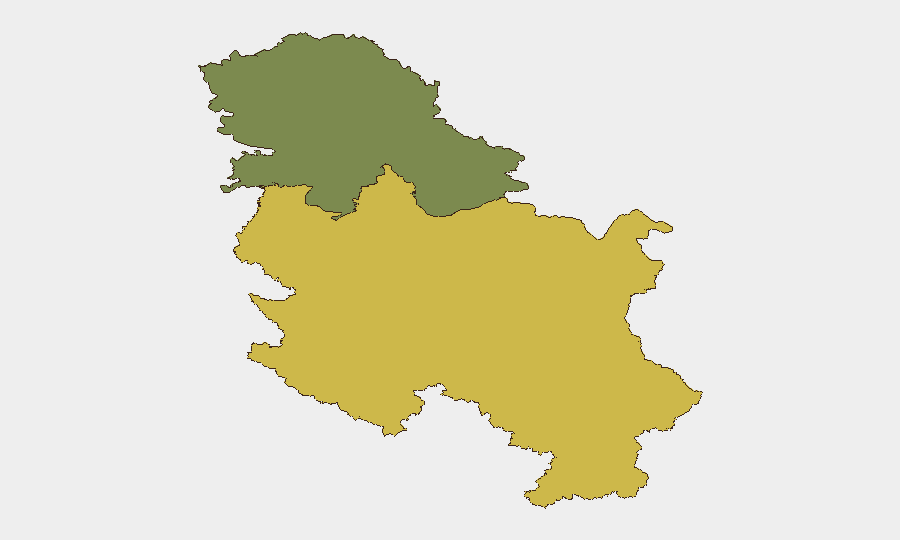
Central Serbia (composite risk 65) dominates the threat picture, driven by political transition uncertainty, mass-protest mobilization in Belgrade, and law-enforcement crackdowns on civil unrest. Vojvodina (risk 35) presents secondary concern, likely linked to border and regional-spillover dynamics. Kosovo-border areas and military positions near southwestern Serbia warrant elevated monitoring due to recent force movements and escalatory rhetoric. Defense and logistics hubs in and around New Belgrade face heightened reputational and protest risk tied to arms-export scrutiny.
How GeoBit Would Assist
Security teams should deploy AOI Monitoring & Early Warning on central Belgrade (government/presidential districts, protest assembly points) and Kosovo-border military concentrations to detect real-time movement and crowd formations. Network & Actor Analysis would track protest-organizer communications via X/Telegram OSINT and sentiment & temporal analysis to predict protest timing and scale. Cyber & OSINT fusion capabilities would monitor Iranian and regional hacking activity and sanctions-exposure developments affecting Serbian defense and logistics operations.
7-Day Outlook
Protest activity in Belgrade is likely to intensify over the next 7 days as opposition consolidates around snap-election demands and Vučić's resignation timeline. Border tensions and military posturing near Kosovo may remain rhetorical but warrant continuous watch for unplanned escalation. Political uncertainty will sustain elevated vulnerability to cyber activity and international scrutiny of Serbian arms exports.
Highest-Risk Areas — Ranked
| # | State / Region | Risk |
|---|---|---|
| 1 | Central Serbia | 65 |
| 2 | Vojvodina | 35 |
Sources
Previous Daily Briefs
A new Serbia brief is written every day — each with its own risk map and downloadable CSV. Here's the last week; use the calendar to go further back.
📅 Browse every day by calendar →
Highlighted days have a brief. Tap a day for that day's map & analysis, or “csv” for that day's dataset ($5).