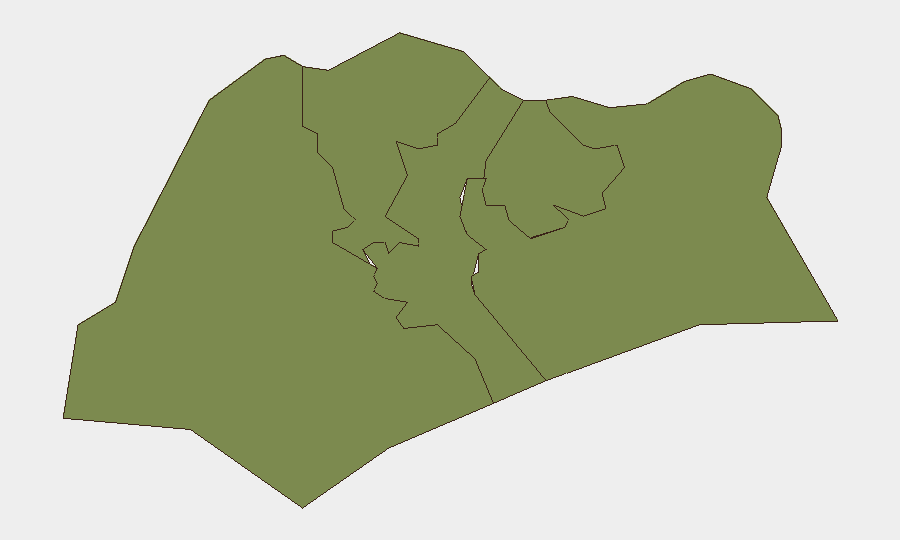
Situation Summary
Singapore remains a low-threat environment with no significant security incidents reported in the last 24–48 hours. The composite threat score of 7 (rank #123 globally) reflects underlying exposure to cyber incidents, maritime risk, and transnational financial crime rather than acute domestic instability or civil unrest. The security posture is stable, though regional maritime activity and cyber exposure warrant continued monitoring.
Key Developments
- Strait of Hormuz, off Iran – 25–26 June 2026: A Singapore-flagged cargo vessel (*Ever Lovely*) sustained impact from a projectile while transiting the Strait of Hormuz. This incident elevates maritime risk for Singapore-linked shipping in the Gulf and may prompt temporary route adjustments or insurance-cost increases for regional operators, though it occurred outside Singapore territory.
- No corroborated domestic incidents reported in Singapore (25–27 June 2026). Available security feeds, travel advisories, and regional intelligence show no new security, civil-unrest, crime spikes, political instability, or infrastructure failures with multi-source confirmation in the past 24–48 hours.
Note on GeoBit event signals: The platform's tracked event signals (Mauritania–Senegal dispute, Congo–Rwanda tensions, Senegal rejection, police disapproval, Germany–Morocco statement) reflect regional and global activity, not Singapore-specific developments. None directly impact Singapore's domestic or immediate risk profile.
Highest-Risk Areas
The Northwest region dominates the sub-national ranking with a composite score of 31.4, significantly above Central (2.5) and the remaining regions (1.4 each). This concentration suggests that if any localized risk materializes in Singapore, it is most likely to emerge in the Northwest; however, the absolute risk level remains low. The Central, Southwest, Northeast, and Southeast regions show near-parity and negligible composite scores, indicating either dispersed, low-level exposure or detection thresholds below the Northwest's prominence. Without recent incident-level reporting, the ranking likely reflects underlying structural factors—maritime chokepoints, population density, or transient exposure—rather than acute developments.
How GeoBit Would Assist
Security teams should use Maritime & Aviation Tracking to monitor Singapore-flagged and Singapore-registered vessel movements through high-risk straits (Hormuz, Malacca) and receive alert on incidents affecting corporate supply chains and personnel in transit. Intel Sweep and multi-source OSINT fusion can provide early detection of emerging cyber campaigns, financial-crime networks, or transnational organized activity targeting Singapore entities, with sentiment and temporal analysis to distinguish noise from substantive threats. AOI Monitoring & Early Warning can sustain persistent watch on the Northwest region and key infrastructure nodes, with automated alerting if risk indicators (protest activity, labor action, cyber scanning, maritime anomalies) cross defined thresholds.
7-Day Outlook
No material change to Singapore's threat trajectory is anticipated in the next seven days based on current open-source and signal data. Continued exposure to cyber intrusions, maritime incidents in regional waterways, and transnational financial-crime flows remains baseline. Security teams should maintain routine monitoring for cyber and maritime incidents and flag any escalation in regional political tensions or supply-chain disruptions that could secondarily affect Singapore's financial hub status or port operations.
Highest-Risk Areas — Ranked
| # | State / Region | Risk |
|---|---|---|
| 1 | Northwest | 31.4 |
| 2 | Central | 2.5 |
| 3 | Southwest | 1.4 |
| 4 | Northeast | 1.4 |
| 5 | Southeast | 1.4 |
Sources
Previous Daily Briefs
A new Singapore brief is written every day — each with its own risk map and downloadable CSV. Here's the last week; use the calendar to go further back.
📅 Browse every day by calendar →
Highlighted days have a brief. Tap a day for that day's map & analysis, or “csv” for that day's dataset ($5).