Situation Summary
South Korea faces a complex near-term security environment marked by concurrent political instability, border-zone incidents, and U.S. military infrastructure concerns. A Supreme Court confirmation of former President Yoon Suk Yeol's conviction on 2026-08-01, combined with implementation of a contested "fake news" law, has intensified domestic political tension. Multiple localized incidents—including a unidentified-aircraft scare near the DMZ, a chemical-leak response at a U.S. air base, and a North Korean defection—suggest heightened operational tempo and lower incident thresholds across both civilian and military domains. Overall threat posture remains moderate with Seoul accounting for disproportionate risk concentration.
Key Developments
- Osan Air Base (south of Seoul), 2026-07-29 — South Korean Safety Ministry and regional authorities ordered brief neighborhood evacuations following a reported white phosphorus leak at the U.S. military facility; residents were directed to shelters during the hazmat assessment.
- Cheorwon / northern Gyeonggi Province, 2026-07-31 — South Korean military issued evacuation alerts for the Civilian Control Zone after detecting an unidentified aircraft near the DMZ; the aircraft was subsequently identified as a U.S. military drone conducting joint exercises. Military conducted a review of the incident.
- DMZ border area, 2026-07-30 or 2026-07-31 — South Korean military took custody of a North Korean soldier who crossed the border earlier in the week; the defector expressed intent to seek asylum and remains under investigation.
- Seoul / Supreme Court, 2026-08-01 — South Korea's Supreme Court upheld a seven-year prison sentence for former President Yoon Suk Yeol in a martial-law-related case, marking a significant legal milestone with implications for domestic political stability and security posture.
- Seoul, 2026-08-01 — South Korea's revised "fake news" law took effect; media organizations and press freedom advocates have raised concerns about information control and journalistic operating constraints.
Highest-Risk Areas
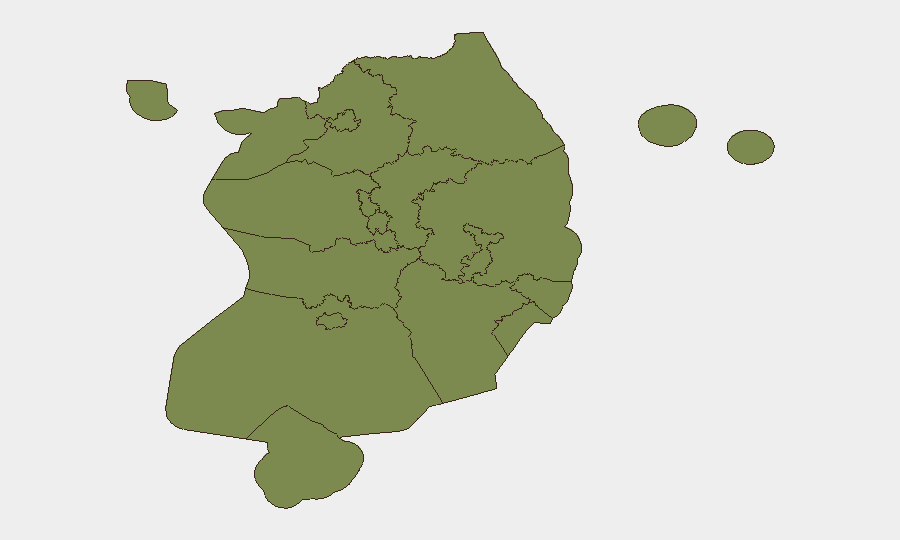
Seoul dominates the national risk profile with a composite score of 31.3—nearly five times the next-ranked region—reflecting concentration of political institutions, media activity, large protest potential, and recent high-profile court proceedings. Gyeonggi Province (6.6) and South Gyeongsang (6.2) represent secondary risk nodes, likely driven by proximity to Seoul's political spillover and regional industrial/labor activity. The remainder of tracked provinces score below 3.0, indicating that risk is sharply concentrated in Seoul and its immediate periphery. Border zones (not separately ranked but operationally significant) remain elevated due to DMZ proximity and recent defection/identification incidents.
How GeoBit Would Assist
Security and duty-of-care teams would employ AOI Monitoring & Early Warning to establish persistent surveillance of Seoul, Gyeonggi border areas, and U.S. military installations (Osan, Camp Humphreys) to detect localized protests, evacuation triggers, or infrastructure incidents before they cascade. Intel Sweep and multi-language OSINT (including X/Twitter, Telegram, and Korean-language sources) would track political faction messaging, prosecutor activity, and court-proceeding sentiment in real time. Election Monitoring and regime-stability analysis capabilities would assess whether the Yoon conviction and media-law implementation trigger sustained unrest or institutional fragmentation.
7-Day Outlook
South Korea's political calendar and court proceedings will likely remain the primary driver of localized tension, particularly in Seoul. Border incidents and U.S. military operations appear elevated but routine; however, any incident involving a U.S. asset or mass-casualty defection could trigger cascading evacuations and media surges. Duty-of-care teams should maintain elevated situational awareness in Seoul and monitor prosecutor activity for signs of broader institutional conflict.
Highest-Risk Areas — Ranked
| # | State / Region | Risk |
|---|---|---|
| 1 | Seoul | 31.3 |
| 2 | Gyeonggi | 6.6 |
| 3 | South Gyeongsang | 6.2 |
| 4 | Gangwon State | 2.8 |
| 5 | Busan | 2.5 |
| 6 | Gwangju | 2.1 |
| 7 | South Jeolla | 1.7 |
| 8 | Incheon | 1.3 |
| 9 | North Chungcheong | 1.3 |
| 10 | South Chungcheong | 1.3 |
| 11 | Jeju | 1.3 |
| 12 | Sejong | 1.3 |
Sources
Previous Daily Briefs
A new South Korea brief is written every day — each with its own risk map and downloadable CSV. Here's the last week; use the calendar to go further back.
📅 Browse every day by calendar →
Highlighted days have a brief. Tap a day for that day's map & analysis, or “csv” for that day's dataset ($5).
Atlas — our AI intelligence desk — emails them this snapshot personally. Nothing else, no list.