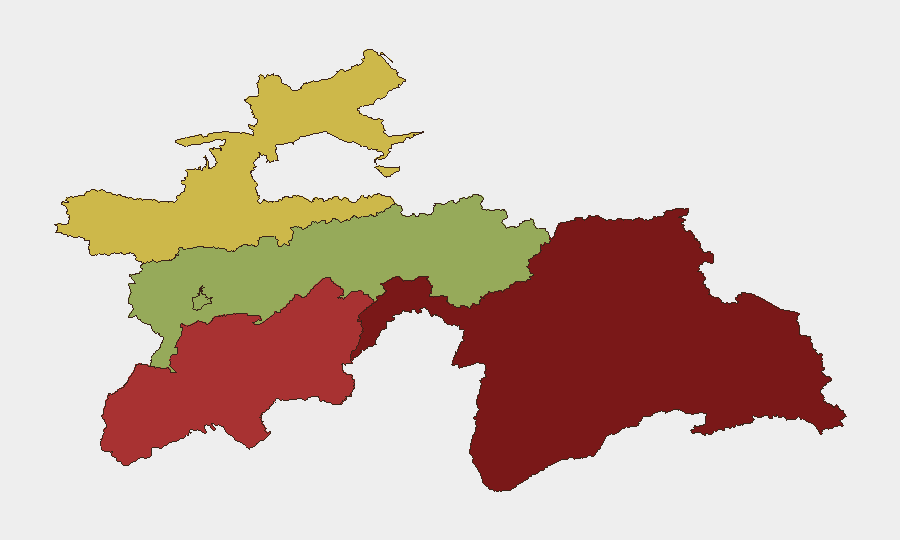
Situation Summary
Tajikistan remains a stable mid-tier security environment (#102 globally) with no acute internal crises, but cross-border volatility from Afghanistan presents a persistent containment challenge. A 6.2-magnitude earthquake in northern Afghanistan on 27 June caused tremors across southern Tajikistan, introducing a secondary infrastructure and travel-disruption risk. Border security tensions with Afghanistan—characterized by sporadic cross-border firing and concentration of armed groups along the frontier—continue to drive the country's primary threat profile, while internal stability in major population centers remains intact.
Key Developments
- Afghanistan–Tajikistan Border (27 June 2026): The CSTO reiterated that sporadic cross-border firing incidents from Afghan territory into Tajikistan remain unresolved, characterizing the border situation as "complicated" and announcing intensified joint measures against armed and extremist groups concentrated along the frontier.
- Afghanistan / Tajikistan (27 June 2026): A magnitude 6.2 earthquake centered in northern Afghanistan generated strong ground shaking felt in parts of Tajikistan, prompting immediate public response and presenting a short-term risk of structural damage, infrastructure disruption, and aftershock activity across the broader region.
- Dushanbe (27 June 2026, ongoing): A Slovak technical delegation completed a working visit focused on water-infrastructure security and hydropower modernization, underscoring international engagement on critical infrastructure resilience relevant to Tajikistan's energy and water systems.
- Internal Stability: No credible reports of civil unrest, major crime escalations, or acute political instability have emerged from Tajikistan's major urban centers in the past 48 hours; routine security operations continue.
Highest-Risk Areas
Gorno-Badakhshan Autonomous Region (risk 92) and Khatlon Region (risk 78) drive the country's threat landscape, primarily due to their geographic proximity to the Afghanistan border and exposure to cross-border armed activity, smuggling networks, and extremist group presence. Sughd Region (risk 65) ranks third, reflecting similar transnational security pressures. Dushanbe (risk 42), despite hosting the capital and largest population, remains comparatively lower-risk due to stronger state security presence and institutional stability. Border-proximate regions require elevated vigilance; interior urban zones remain operationally manageable under current conditions.
How GeoBit Would Assist
Security teams should deploy AOI Monitoring & Early Warning on high-risk border zones (particularly Gorno-Badakhshan and Khatlon) to detect cross-border incident escalation and armed-group movement in near real-time. Satellite & Imagery Analysis and GIS & Spatial Analysis capabilities enable persistent monitoring of infrastructure vulnerability post-earthquake and border corridor activity. Multi-language OSINT, entity extraction, and network analysis on Telegram, regional news, and open militia communications provide early signal detection for emerging threats before they materialize into operational incidents.
7-Day Outlook
The near-term trajectory favors stability within Tajikistan's interior, but border volatility should be expected to persist at current operational tempos. Earthquake aftershock risk in southern Tajikistan will gradually diminish over 7–10 days; infrastructure inspection and repair prioritization for critical assets (particularly hydropower facilities) is recommended. Cross-border firing incidents and trafficking activity along the Afghanistan frontier are likely to remain endemic; escalation is possible but not imminent absent a triggering event in Afghanistan.
Highest-Risk Areas — Ranked
| # | State / Region | Risk |
|---|---|---|
| 1 | Gorno-Badakhshan Autonomous Region | 92 |
| 2 | Khatlon Region | 78 |
| 3 | Sughd Region | 65 |
| 4 | Districts of Republican Subordination | 58 |
| 5 | Dushanbe | 42 |
Sources
Previous Daily Briefs
A new Tajikistan brief is written every day — each with its own risk map and downloadable CSV. Here's the last week; use the calendar to go further back.
📅 Browse every day by calendar →
Highlighted days have a brief. Tap a day for that day's map & analysis, or “csv” for that day's dataset ($5).