Situation Summary
Tonga remains a low-threat environment with a composite threat score of 2 globally (#166 ranking). No significant security incidents, civil unrest, infrastructure disruption, or acute travel risks have been reported in the last 24–48 hours. A localized police investigation into a body discovery near Masefield Naval Base in Nuku'alofa on 18 June is ongoing with no indication of wider threat implications. The security landscape is stable, with routine governance and economic activity proceeding normally.
Key Developments
- Nuku'alofa, Touliki – Body discovery near naval base (18 June 2026). Tonga Police opened an investigation after a male body was discovered near Masefield Naval Base. No public cause of death has been announced; investigation is ongoing. No indication of targeting, foul play, or connection to broader security concerns at this time.
- Nuku'alofa – National budget approved (mid-June 2026). The Legislative Assembly passed the FY 2026–2027 national budget (T$949.4m) and Appropriation Bill with amendments during a late parliamentary sitting. No protests, disorder, or political instability reported in connection with the vote.
- Nationwide – Electricity tariff increase effective 1 June 2026 (reported mid-June). The Tonga Energy Commission implemented a 2.8% increase in electricity tariff (121.63 to 125.02 seniti/kWh). While this represents a cost-of-living adjustment, no concurrent public unrest or security incidents have been documented.
- No acute infrastructure, terrorism, or civil-unrest incidents confirmed in Tonga in the last 24–48 hours. Open-source monitoring, regional Pacific intelligence, and social-media feeds show no alerts for ports, airports, power systems, or telecommunications disruption specific to Tonga. Political violence, organized crime spikes, or demonstration activity are not in evidence.
Highest-Risk Areas
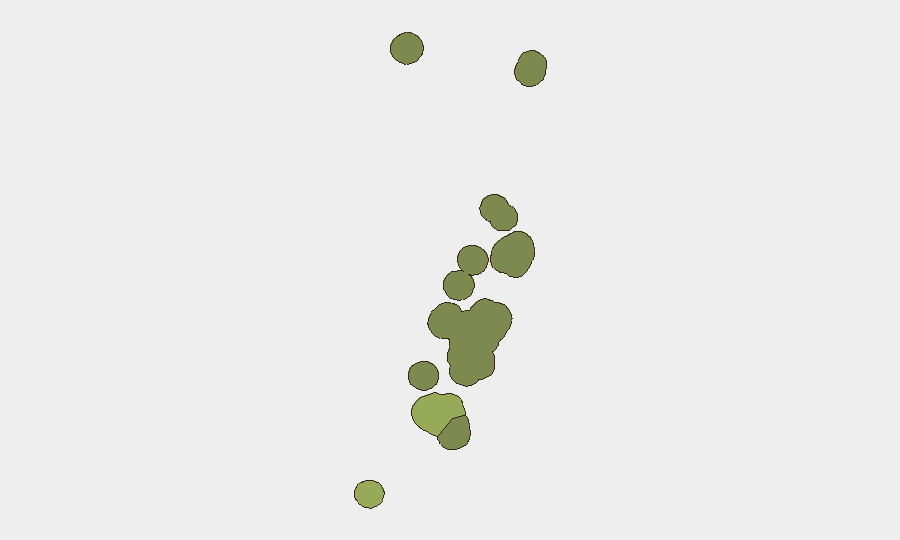
Tongatapu (composite risk 45) remains the clear concentration of concern, driven by its status as the capital territory and seat of government, population density in Nuku'alofa, and routine economic/administrative activity. Vavaʻu (risk 28) and Haʻapai (risk 22) carry secondary risk profiles, likely reflecting smaller populations, remoteness, and lower operational activity. ʻEua and Ongo Niua present minimal localized risk. None of these rankings reflect acute threats; they reflect structural exposure and operational footprint. The 18 June body discovery occurred in Tongatapu but has not escalated into wider security concern.
How GeoBit Would Assist
Organizations with personnel or assets in Tonga would benefit from persistent Area-of-Interest monitoring and early-warning alerting on Nuku'alofa and key infrastructure sites (ports, airport, utilities) to detect any escalation in crime, unrest, or civil disorder. Multi-language open-source intelligence sweeps and social-media OSINT across X, Telegram, and local news feeds would provide early detection of emerging protests, political instability, or labor action tied to policy changes (e.g., tariff increases). Routing and network analysis can support contingency planning if any future disruption to air or sea transport occurs.
7-Day Outlook
No significant security developments are anticipated in the next seven days. Routine governance, economic activity, and the ongoing naval-base investigation are expected to proceed without major incident. The electricity tariff and budget measures are unlikely to trigger organized opposition in the near term. Tonga's risk trajectory remains stable and low.
Highest-Risk Areas — Ranked
| # | State / Region | Risk |
|---|---|---|
| 1 | Tongatapu | 45 |
| 2 | Vavaʻu | 28 |
| 3 | Haʻapai | 22 |
| 4 | ʻEua | 18 |
| 5 | Ongo Niua | 12 |
Sources
Previous Daily Briefs
A new Tonga brief is written every day — each with its own risk map and downloadable CSV. Here's the last week; use the calendar to go further back.
📅 Browse every day by calendar →
Highlighted days have a brief. Tap a day for that day's map & analysis, or “csv” for that day's dataset ($5).