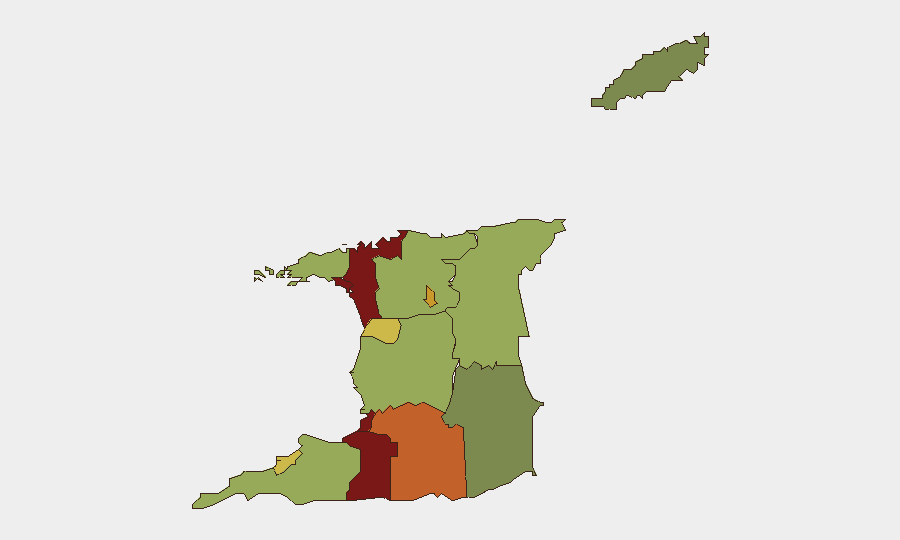
Situation Summary
Trinidad and Tobago remains a mid-tier transnational crime hub with persistent narcotics trafficking, firearm proliferation, and property crime across multiple urban centers. The expiration of a 199-day State of Emergency on 17 September marks a transition to standard policing after mass-arrest operations, introducing uncertainty around public order and enforcement tempo. Coastal interdiction successes (440 kg cocaine seizure, 14–15 September) and targeted anti-crime operations demonstrate active law-enforcement response, but gang activity, youth firearm possession, and organized crime remain structural challenges concentrated in Port of Spain, San Juan-Laventille, and southern divisions.
Key Developments
- Northern Gulf of Paria maritime seizure (14–15 September): Coast Guard intercepted 394 packages of cocaine (440.20 kg, ~TT$24.5M street value) during routine Gulf of Paria operations; confirms sustained transnational trafficking volume and indicates working maritime interdiction capability.
- Freeport anti-crime sweep (16 September): TTPS arrested seven persons, including a 15-year-old, in connection with home invasion, robbery with violence, and kidnapping in Freeport and Calcutta Settlement #2; recovered gold jewellery and mobile device, illustrating organized property crime and youth gang involvement.
- State of Emergency termination (17 September): 199-day emergency period ended after arresting 5,802 persons and charging 3,552 (61.2% rate), including 46 murder charges and 2,100+ firearm/serious-crime defendants; shift to standard policing may reduce enforcement intensity and increase civil-liberties activism.
- Southern and Northeastern Division firearm seizures (16 September): Police operations seized three firearms and six rounds of ammunition across separate incidents; one arrest made, indicating distributed armed-crime activity across police jurisdictions.
- Claxton Bay minor charged with firearm possession (15–19 September): 17-year-old from Claxton Bay charged following police investigation beginning 15 September; reflects ongoing penetration of firearms into youth populations in south-central Trinidad.
- Industrial Court caseload increase (12-month period to 14 September): 876 new labour-dispute cases filed (105 more than prior year, 115.75% clearance rate); may signal rising workplace tensions or economic friction, though not a direct security threat.
Highest-Risk Areas
San Juan-Laventille (risk 95) and Port of Spain (risk 88) dominate the threat landscape, driven by gang territoriality, firearm availability, and murder rates substantially above national average. Penal-Debe (82), San Fernando (80), and Princes Town (75) form a southern corridor of elevated risk linked to drug trafficking, organized-crime financing, and property crime. These five jurisdictions account for the majority of serious violent crime and reflect both supply-side narcotics transit and demand-side gang competition for territory and revenue; corporate and NGO presence in Port of Spain and San Fernando warrants heightened awareness.
How GeoBit Would Assist
Security teams should deploy AOI Monitoring & Early Warning against Port of Spain, San Juan-Laventille, and Freeport to detect emerging protests, gang activity, or police operations affecting staff and facilities. OSINT fusion (X/Twitter, YouTube news-program feeds, Telegram organized-crime signalling) combined with sentiment & temporal analysis would provide early signal of gang disputes, police enforcement shifts, or civil-liberties backlash following the State of Emergency lift. Network & Actor Analysis applied to trafficking organizations and criminal financing would support due-diligence and supply-chain vetting in high-risk southern divisions.
7-Day Outlook
Transition from emergency to standard policing may briefly reduce enforcement visibility but is unlikely to suppress trafficking or organized crime. Ongoing maritime interdiction and anti-crime operations suggest sustained law-enforcement focus on narcotics and armed crime. Expect continued youth firearm arrests and property-crime incidents in urban centers, with potential for civil-unrest rhetoric around detained persons from the SoE period.
Highest-Risk Areas — Ranked
| # | State / Region | Risk |
|---|---|---|
| 1 | San Juan-Laventille | 95 |
| 2 | Port of Spain | 88 |
| 3 | Penal-Debe | 82 |
| 4 | San Fernando | 80 |
| 5 | Princes Town | 75 |
| 6 | Arima | 72 |
| 7 | Chaguanas | 68 |
| 8 | Point Fortin | 65 |
| 9 | Diego Martin | 58 |
| 10 | Siparia | 55 |
| 11 | Couva-Tabaquite-Talparo | 52 |
| 12 | Sangre Grande | 48 |
Sources
Previous Weekly Briefs
A new Trinidad and Tobago brief is written every Monday, covering the week — each with its own risk map and downloadable CSV. Use the calendar to go further back.
- September 14, 2026
- September 7, 2026
- September 2, 2026
- September 1, 2026
- August 31, 2026
- August 30, 2026
- August 29, 2026
📅 Browse past briefs by calendar →
Highlighted days have a brief. Tap a day for that day's map & analysis, or “csv” for that day's dataset ($5).
Atlas — our AI intelligence desk — emails them this snapshot personally. Nothing else, no list.