Situation Summary
Turkmenistan remains a low-frequency, low-visibility security environment with no discrete incidents tracked in the current reporting window. The country ranks #176 globally on GeoBit's composite threat index (score: 4), reflecting its stable political system, limited open conflict, and restricted information environment. Risk remains geographically concentrated in the Balkan and Lebap regions in the west and north, where border proximity, energy infrastructure, and trafficking routes elevate exposure. The overall trajectory is static, with no indicators of near-term destabilization.
Key Developments
No discrete security, civil-unrest, crime, conflict, political-instability, infrastructure, or travel-risk incidents were verified in Turkmenistan during the last 24–48 hours. Web monitoring and OSINT feeds returned no substantive recent events attributed to the country.
Highest-Risk Areas
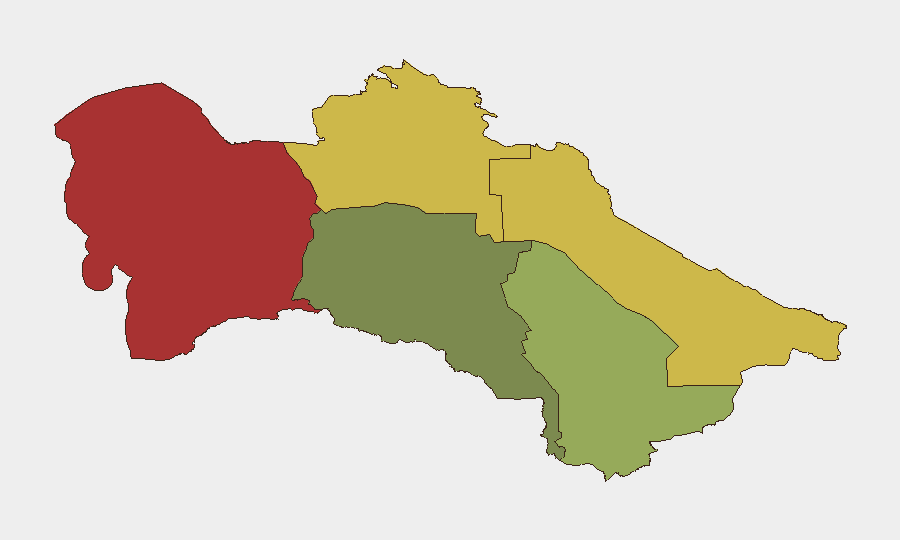
The Balkan Region (risk score 78) and Lebap Region (risk score 68) drive the country's risk profile, reflecting their location along contested and porous borders with Afghanistan, Uzbekistan, and Kazakhstan, where trafficking networks, smuggling, and cross-border security incidents carry greatest frequency. Dashoguz Region (score 62) faces similar exposure to the Uzbek border and regional transit routes. By contrast, Ashgabat City (score 18) and Ahal Region (score 35) present substantially lower discrete security risks, though all areas remain subject to Turkmenistan's opaque internal security apparatus and restricted media environment, which limits visibility into localized incidents.
How GeoBit Would Assist
A corporate security team with personnel or assets in Turkmenistan should deploy AOI (Area-of-Interest) Monitoring & Early Warning on the Balkan and Lebap regions to detect border incidents, infrastructure disruptions, or trafficking activity in near-real time. Intel Sweep and multi-language OSINT (including X/Twitter, Telegram, and local news monitoring) would surface any emerging unrest, official policy shifts, or travel restrictions affecting operations. Routing & Network Analysis capabilities would enable identification of safer transit corridors and contingency pathways in the event of localized closure or instability. Entity extraction and sentiment analysis of official statements and regional media would provide early signals of regime policy changes affecting foreign business.
7-Day Outlook
No imminent escalation is anticipated. Turkmenistan's political stability and limited cross-border conflict exposure suggest continued low event frequency over the next seven days. Monitoring should focus on routine border management, any changes to visa or travel policy, and energy-sector workforce or infrastructure announcements, as these remain the primary vectors for disruption to corporate operations. Seasonal summer conditions and ongoing regional diplomatic engagement do not point to elevated risk in the near term.
Highest-Risk Areas — Ranked
| # | State / Region | Risk |
|---|---|---|
| 1 | Balkan Region | 78 |
| 2 | Lebap Region | 68 |
| 3 | Dashoguz Region | 62 |
| 4 | Mary Region | 42 |
| 5 | Ahal Region | 35 |
| 6 | Ashgabat City | 18 |
Previous Daily Briefs
A new Turkmenistan brief is written every day — each with its own risk map and downloadable CSV. Here's the last week; use the calendar to go further back.
📅 Browse every day by calendar →
Highlighted days have a brief. Tap a day for that day's map & analysis, or “csv” for that day's dataset ($5).