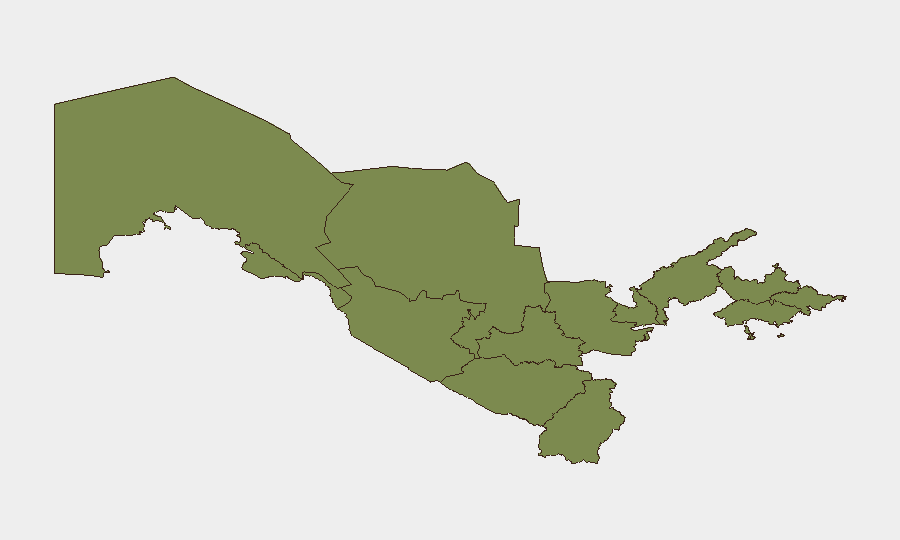
Situation Summary
Uzbekistan remains a low-threat environment with a composite national risk score of 2 (rank #197 globally) and no verified security incidents, civil unrest, or infrastructure disruptions recorded in the past 24–48 hours. Recent diplomatic tensions between Uzbekistan and Tajikistan—characterized by public statements and threat rhetoric on 2 July—reflect longstanding border disputes but have not escalated to active conflict or spillover affecting civilian populations. The security posture is stable; no terrorism, large-scale crime, or travel disruptions are currently reported.
Key Developments
- 2 July, Nationwide (Official Level): Uzbekistan's Security Council and Military issued a public statement, indicating internal coordination on a security matter; no operational details are available from open sources.
- 2 July, Tajik Border: Uzbekistan issued threat statements directed at Tajikistan (two separate threat communications recorded), reflecting continuation of long-standing border tensions. No active military mobilization, cross-border incursions, or civilian casualties reported as of 3 July.
- No discrete ground-level incidents reported in Tashkent, the Fergana Valley, Namangan Region, or other monitored areas in the past 48 hours. Routine security operations continue.
Highest-Risk Areas
Namangan Region drives the national risk profile with a composite score of 31.4—approximately 22 times the national baseline—primarily reflecting historical militant activity, informal networks, and proximity to the Tajik border. All other monitored regions (Fergana, Qashqadaryo, Surxondaryo, Karakalpakstan, and others) score uniformly at 1.4, indicating baseline, stable conditions. The concentration of risk in Namangan reflects residual factors from past extremist activity and border instability rather than current active threats; however, organizations with personnel or supply chains in the Fergana Valley region should maintain standard vigilance protocols given the area's historical sensitivity and dense population.
How GeoBit Would Assist
Security teams should deploy AOI Monitoring & Early Warning on Namangan Region and border crossing points (particularly Tajik frontier) with alerting thresholds set to detect renewed military posture, large gatherings, or rhetoric escalation. OSINT Fusion (X/Telegram, multi-language news feeds, and sentiment analysis) will track Uzbek–Tajik diplomatic communications and regional social media for signs of mobilization or de-escalation. Conflict & Military force-structure tracking and Network & Actor Analysis will provide early warning if the current diplomatic friction moves toward kinetic activity, enabling rapid internal alert and contingency activation for personnel in high-risk zones.
7-Day Outlook
Diplomatic and threat rhetoric between Uzbekistan and Tajikistan is likely to persist and fluctuate but remains below the threshold of organized military action as of early July 2026. No imminent civil unrest, terrorism, or infrastructure disruption is forecast. Organizations should maintain standard duty-of-care monitoring and communication protocols with field teams, particularly in Namangan and Fergana Valley, and flag any local reporting of unusual military movement or administrative changes for immediate escalation.
Highest-Risk Areas — Ranked
| # | State / Region | Risk |
|---|---|---|
| 1 | Namangan Region | 31.4 |
| 2 | Qashqadaryo Region | 1.4 |
| 3 | Surxondaryo Region | 1.4 |
| 4 | Fergana Region | 1.4 |
| 5 | Republic of Karakalpakstan | 1.4 |
| 6 | Xorazm Region | 1.4 |
| 7 | Navoiy Region | 1.4 |
| 8 | Bukhara Region | 1.4 |
| 9 | Jizzakh Region | 1.4 |
| 10 | Tashkent | 1.4 |
| 11 | Tashkent Region | 1.4 |
| 12 | Sirdaryo Region | 1.4 |
Sources
Previous Daily Briefs
A new Uzbekistan brief is written every day — each with its own risk map and downloadable CSV. Here's the last week; use the calendar to go further back.
📅 Browse every day by calendar →
Highlighted days have a brief. Tap a day for that day's map & analysis, or “csv” for that day's dataset ($5).
Atlas — our AI intelligence desk — emails them this snapshot personally. Nothing else, no list.