Situation Summary
Azerbaijan maintains a composite threat score of 14 globally, with security risk heavily concentrated in Baku City (31.3), which accounts for the majority of tracked incidents. Recent signals indicate elevated state activity across law enforcement (narcotics operations, detention), border dynamics (cross-border activism, mine clearance), and digital governance (expanded internet-blocking authorities). The threat environment remains manageable for most of the country outside the capital, though political detention and rights restrictions create underlying tension.
Key Developments
- Nationwide narcotics operation (c. July 19–20): Interior Ministry reported destruction of approximately 1.3 tonnes of wild cannabis and seizure of 3.5 kg of narcotic substances in a single-day operation across multiple districts. Indicates heightened rural police activity with potential for localized friction in affected zones.
- Ali Karimli detention conditions deteriorate (c. July 20–21): Opposition Popular Front Party chairman's legal representatives reported "even harsher" restrictions imposed on his detention while held on coup-related charges. Signals continued political repression with potential to trigger civil-society pressure or protest activity.
- Mine-clearance acceleration in liberated territories (July 13–19): ANAMA cleared 1,959.5 hectares and neutralized 228 mines (anti-personnel and anti-tank) in Karabakh and adjacent regions. Ongoing explosive hazard persists; infrastructure development and civilian transit in these zones remain high-risk.
- Armenian servicemen families announce border protest planning (mid-July, intent within one week): Relatives of missing Armenian personnel stated plans for demonstration at Hakari Bridge if information demands are unmet. Raises risk of cross-border civil unrest and security-force deployment at a critical Armenia–Azerbaijan transit point.
- Digital governance laws tightened (July 2026, timing unspecified): Azerbaijan enacted amendments requiring age verification and local platform presence, expanding grounds for temporary internet blocking. Increases state's legal capacity for information control during unrest, affecting news dissemination and foreign traveller communications access.
- Presidential threat to withdraw from Council of Europe Parliamentary Assembly (mid-July): President Aliyev stated Azerbaijan may exit PACE, citing perceived punishment over Karabakh and Zangezur corridor steps. Reflects escalating diplomatic tension with European institutions, likely to affect political-risk perception and advisory frameworks.
Highest-Risk Areas
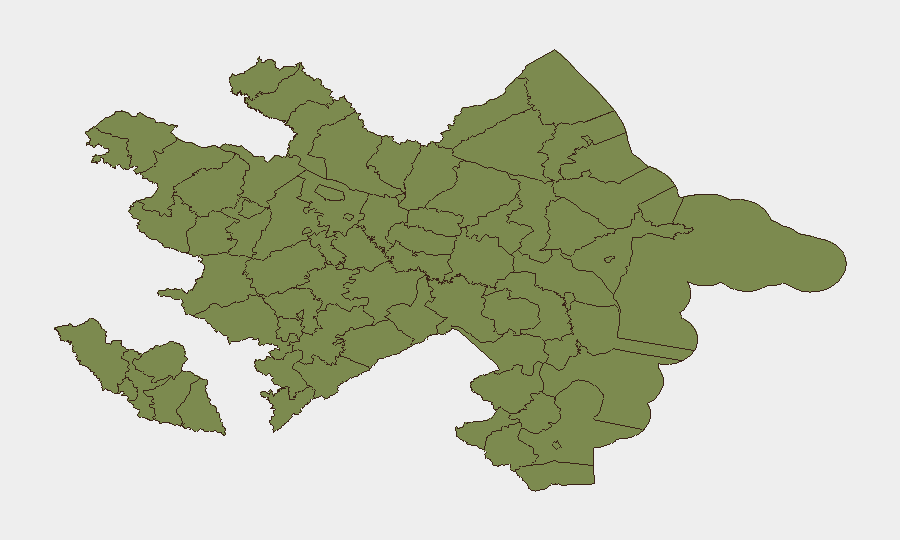
Baku City dominates the national risk profile at 31.3, driven by concentration of state activity (detention, enforcement operations, digital infrastructure control) and political tension. Secondary clusters in Ujar District (3.8) and scattered border/liberated-territory zones (Sadarak, Sharur, Tovuz, Qazakh at 1.3 each) reflect mine contamination, cross-border activism risk, and law-enforcement operations. All other urban and rural areas remain below 1.5 composite score; risk outside Baku is fragmented and localized to specific borderland and post-conflict recovery zones.
How GeoBit Would Assist
Security teams should deploy AOI Monitoring & Early Warning on Baku's political hotspots (detention facilities, protest-prone areas) and the Armenia–Azerbaijan border corridor (Hakari Bridge approach) to detect gathering activity and police deployment in real time. OSINT Fusion & Corroboration (X/Twitter, Telegram, local news) would rapidly clarify the timing and scale of announced cross-border protests and any emergency digital shutdowns. Conflict & Military tracking combined with Satellite & Imagery Analysis would provide current assessments of mine-clearance progress and hazard zones in liberated territories, enabling risk-aware routing for personnel and supply movement.
7-Day Outlook
Political and border-activism risk is likely to increase if the announced Armenian servicemen march proceeds at Hakari Bridge; security-force presence will be substantial and potential for confrontation remains elevated. Domestic enforcement intensity (narcotics, detention conditions) will persist; internet and media controls are now legally reinforced and may activate during any civil unrest. Overall threat trajectory is stable but with sustained underlying political tension and volatile border dynamics; Baku remains the primary concern for corporate personnel.
Highest-Risk Areas — Ranked
| # | State / Region | Risk |
|---|---|---|
| 1 | Baku City | 31.3 |
| 2 | Ujar District | 3.8 |
| 3 | Sadarak District | 1.3 |
| 4 | Qazakh District | 1.3 |
| 5 | Sharur District | 1.3 |
| 6 | Yevlakh District | 1.3 |
| 7 | Kangarli District | 1.3 |
| 8 | Nakhchivan Autonomous Republic | 1.3 |
| 9 | Aghstafa District | 1.3 |
| 10 | Tovuz District | 1.3 |
| 11 | Qakh District | 1.3 |
| 12 | Shaki | 1.3 |
Sources
Previous Daily Briefs
A new Azerbaijan brief is written every day — each with its own risk map and downloadable CSV. Here's the last week; use the calendar to go further back.
📅 Browse every day by calendar →
Highlighted days have a brief. Tap a day for that day's map & analysis, or “csv” for that day's dataset ($5).
Atlas — our AI intelligence desk — emails them this snapshot personally. Nothing else, no list.