Situation Summary
Belgium faces a composite threat environment dominated by cyber intrusions and diplomatic tensions, rather than acute physical security incidents. As of 24 June 2026, the country ranks #151 globally with 51 tracked threat events; Brussels-Capital accounts for approximately 65% of sub-national risk, reflecting its role as an EU and NATO hub. A large-scale Russian-linked cyberattack exploiting Fortinet infrastructure remains active, affecting critical sectors including local government, legal services, and education, while simultaneous geopolitical friction with Iran, Egypt, and Belarus generates secondary diplomatic and investigative pressure on Belgian authorities.
Key Developments
- Belgium-wide — 23 Jun 2026 — Russian-linked cyberattack exploiting Fortinet firewalls confirmed active across at least 270 Belgian organizations; stolen administrator credentials remain in use, and new system compromises reported daily. Affected sectors include local authorities, law firms, and schools. Belgian cybersecurity authority notified.
- Brussels — 23 Jun 2026 — Belgium issued five single-day, Belgium-only visas to a Taliban delegation attending an EU migration meeting in Brussels; move carries political and security sensitivities amid elevated diplomatic tensions.
- Belgium (multi-sector) — 23 Jun 2026 — Belgian authorities conducted arrests and detentions of European-origin individuals and issued demands as part of ongoing enforcement operations linked to rebel or opposition actor networks; details remain limited in open sources.
- Belgium (diplomatic) — 22 Jun 2026 — Egypt initiated a formal investigation involving Belgium; concurrent Iranian demonstration/rally activity and Belarus military threats signal overlapping geopolitical pressure on Belgian sovereignty and EU commitments.
Highest-Risk Areas
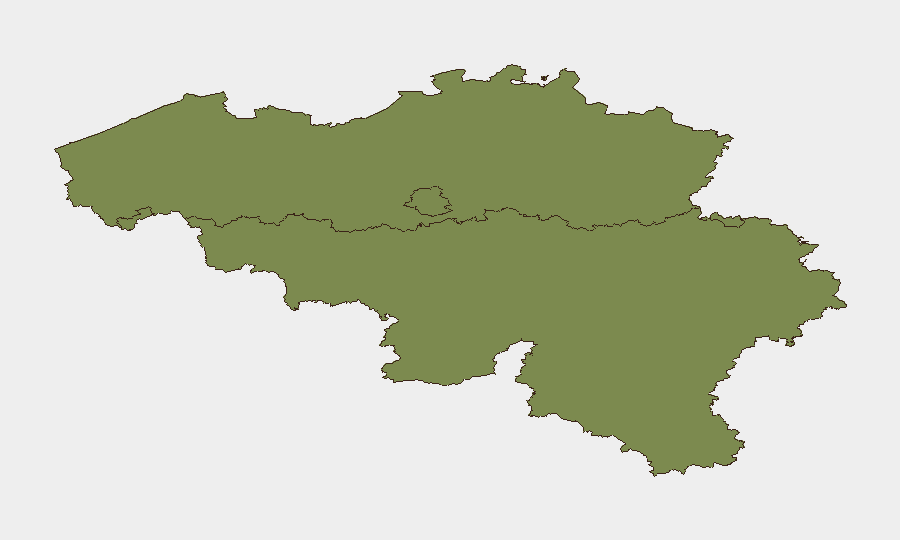
Brussels-Capital (risk score 32) dominates the threat landscape, driven by its concentration of EU institutions, NATO presence, and diplomatic missions—making it the primary target for cyber campaigns, intelligence operations, and politically motivated demonstrations. Flanders (risk 22.3) ranks second, likely reflecting industrial and port infrastructure in cities like Antwerp, plus historical activism networks. Wallonia (risk 2) remains substantially lower-risk, with minimal tracked event density. The cyber threat is geographically distributed but likely to affect Brussels-headquartered multinationals and government agencies disproportionately.
How GeoBit Would Assist
Security and risk teams operating in Belgium should use Intel Sweep and OSINT fusion to maintain real-time monitoring of evolving cyber-threat actor tactics and stolen-credential circulation across dark web and Telegram channels. Concurrent deployment of Network & Actor Analysis and persistent AOI Monitoring on Brussels diplomatic districts, port facilities, and telecom/financial hubs will provide early warning of secondary cyber operations or physical protest activity. Cyber threat intelligence linked to geopolitical event feeds will help correlate the Fortinet campaign with Iranian, Egyptian, and Belarusian state or proxy activity, supporting duty-of-care incident response and supply-chain risk assessments.
7-Day Outlook
The Fortinet exploitation campaign is expected to persist through the next 7–10 days as threat actors consolidate access within victim networks and harvest credentials; incident remediation timelines for affected SMEs and local government may extend 2–4 weeks. Diplomatic tensions involving Iran, Egypt, and Belarus are unlikely to escalate into direct kinetic action against Belgium, but secondary cyber operations, visa denials, or asset freezes may follow; corporate sanctions risk should be monitored alongside cybersecurity incident response.
Highest-Risk Areas — Ranked
| # | State / Region | Risk |
|---|---|---|
| 1 | Brussels-Capital | 32 |
| 2 | Flanders | 22.3 |
| 3 | Wallonia | 2 |
Sources
Previous Daily Briefs
A new Belgium brief is written every day — each with its own risk map and downloadable CSV. Here's the last week; use the calendar to go further back.
📅 Browse every day by calendar →
Highlighted days have a brief. Tap a day for that day's map & analysis, or “csv” for that day's dataset ($5).