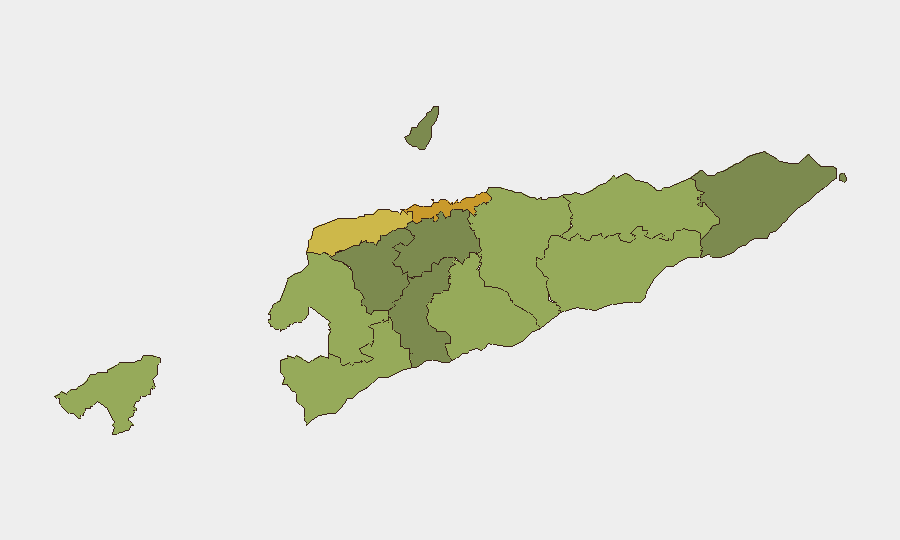
Situation Summary
East Timor remains stable with no credible reports of security incidents, civil unrest, crime spikes, or infrastructure disruption in the past 24–48 hours. Recent diplomatic activity—including ministerial meetings with South Korea, ASEAN integration votes, and police cooperation with Indonesia—reflects normal inter-governmental engagement and points to a benign security trajectory. The national composite threat score remains low at 6 globally, with zero tracked events in the current assessment window.
Key Developments
- Dili, June 29, 2026: National Parliament approved two resolutions to strengthen East Timor's integration into ASEAN, reinforcing regional diplomatic and economic alignment. No incidents or political friction reported.
- Seoul, South Korea, June 29, 2026: Foreign Minister Bendito dos Santos Freitas and Korean Foreign Minister Cho Hyun agreed to expand bilateral cooperation in climate change, infrastructure, maritime affairs, law enforcement against transnational crime, and human resource development. Reflects stable diplomatic relations.
- Indonesia, June 30, 2026: Timor-Leste's Ambassador attended the 80th Bhayangkara anniversary of the Indonesian National Police, emphasizing law-enforcement cooperation and bilateral stability.
- GBA–ASEAN Summit, late June 2026: Vice Prime Minister Francisco Kalbuadi Lay outlined plans for leveraging ASEAN–Greater Bay Area economic ties for investment and technology transfer, signaling institutional confidence and regional integration.
Highest-Risk Areas
Dili (risk 72) and Liquiçá (risk 62) remain the highest-risk districts and are the primary drivers of the national composite score. Baucau, Cova Lima, and Bobonaro follow with elevated but moderate scores (58, 55, and 53 respectively). Risk concentration in these five districts reflects historical patterns of inter-communal tension, informal settlement density, and limited state capacity in peripheral areas; however, no acute incidents have been reported in any district during the current 24–48 hour window. Lower-risk districts (Aileu, Ermera, Ainaro, Manatuto) show declining scores and remain stable.
How GeoBit Would Assist
Intel Sweep and OSINT fusion enable continuous monitoring of open-source channels (news, social media, government statements) to detect emerging unrest, protest activity, or crime trends before formal reporting. AOI Monitoring & Early Warning provides persistent, automated watch of Dili and Liquiçá with real-time alerting if indicators of communal violence, political instability, or gang activity emerge. Network & Actor Analysis and Routing & Network Analysis support duty-of-care teams in identifying safe movement corridors for personnel in high-risk districts and in understanding informal power structures that may affect site security or supply-chain continuity.
7-Day Outlook
No indicators suggest deterioration in the near term. Ongoing diplomatic engagement and ASEAN integration initiatives support stability. Security teams should maintain standard vigilance in Dili and Liquiçá while monitoring for any disruption linked to parliamentary activity, inter-district transport disputes, or informal-settlement tensions—all historically prone to seasonal escalation. The window remains low-risk barring exogenous shocks or unreported localized incidents.
Highest-Risk Areas — Ranked
| # | State / Region | Risk |
|---|---|---|
| 1 | Dili | 72 |
| 2 | Liquiçá | 62 |
| 3 | Baucau | 58 |
| 4 | Cova Lima | 55 |
| 5 | Bobonaro | 53 |
| 6 | Oecussi-Ambeno | 48 |
| 7 | Manufahi | 45 |
| 8 | Viqueque | 42 |
| 9 | Manatuto | 40 |
| 10 | Ainaro | 38 |
| 11 | Ermera | 36 |
| 12 | Aileu | 32 |
Sources
Previous Daily Briefs
A new East Timor brief is written every day — each with its own risk map and downloadable CSV. Here's the last week; use the calendar to go further back.
📅 Browse every day by calendar →
Highlighted days have a brief. Tap a day for that day's map & analysis, or “csv” for that day's dataset ($5).