Situation Summary
Eswatini remains stable with no verified security incidents, civil unrest, or acute travel disruptions reported in the last 24–48 hours. The country is ranked #135 globally (composite threat score 6) with routine crime and sporadic demonstrations as primary baseline concerns. Sub-national risk remains concentrated in the eastern and southern regions (Lubombo and Shiselweni), though no new incident activity has been detected nationwide to alter the current trajectory.
Key Developments
- Nationwide (13–14 July 2026): No new security incidents, civil unrest, or acute travel disruptions detected across open-web, social-media, and foreign-government advisory channels in the last 24–48 hours.
- Nationwide (13–14 July 2026): No verified crime spikes, protests, or politically linked violence flagged by local media or regional security reporting in the current window.
- Nationwide (10 July 2026, still current): U.S. State Department maintains Level 2 "Exercise Increased Caution" advisory for Eswatini with no recent changes to advisory level or new risk indicators; general crime and sporadic civil unrest remain baseline concerns.
- Nationwide (mid-July 2026): German Foreign Office assesses domestic political situation as currently stable with no new security incidents or alerts recorded; conditions noted as improved since January 2026 flood recovery.
- Nationwide (ongoing baseline): Routine street crime remains the primary persistent risk; no spike or organized criminal activity changes reported in the last 48 hours.
Highest-Risk Areas
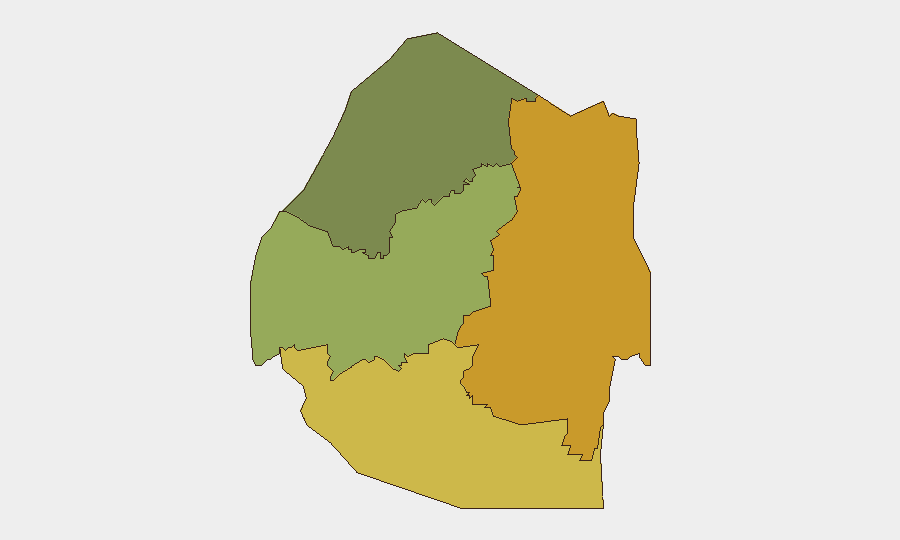
Lubombo Region (risk score 72) and Shiselweni Region (risk score 68) drive the country's sub-national risk profile, together accounting for the majority of tracked threat indicators. Manzini Region (55) represents a secondary risk zone, while Hhohho Region (35) remains the lowest-risk administrative area. Risk concentration in the eastern and southern regions reflects historical patterns of cross-border criminal activity, informal-settlement crime, and sporadic labor-related demonstrations; however, no acute incident activity has been reported in these zones within the last 24–48 hours to suggest an imminent escalation.
How GeoBit Would Assist
Security teams operating in Eswatini would prioritize AOI Monitoring & Early Warning to establish persistent watch over high-risk sub-national zones (Lubombo, Shiselweni) with automated alerting on protest activity, crime clustering, or political unrest. OSINT fusion (multi-language web search, X/Twitter & Telegram monitoring, sentiment analysis) provides real-time intelligence on emerging demonstrations or criminal activity before mainstream media confirmation. Routing & Network Analysis supports duty-of-care planning for personnel and asset movement, identifying alternative transport corridors in high-risk regions and enabling rapid rerouting if localized incidents emerge.
7-Day Outlook
No acute security drivers are evident to suggest material escalation over the next 7 days; the country's baseline risk profile (Level 2 caution) is expected to remain stable absent new political or economic shocks. Routine crime and the possibility of spontaneous demonstrations remain the principal planning assumptions for corporate operations and duty-of-care protocols.
Highest-Risk Areas — Ranked
| # | State / Region | Risk |
|---|---|---|
| 1 | Lubombo | 72 |
| 2 | Shiselweni | 68 |
| 3 | Manzini Region | 55 |
| 4 | Hhohho Region | 35 |
Sources
Previous Daily Briefs
A new Eswatini brief is written every day — each with its own risk map and downloadable CSV. Here's the last week; use the calendar to go further back.
📅 Browse every day by calendar →
Highlighted days have a brief. Tap a day for that day's map & analysis, or “csv” for that day's dataset ($5).
Atlas — our AI intelligence desk — emails them this snapshot personally. Nothing else, no list.