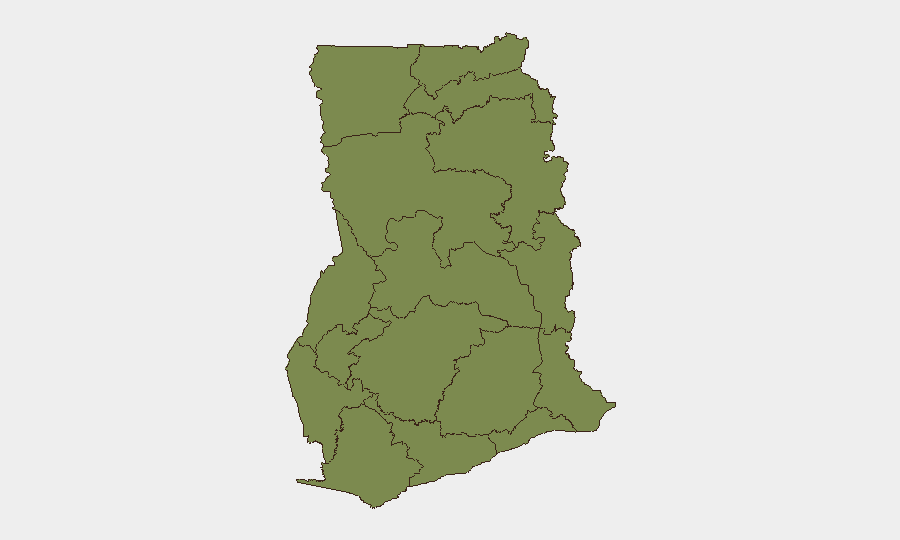
Situation Summary
Ghana remains a relatively stable West African jurisdiction (global rank #98, composite threat score 10) but faces concentrated volatility in Greater Accra Region and emerging flashpoints in resource-rich northern zones. The past 48 hours have registered multiple law-enforcement escalations, political tensions with regional actors, and isolated armed incidents outside the capital. Trajectory remains fragile rather than deteriorating, but duty-of-care risk in Greater Accra and peripheral regions warrants active monitoring.
Key Developments
- Accra, 17 July 2026: Presidential public statement regarding Nigeria signals diplomatic friction; simultaneous police arrests and parliamentary demands suggest internal political tension. Underlying cause and scope remain unclear from available reporting.
- Accra, 16 July 2026: Military-linked conventional force activity reported between army units and Accra authorities; concurrent threat signals and Securities and Exchange Commission demand indicate possible financial or governance dispute. Details limited; classification as "military" likely reflects armed-services involvement rather than active combat.
- Dome-Kwabenya, Greater Accra, 10 July 2026 (reported): Ghana Police arrested six private security guards following a shooting incident at the residence of former MP Sarah Adwoa Safo. Weapon discharge and arrest of armed civilians in capital vicinity suggests localized loss of control or escalated personal security conflict.
- Media environment, 16 July 2026: Media rights group reported arrest or detention of a journalist; concurrent public statement by Africa-region actors suggests possible press freedom or safety concern affecting reporting capacity on concurrent events.
- Nationwide, 16–17 July 2026: Multiple threat signals and demands directed at Ghana, SEC, and Parliament from identified and unidentified actors; no casualty reports but suggests coordinated or overlapping pressure campaigns.
- Regional context (11–12 July, recent pattern): Sefwi Sayerano, Western North Region, saw police shootings with at least three civilian deaths and destruction of police infrastructure; eight officers interdicted. Suggests pattern of law-enforcement escalation in resource or political tension zones outside capital.
Highest-Risk Areas
Greater Accra Region dominates the risk profile (32.9 composite score), driven by concentration of political authority, business activity, security-force presence, and recent arrests of armed actors in residential zones. Bono East Region (10.4) represents a secondary but distinct risk cluster, likely linked to resource competition or inter-community tension. All other regions score below 3.2, indicating that national risk is substantially localized; however, isolated incidents in Oti Region (Odomi), Eastern Region (Kyebi), and Western North Region (Sefwi Sayerano) involving police or armed actors suggest that peripheral zones experience sporadic high-intensity events despite low aggregate ranking.
How GeoBit Would Assist
Active AOI Monitoring & Early Warning on Greater Accra, Bono East, and flagged incident zones would provide persistent detection of security-force movements, gathering activity, or escalation before widespread reporting. Intel Sweep and OSINT fusion across X/Telegram, local news, and radio SIGINT would clarify the political and financial drivers of current military-authority tension and media detention. Network & Actor Analysis would map the "Lions of NPP" and other politically aligned security actors to support risk assessment for staff and asset exposure to vigilante or faction-linked violence.
7-Day Outlook
Political tension and police escalation are likely to remain elevated through mid-to-late July pending clarification of the SEC demand and presidential-parliamentary disputes. No evidence of imminent regime instability or organized conflict spread, but isolated armed incidents in peripheral regions may recur. Corporate teams should expect continued operational friction in Accra and heightened scrutiny of armed private security.
Highest-Risk Areas — Ranked
| # | State / Region | Risk |
|---|---|---|
| 1 | Greater Accra Region | 32.9 |
| 2 | Bono East Region | 10.4 |
| 3 | Volta Region | 3.2 |
| 4 | Central Region | 3.2 |
| 5 | Upper East Region | 2.9 |
| 6 | Upper West Region | 2.9 |
| 7 | Savannah Region | 2.9 |
| 8 | North East Region | 2.9 |
| 9 | Northern Region | 2.9 |
| 10 | Eastern Region | 2.9 |
| 11 | Oti Region | 2.9 |
| 12 | Bono Region | 2.9 |
Sources
Previous Daily Briefs
A new Ghana brief is written every day — each with its own risk map and downloadable CSV. Here's the last week; use the calendar to go further back.
📅 Browse every day by calendar →
Highlighted days have a brief. Tap a day for that day's map & analysis, or “csv” for that day's dataset ($5).
Atlas — our AI intelligence desk — emails them this snapshot personally. Nothing else, no list.