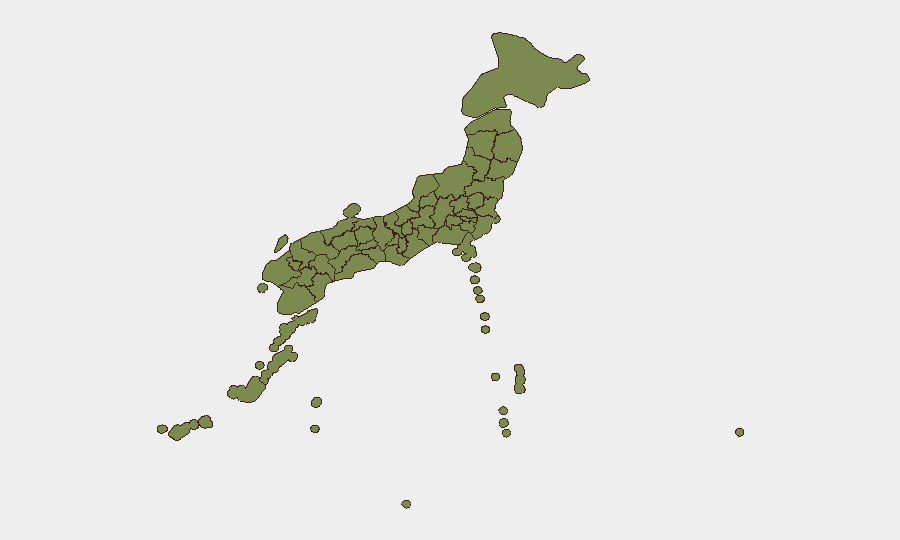
Situation Summary
Japan faces a moderately elevated composite threat environment (score 20; #null globally) driven by a sharp concentration of risk in Nagano Prefecture and secondary concerns in Tokyo and Aichi. The last 48 hours have seen a magnitude 5.5 earthquake in eastern Japan and multiple concurrent diplomatic/investigative events that signal heightened state-level scrutiny. Overall security posture remains stable, but the clustering of incidents and geographic concentration warrant heightened monitoring in high-risk prefectures.
Key Developments
- Eastern Japan / Gunma & Tokyo region, 2026-06-17: Magnitude 5.5 earthquake struck southern Ibaraki/Tokyo area, injuring two people in Gunma and temporarily halting Shinkansen and local rail services; Japan Meteorological Agency confirmed no tsunami risk.
- Japan, 2026-06-15: Presidential and New York public statements directed toward Japan; simultaneous arrest/detention action within Japan recorded by GeoBit event feed.
- Japan, 2026-06-16: Investigation initiated by Japan against a hospital entity; a separate rejection action by Japan government recorded.
- Japan, 2026-06-17: Investigation opened against a corporation by Japan; two additional rejection actions by Japanese government entities.
- Brazil vs. Japan, 2026-06-17: Territory occupation event recorded; requires clarification but signals cross-border or territorial assertion activity.
- Taiwan vs. Japan, 2026-06-15: Public statement from Taiwan directed at Japan; diplomatic tone and context not yet confirmed.
- Naval vs. Japan, 2026-06-16: Naval investigation or incident involving Japanese waters or assets.
- Domestic Japanese statement, 2026-06-17: Public statement issued between Japanese government/entity divisions.
Highest-Risk Areas
Nagano Prefecture dominates Japan's risk profile (score 30.8—nearly double the national average), reflecting either sustained incident frequency or high-severity events in that region. Tokyo (16.8) and Aichi Prefecture (11.5) carry secondary but material risk, driven by capital-region concentration and economic/infrastructure density. All other prefectures score below 4.0. The recent earthquake in Gunma and Tokyo adds tactical urgency to the Kanto region; Nagano's persistently elevated score suggests underlying structural risk factors (geological, political, or infrastructure-related) that warrant deeper investigation. Corporate and expatriate concentrations in Tokyo and major industrial zones in Aichi should prioritize local situational awareness.
How GeoBit Would Assist
Security teams should deploy AOI Monitoring & Early Warning on Nagano, Tokyo, and Aichi prefectures to capture emerging incident signals in real time. Intel Sweep and multi-language OSINT (X/Telegram, news feeds, local government statements) will provide early detection of diplomatic escalation or corporate/hospital investigations before they affect operations. GIS & Spatial Analysis combined with Satellite & Imagery analysis can assess earthquake damage progression, infrastructure repair timelines, and transportation route viability—critical for duty-of-care teams managing personnel movement or supply chains through affected zones.
7-Day Outlook
The combination of natural disaster (earthquake), diplomatic scrutiny, and investigative activity suggests Japan may experience a period of heightened government action and infrastructure disruption over the next week. The Kanto region should expect continued rail inspections and possible service delays; Nagano Prefecture warrants sustained monitoring given its disproportionate risk score. Unless major escalation occurs between state actors (Brazil, Taiwan, US), overall threat trajectory is expected to stabilize within 7–10 days as recovery and diplomatic dialogue proceed.
Highest-Risk Areas — Ranked
| # | State / Region | Risk |
|---|---|---|
| 1 | Nagano Prefecture | 30.8 |
| 2 | Tokyo | 16.8 |
| 3 | Aichi Prefecture | 11.5 |
| 4 | Kyoto Prefecture | 3.5 |
| 5 | Wakayama Prefecture | 2.5 |
| 6 | Kagoshima Prefecture | 1.8 |
| 7 | Gunma Prefecture | 1.8 |
| 8 | Hyogo Prefecture | 1.5 |
| 9 | Miyazaki Prefecture | 1.1 |
| 10 | Hokkaido Prefecture | 1.1 |
| 11 | Okinawa Prefecture | 0.8 |
| 12 | Nagasaki Prefecture | 0.8 |
Sources
Previous Daily Briefs
A new Japan brief is written every day — each with its own risk map and downloadable CSV. Here's the last week; use the calendar to go further back.
📅 Browse every day by calendar →
Highlighted days have a brief. Tap a day for that day's map & analysis, or “csv” for that day's dataset ($5).