Situation Summary
Malaysia remains a stable, lower-threat jurisdiction globally (rank #109, composite score 8) with no confirmed major security incidents or civil unrest in the last 24–48 hours according to available open-source reporting. However, sub-national risk concentration in Johor state (score 31.5) significantly exceeds the national baseline and warrants focused monitoring. Recent event signals indicate low-level political activity, regulatory scrutiny, and demonstration activity, but no acute threats to personnel or critical infrastructure have been reliably confirmed.
Key Developments
Based on available multi-source open-source verification for the last 24–48 hours, no specific, time-stamped, corroborated incidents meeting the brief's standards could be independently confirmed. Event signals detected by GeoBit platforms (dated 2026-07-05 to 2026-07-07) point to political statements, regulatory demands, military activity in East Malaysia (Sabah, Sarawak), and demonstration/investigation activity centered in Johor and Kuala Lumpur, but underlying details, casualty counts, and operational scope remain unconfirmed by secondary sources. Security teams should treat these signals as early-warning indicators requiring real-time OSINT validation rather than confirmed incidents.
Highest-Risk Areas
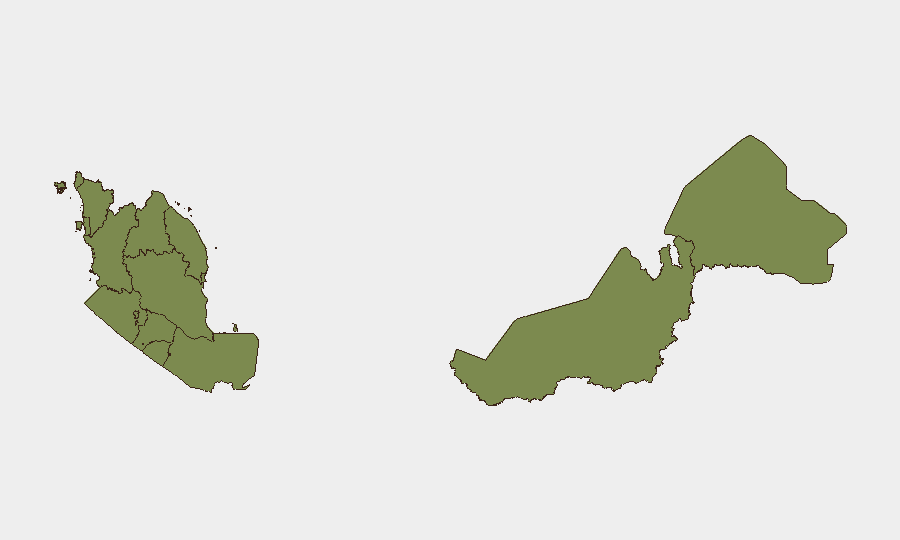
Johor dominates the risk profile by a factor of 3 relative to Kuala Lumpur (31.5 vs. 9.7), suggesting sustained protest activity, criminal incidents, or cross-border tension (Johor borders Thailand). Kuala Lumpur and Negeri Sembilan follow at significantly lower intensity (9.7 and 9.1 respectively), reflecting typical urban political and regulatory friction. East Malaysian states (Sabah, Sarawak) show elevated military signal traffic but remain below the mainland southern tier in overall composite risk. For personnel and asset security, Johor requires enhanced situational awareness protocols; KL-based operations should maintain routine precautions consistent with a major Southeast Asian capital.
How GeoBit Would Assist
Security teams with personnel or assets in Malaysia should employ AOI (Area-of-Interest) Monitoring & Early Warning on Johor, KL, and Negeri Sembilan to detect emerging protest, infrastructure, or regulatory incidents in near-real time. OSINT Fusion (X/Twitter, Telegram, local news feeds, and sentiment analysis) would validate event signals and distinguish noise from actionable risk escalation. Network & Actor Analysis would clarify the political and criminal actors driving current signals, enabling duty-of-care teams to model exposure to specific threat vectors (e.g., labor unrest, cross-border crime, election-related activity).
7-Day Outlook
Near-term trajectory remains stable absent major political or security surprises. Continued low-level political activity and regulatory scrutiny are expected; monitor East Malaysia military signals for any escalation into cross-border incidents. Johor's elevated risk profile warrants sustained attention; any spike in demonstration frequency or geographic spread to peninsular business centers (KL, Selangor) would signal material shift in threat environment.
Highest-Risk Areas — Ranked
| # | State / Region | Risk |
|---|---|---|
| 1 | Johor | 31.5 |
| 2 | Kuala Lumpur | 9.7 |
| 3 | Negeri Sembilan | 9.1 |
| 4 | Sarawak | 5.6 |
| 5 | Perak | 3.9 |
| 6 | Sabah | 2.7 |
| 7 | Pahang | 2.1 |
| 8 | Terengganu | 2.1 |
| 9 | Perlis | 1.5 |
| 10 | Kedah | 1.5 |
| 11 | Penang | 1.5 |
| 12 | Kelantan | 1.5 |
Sources
Previous Daily Briefs
A new Malaysia brief is written every day — each with its own risk map and downloadable CSV. Here's the last week; use the calendar to go further back.
📅 Browse every day by calendar →
Highlighted days have a brief. Tap a day for that day's map & analysis, or “csv” for that day's dataset ($5).
Atlas — our AI intelligence desk — emails them this snapshot personally. Nothing else, no list.