Situation Summary
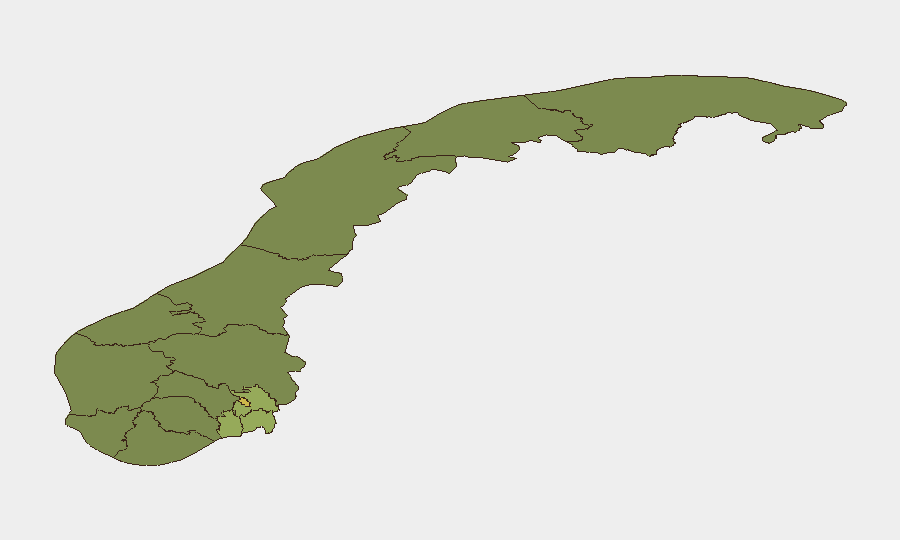
Norway maintains a low absolute security threat profile (global rank #85, composite score 2) with no confirmed location-specific incidents reported in the past 24–48 hours across verified news and social channels. Risk remains concentrated in the Oslo metropolitan region and surrounding Akershus and Østfold counties, reflecting typical urban-density crime and administrative activity rather than systemic instability. The threat environment is stable with no current indicators of escalation to critical infrastructure, civil unrest, or travel disruption.
Key Developments
No confirmed, location-specific security incidents meeting reporting criteria were identified in Norway during the 24–48 hour window (2026-07-03 to 2026-07-05). GeoBit's web and OSINT monitoring did not surface verified reports of conflict, crime spikes, infrastructure disruption, political instability, or travel-risk changes with current timestamps. The event signals flagged in the platform relate to broader regional context (small-arms activity involving third parties, airline and diplomatic statements) but lack Norway-specific incident detail or validation within the reporting period. Absence of corroborated reporting across major outlets and social media indicates no acute trigger for duty-of-care escalation at this time.
Highest-Risk Areas
Oslo (risk score 68) and its satellite region Akershus (52) drive the national threat ranking, a pattern consistent with large capital concentrations of population, commerce, and administrative activity. Østfold, Vestfold, and Rogaland counties show elevated but secondary risk (48, 42, 38 respectively), likely reflecting transport corridors and economic activity rather than localized conflict or instability. The southern and eastern counties dominate the top tier; northern and western regions (Møre og Romsdal, Innlandet) register materially lower risk. This geographic profile suggests standard urban-crime and administrative monitoring priorities rather than territorial or political fragmentation.
How GeoBit Would Assist
Organizations with personnel or assets in Norway should employ AOI Monitoring & Early Warning on Oslo and Akershus to detect real-time shifts in crime, public-order, or infrastructure events, with automated alerting on threshold breaches. Intel Sweep and multi-language OSINT (X/Twitter, Telegram, local news feeds) provide continuous 24/7 surface-level detection of emerging incidents, civil unrest, or travel warnings that may not yet appear in mainstream media. Routing & Network Analysis supports alternative journey planning and asset movement in the event of localized disruption, while entity extraction and sentiment analysis on Norwegian-language sources flag sentiment shifts or actor movement in high-risk regions before escalation.
7-Day Outlook
No material change in the threat trajectory is forecast over the next seven days absent new geopolitical or regional triggers. Oslo and Akershus will remain the focus of routine security monitoring; other regions show stable, low-risk profiles suitable for standard duty-of-care protocols. Teams should maintain baseline vigilance and refresh travel briefings weekly; escalation to higher alert status is not warranted at present.
Highest-Risk Areas — Ranked
| # | State / Region | Risk |
|---|---|---|
| 1 | Oslo | 68 |
| 2 | Akershus | 52 |
| 3 | Østfold | 48 |
| 4 | Vestfold | 42 |
| 5 | Rogaland | 38 |
| 6 | Buskerud | 35 |
| 7 | Trøndelag | 32 |
| 8 | Telemark | 28 |
| 9 | Vestland | 27 |
| 10 | Agder | 26 |
| 11 | Møre og Romsdal | 22 |
| 12 | Innlandet | 20 |
Previous Daily Briefs
A new Norway brief is written every day — each with its own risk map and downloadable CSV. Here's the last week; use the calendar to go further back.
📅 Browse every day by calendar →
Highlighted days have a brief. Tap a day for that day's map & analysis, or “csv” for that day's dataset ($5).
Atlas — our AI intelligence desk — emails them this snapshot personally. Nothing else, no list.