Situation Summary
Portugal remains in the lower-risk tier globally (composite threat score 14 across 11 tracked events), with no systemic instability or widespread violence. However, Lisbon presents a significantly elevated local risk profile (31.3 composite score), driven by recent unconventional violence, investigation activity, and rejection statements from government officials. Secondary concerns include wildfire danger across central and northern regions and isolated incidents of street violence in Porto, though the overall security environment remains stable outside Lisbon.
Key Developments
- Lisbon (2026-07-28 to -30): Unconventional violence incident reported 28 July; authorities launched investigations (29 July) and government issued rejection statement (30 July). Specific incident details remain limited, but scale and official response suggest elevated local volatility.
- Porto, Rua da Cidade de Recife/Viso (2026-07-06): Street fight involving dozens resulted in three injured from bladed-weapon attacks; three transported to hospital. While dated 6 July (outside strict 48h window), this reflects ongoing street-violence pattern in Porto district.
- Porto Temporary Installation Center (2026-07-30): PSP reported search for immigrant who escaped detention facility; operational security concern but no violence confirmed.
- Portuguese airports nationwide (2026-07-30): 360+ PSP officers deployed for border-control reinforcement to manage queues; indicates elevated staffing but routine operational posture.
- Wildfire danger (2026-07-30): Maximum or very-high wildfire alerts remain across central, northern interior, and parts of Alentejo and Algarve; police and fire resources reinforced nationwide. Travel and asset risk in affected municipalities elevated through August.
- Azores (2026-07-29): Public-statement activity between Azores entities; significance and content unclear from available reporting but flagged in event signals.
- Cross-border threat signal (2026-07-28): Citizen-sourced threat statement against Spain noted in event signals; context and credibility assessment required.
Highest-Risk Areas
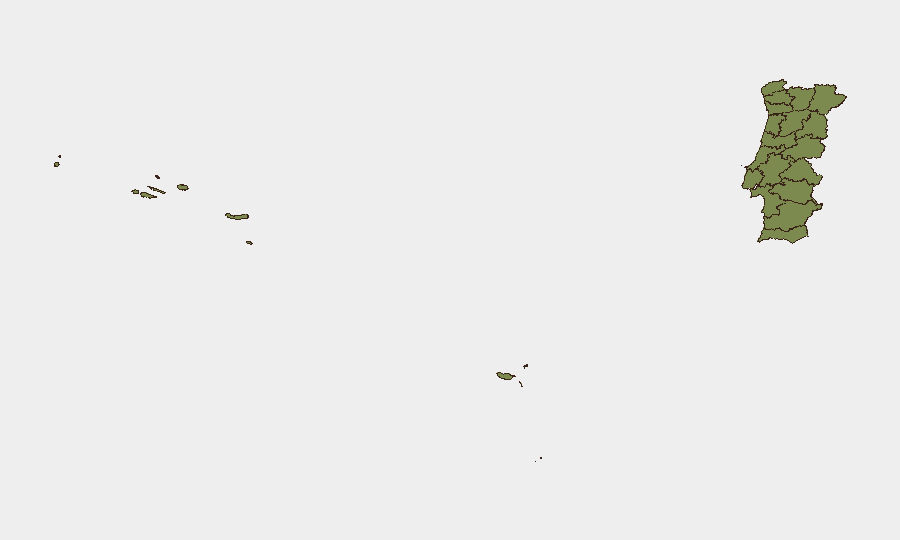
Lisbon dominates sub-national risk (31.3 vs. 2.5 for second-ranked Bragança), reflecting recent unconventional violence, investigative activity, and ministerial rejection statements concentrated in the capital. The steep risk gradient suggests a localized cluster rather than distributed instability. Bragança and Leiria carry modest secondary risk (2.5 each), while remaining regions cluster at 1.3, indicating Portugal's risk is heavily concentrated in the capital and its immediate security responses. Wildfire conditions elevate practical travel and asset security risk across central and northern regions independent of the conflict/crime metrics.
How GeoBit Would Assist
Security teams should deploy AOI Monitoring & Early Warning on Lisbon, Bragança, and Leiria to track real-time incident clusters and official responses. OSINT Fusion & Corroboration across Portuguese media, government statements, and social-signal platforms (X, Telegram) would disambiguate the unconventional-violence incident and associated investigations. Environmental & Health monitoring tools should track wildfire progression and air-quality impacts on personnel in central and northern regions, feeding into operational-continuity and travel-routing decisions.
7-Day Outlook
Lisbon's investigative posture and official statements suggest the incident remains under active assessment; escalation risk appears moderate unless evidence of organized coordination emerges. Wildfire danger is expected to persist through the near term, affecting asset accessibility and travel logistics in interior regions. No signals indicate broader national destabilization, and secondary regions remain low-risk; contingency focus should remain on Lisbon and wildfire-zone logistics.
Highest-Risk Areas — Ranked
| # | State / Region | Risk |
|---|---|---|
| 1 | Lisbon | 31.3 |
| 2 | Bragança | 2.5 |
| 3 | Leiria | 2.5 |
| 4 | Madeira | 1.3 |
| 5 | Azores | 1.3 |
| 6 | Viana do Castelo | 1.3 |
| 7 | Braga | 1.3 |
| 8 | Porto | 1.3 |
| 9 | Vila Real | 1.3 |
| 10 | Aveiro | 1.3 |
| 11 | Viseu | 1.3 |
| 12 | Guarda | 1.3 |
Sources
Previous Daily Briefs
A new Portugal brief is written every day — each with its own risk map and downloadable CSV. Here's the last week; use the calendar to go further back.
📅 Browse every day by calendar →
Highlighted days have a brief. Tap a day for that day's map & analysis, or “csv” for that day's dataset ($5).
Atlas — our AI intelligence desk — emails them this snapshot personally. Nothing else, no list.