Situation Summary
Serbia faces acute political instability following President Aleksandar Vučić's 27 June announcement of his resignation within "a couple of weeks," which has failed to satisfy opposition and student-led movements demanding his immediate departure. Mass anti-government protests are ongoing in multiple cities, particularly Kraljevo and Belgrade, with demonstrators dismissing resignation pledges as delaying tactics and raising concerns about electoral manipulation. Concurrent military movements near the Kosovo border and plans to reinstate conscription in March 2027 compound domestic political uncertainty with regional escalation risk, while international criticism of force used against protesters has intensified pressure on rule of law and media freedom.
Key Developments
- Belgrade, 27 June 2026 – President Vučić publicly announced his presidential resignation within "a couple more weeks" at a pro-government rally, signalling early elections but offering no immediate departure timeline.
- Kraljevo, central Serbia, 28 June 2026 – Thousands of anti-government protesters gathered to reject Vučić's resignation pledge, accusing him of attempting to retain power through a future prime-minister role and demanding immediate departure.
- Belgrade and Novi Sad, 27–28 June 2026 – Student-led anti-government demonstrations continued across multiple cities, with protesters calling for fair elections and immediate resignation; EU statements over the same period criticised use of force against peaceful protesters and raised rule-of-law concerns.
- Near Kosovo border, southern Serbia, reported 28 June 2026 – Commentary on social media and regional outlets flagged recent Serbian military force deployments near the border, with analysts warning these movements could escalate regional tension, particularly combined with Vučić's political rhetoric.
- National level, 27–28 June 2026 – Vučić reiterated plans to reinstate compulsory military service in March 2027, a move observers interpret as part of a broader militarisation trend amid political instability and strained Kosovo and Western relations.
- Domestic political sphere, 27–28 June 2026 – Opposition figures and protest organisers called for sustained nationwide demonstrations and international electoral monitoring, warning of potential election manipulation.
Highest-Risk Areas
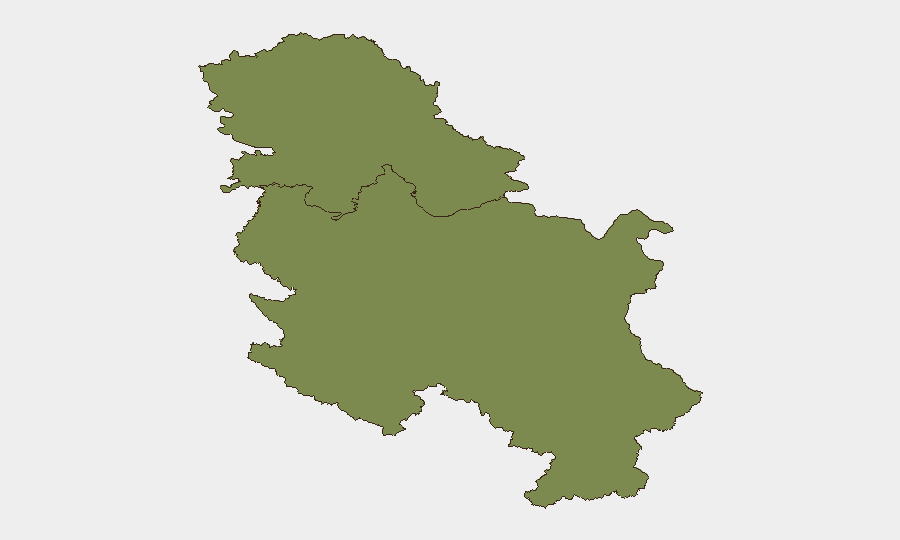
Central Serbia (composite risk 31.5) dominates the threat landscape, driven by the concentration of anti-government demonstrations in Kraljevo and Belgrade, combined with military activity near Kosovo and the capital's role as the political epicentre of the crisis. Vojvodina's significantly lower risk score (1.5) reflects its distance from the current epicentre of political upheaval and border tensions. The sharp disparity underscores that security risk in Serbia is presently concentrated in the central region, where political instability, protest activity, and military deployments coincide.
How GeoBit Would Assist
Security teams would deploy AOI Monitoring & Early Warning on Kraljevo, Belgrade, and the Kosovo border zone to track protest activity, crowd movements, and military deployments in real time with alerting. Election Monitoring and OSINT fusion (combining X/Twitter, Telegram, and regional media feeds with sentiment analysis) would provide early signals of opposition mobilisation, electoral manipulation risk, and public mood shifts. Conflict & Military capabilities—including force-structure tracking and battle-mapping—combined with GIS & Spatial Analysis would monitor military movements and regional escalation indicators near Kosovo.
7-Day Outlook
Political pressure will likely intensify as Vučić's resignation timeline remains vague and protest momentum persists; opposition calls for immediate departure and electoral monitoring suggest sustained street activity through early July. Military posturing near Kosovo and conscription announcements carry tactical escalation risk should domestic political turbulence coincide with regional flashpoints, though no armed conflict has been reported. Electoral uncertainty and potential for security-force responses to continued protests remain the primary near-term threat vectors for foreign personnel and assets.
Highest-Risk Areas — Ranked
| # | State / Region | Risk |
|---|---|---|
| 1 | Central Serbia | 31.5 |
| 2 | Vojvodina | 1.5 |
Previous Daily Briefs
A new Serbia brief is written every day — each with its own risk map and downloadable CSV. Here's the last week; use the calendar to go further back.
📅 Browse every day by calendar →
Highlighted days have a brief. Tap a day for that day's map & analysis, or “csv” for that day's dataset ($5).