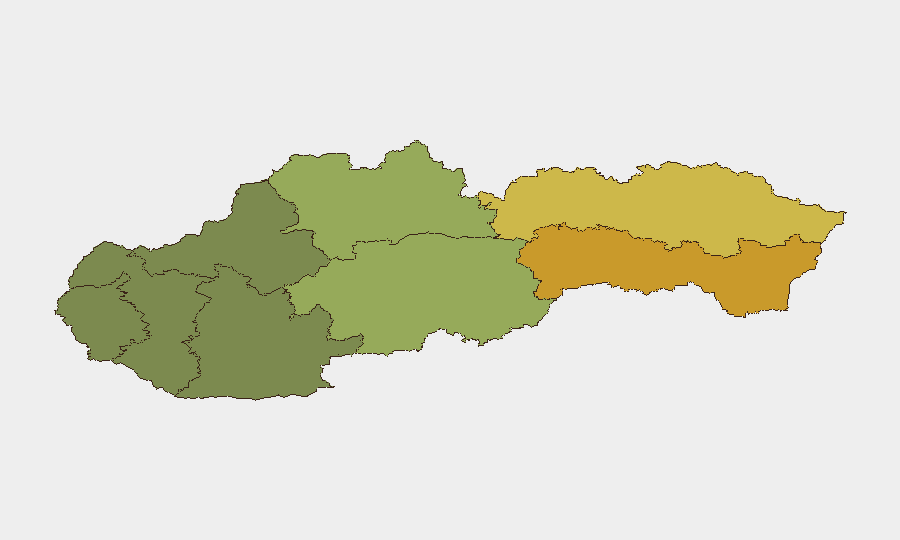
Situation Summary
Slovakia maintains a low composite threat ranking (113th globally; risk score 14) with no discrete security events currently tracked. However, a critical cyber-security vulnerability affecting national infrastructure—Russian-origin traffic cameras with built-in remote-execution backdoors—disclosed on 19 August has triggered political crisis and elevated state-level cyber and espionage risk. Eastern regions (Košice, Prešov, Banská Bystrica) remain substantially higher-risk than western areas, driven by property crime, organized trafficking, and interpersonal violence. The convergence of infrastructure compromise, visa restrictions on Russian nationals, and recent organized crime prosecutions indicates a security environment in transition from routine baseline to elevated operational sensitivity.
Key Developments
- Nationwide cyber-infrastructure breach (19 August): Slovakia's National Security Authority disclosed that NERO R-ONE high-speed traffic cameras—rebranded Russian CORDON PRO.M units deployed at Interior Ministry sites—contain backdoors executable via SMS from hard-coded Russian phone numbers, potentially exposing national traffic monitoring and critical databases to remote compromise. Interior Ministry has paused further deployment and ordered an independent audit.
- Political escalation and criminal complaint (18–19 August, Bratislava): Opposition parties renewed calls for Interior Minister Matúš Šutaj Eštok's resignation; Michal Šimečka and Peter Bátor announced preparation of a formal criminal complaint alleging Russian remote access to state facilities and unauthorized use of foreign surveillance equipment at critical infrastructure sites.
- Schengen visa restrictions on Russian nationals (by 18 August, nationwide): Slovak authorities have temporarily suspended most visa issuances for Russian citizens in direct response to the camera backdoor discovery, creating near-term travel and consular mobility impacts linked to infrastructure-security concerns.
- Armed retail burglary, Košice (incident 16 August, arrests 17 August): Two Lithuanian nationals (aged 34, 35) arrested and charged with theft and criminal damage following a drug-fueled break-in at a Košice shopping center; mobile phones stolen. Indicates organized property crime by foreign actors in commercial urban areas.
- Assault on minors investigation (incident 14 August, Csallóközkürt, Dunajská Streda district): Three minors allegedly beaten near Kürti-island; two male suspects detained and now under investigation for extortion. Case remains active with minimal additional disclosure.
- High-value fraud investigation (15 August, Bratislava–Hálkova Street): Woman defrauded of €15,200 in cash in public commercial area; suspect wanted and circulated by police. Underscores urban financial-crime targeting of individuals in street-level transactions.
- Illegal firearms trafficking operation (charges announced 15 August, nationwide): Police filed charges against two individuals and one corporate entity under Operation "Vendor" for illegal firearm possession and trafficking; one remanded in custody, reflecting law-enforcement focus on organized arms supply.
- Human-smuggling prosecution (charges updated 15 August): 30-year-old Ukrainian citizen charged with human smuggling; convictions carry 7–10 year sentences, consistent with ongoing migration and border-control crime risk.
Highest-Risk Areas
Košice (risk 72) and Prešov (risk 68) dominate the sub-national ranking, reflecting concentrations of organized property crime, trafficking networks, and interpersonal violence in eastern Slovakia's urban and transitional zones. Banská Bystrica (55) and Žilina (42) extend this eastern-corridor risk profile, while Bratislava (28), despite hosting political and financial targets, remains moderate-risk due to institutional security and urban enforcement. Western regions (Trenčín, Trnava) show significantly lower composite risk scores, indicating geography-driven variation in organized crime prevalence and cross-border trafficking pressure.
How GeoBit Would Assist
Real-time Intel Sweep and multi-language OSINT fusion would enable continuous monitoring of post-disclosure political fallout and Interior Ministry audit progress, reducing reputational and operational exposure for organizations dependent on Slovak state services. AOI Monitoring & Early Warning on Košice and Prešov would provide persistent alerting on property-crime and trafficking developments affecting corporate assets and personnel in high-risk eastern zones. Network & Actor Analysis would map linkages among Russian equipment vendors, trafficking networks, and visa-restriction policies to identify downstream legal and supply-chain risks for affected organizations.
7-Day Outlook
The Russian camera scandal will likely dominate political discourse and may trigger additional infrastructure audits across Interior and defense sectors, creating near-term operational uncertainty for government-linked contracts and compliance obligations. Eastern-region crime activity (burglary, trafficking, assault) shows no signs of abatement; organizations with personnel or assets in Košice and Prešov should maintain heightened awareness. Visa restrictions on Russian nationals may stabilize within days or weeks pending government clarification, but underlying suspicion of Russian state-linked infrastructure penetration will sustain elevated operational sensitivity through early September.
Highest-Risk Areas — Ranked
| # | State / Region | Risk |
|---|---|---|
| 1 | Region of Košice | 72 |
| 2 | Region of Prešov | 68 |
| 3 | Region of Banská Bystrica | 55 |
| 4 | Region of Žilina | 42 |
| 5 | Region of Nitra | 35 |
| 6 | Region of Bratislava | 28 |
| 7 | Region of Trenčín | 22 |
| 8 | Region of Trnava | 18 |
Sources
Previous Daily Briefs
A new Slovakia brief is written every day — each with its own risk map and downloadable CSV. Here's the last week; use the calendar to go further back.
- August 17, 2026
- August 15, 2026
- August 13, 2026
- August 11, 2026
- August 10, 2026
- August 8, 2026
- August 6, 2026
📅 Browse every day by calendar →
Highlighted days have a brief. Tap a day for that day's map & analysis, or “csv” for that day's dataset ($5).
Atlas — our AI intelligence desk — emails them this snapshot personally. Nothing else, no list.