Situation Summary
South Korea faces a moderate composite threat environment (score 14) concentrated heavily in Seoul, which carries a risk score nearly 13× higher than the second-ranked region. Recent developments include isolated military coordination incidents near the DMZ, internal political disapproval signals, and routine law enforcement activity. The overall threat trajectory remains stable but Seoul-centric, with no indication of country-wide destabilization.
Key Developments
- Cheorwon County (DMZ vicinity), 2026-07-30: South Korean military ordered resident evacuations after misidentifying a U.S. drone conducting joint exercises as an unidentified aircraft and preparing defensive action. U.S. Forces Korea confirmed the aircraft was American, and the evacuation was subsequently lifted. Risk to civilians was low but incident underscores operational friction in joint defense drills.
- Osan Air Base (south of Seoul), 2026-07-29–30: South Korean authorities ordered brief neighborhood evacuations following a reported white phosphorus leak from the U.S. military facility. Chemical hazard assessment was initiated; no casualties reported. Incident reflects chemical/environmental risk proximity to civilian populations near major U.S. installations.
- Seoul political developments, 2026-07-31–08-01: Multiple disapproval signals registered against the President, Prime Minister, Democratic Party, and broader authorities; concurrent prosecutor and police investigations noted. No violence or public disorder escalated; activity remains within normal democratic/institutional channels.
- Unification Ministry investigation, 2026-08-01: Authorities investigated defector case; no operational impact on civilian or corporate security reported.
- Administrative sanction (tourism), 2026-08-01: Minor administrative action against a tourist; routine enforcement with no broader security implications.
Highest-Risk Areas
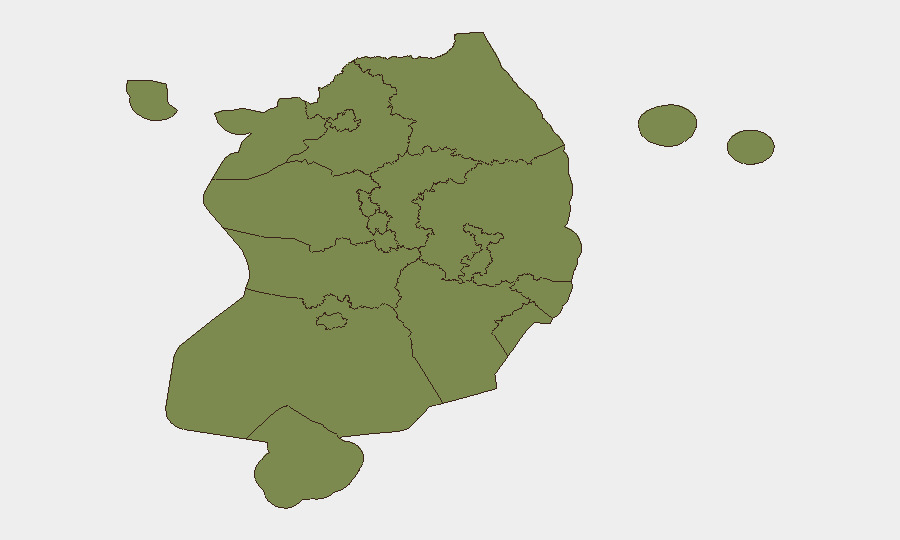
Seoul dominates the risk landscape, accounting for the vast majority of tracked threat events (composite score 31.3 vs. 2.4 for the second-ranked region, Gangwon). This concentration reflects Seoul's role as the political, economic, and media center; the city hosts presidential and parliamentary institutions, major corporate headquarters, and international diplomatic presence. Secondary regional risks (Gangwon, Gwangju, Jeolla, and Gyeongsang) remain minimal (scores 1.3–2.4), consistent with lower population density and political activity outside the capital. The gap between Seoul and all other regions suggests risk is highly localized to central government, major corporations, and diplomatic facilities rather than distributed across the country.
How GeoBit Would Assist
Intel Sweep and X/Twitter OSINT provide real-time monitoring of political and institutional developments in Seoul to detect early shifts in disapproval, protest, or policy instability before they affect operations. AOI Monitoring & Early Warning with persistent watch on DMZ-adjacent counties (Cheorwon, Paju) and major U.S. installations (Osan, Camp Humphreys) alert duty-of-care teams to evacuation orders, military exercises, or chemical/environmental hazards within hours. Routing & Network Analysis supports alternative transportation and supply-chain planning for Seoul-based teams during periods of heightened political activity or restricted airspace near bases.
7-Day Outlook
Political disapproval signals and routine investigations are expected to continue within institutional channels; no escalation to protest, strike, or public disorder is indicated. Military coordination incidents near the DMZ may recur during ongoing joint U.S.–South Korea exercises; teams near bases or evacuation zones should maintain standing communication with local authorities and base public affairs for exercise timelines.
Highest-Risk Areas — Ranked
| # | State / Region | Risk |
|---|---|---|
| 1 | Seoul | 31.3 |
| 2 | Gangwon State | 2.4 |
| 3 | Gwangju | 1.8 |
| 4 | South Jeolla | 1.5 |
| 5 | South Gyeongsang | 1.5 |
| 6 | Incheon | 1.3 |
| 7 | Gyeonggi | 1.3 |
| 8 | North Chungcheong | 1.3 |
| 9 | South Chungcheong | 1.3 |
| 10 | Jeju | 1.3 |
| 11 | Sejong | 1.3 |
| 12 | Jeonbuk State | 1.3 |
Sources
Previous Daily Briefs
A new South Korea brief is written every day — each with its own risk map and downloadable CSV. Here's the last week; use the calendar to go further back.
📅 Browse every day by calendar →
Highlighted days have a brief. Tap a day for that day's map & analysis, or “csv” for that day's dataset ($5).
Atlas — our AI intelligence desk — emails them this snapshot personally. Nothing else, no list.