Situation Summary
Tajikistan remains classified as a lower-tier global security risk (rank #131) with no verified incidents reported in the past 48 hours. The country's overall stability profile is stable in the capital and western regions, but acute risks persist in remote, high-altitude border areas and southern provinces where terrain, isolation, and historical cross-border tensions create persistent vulnerability. The absence of recent discrete events does not indicate structural risk mitigation; underlying drivers—border demarcation disputes with Uzbekistan, porous mountain frontiers, and limited state capacity in peripheral regions—remain latent.
Key Developments
- Nationwide — June 28–30, 2026 — No credible security incidents, civil unrest, infrastructure failures, border clashes, or travel disruptions were reported across open-source channels, government advisories, or regional media.
*No additional discrete developments met the 24–48 hour threshold during the monitoring window.*
Note: The absence of reported incidents does not constitute strategic all-clear. GeoBit's current event window reflects reporting lag, limited open-source coverage in peripheral regions, and the episodic (rather than continuous) nature of cross-border tensions. Duty-of-care teams should not interpret "no events reported" as zero risk.
Highest-Risk Areas
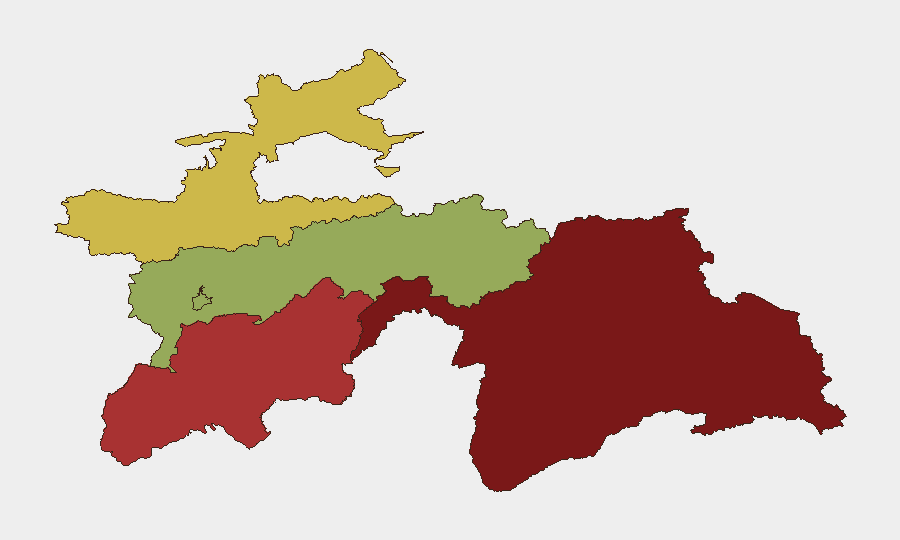
Gorno-Badakhshan Autonomous Region (GBAO; risk 92) dominates the threat landscape and commands priority monitoring. This remote, high-altitude territory hosts difficult terrain, weak state presence, porous Afghan borders, and a history of cross-border militant transit and narcotics trafficking. Khatlon Region (risk 78), in the south, faces secondary but substantial risk from Uzbekistan border tensions, criminal networks, and logistical vulnerability. Sughd Region (risk 65) in the north adds layer-three risk from Uzbek border friction and trafficking corridors. The capital Dushanbe (risk 42) and urban centers remain relatively stable, but peripheral mountain and southern provinces remain structurally fragile.
How GeoBit Would Assist
Security and duty-of-care teams should deploy Area-of-Interest (AOI) Monitoring & Early Warning on GBAO and Khatlon to detect cross-border movements, militant activity, or infrastructure disruption before they mature into incidents. Multi-language OSINT (Tajik, Russian, Dari) and Telegram/X monitoring can surface local reporting, displacement signals, or security force movements missed by English-language media. Border & Disputed-Territory Search combined with Satellite & Imagery Analysis support persistent watch on Tajik-Uzbek demarcation zones and Afghan frontier transit points. Routing & Network Analysis helps identify safe corridors and alternative logistics pathways for personnel or supply chains vulnerable to closure.
7-Day Outlook
No acute deterioration is forecast for the next seven days. However, the summer season historically correlates with increased cross-border smuggling, militant recruitment activity in peripheral regions, and occasional localized clashes along ill-demarcated Uzbek borders. Organizations with staff or assets in GBAO or Khatlon should maintain elevated awareness posture and ensure contingency communication and evacuation plans remain current.
Highest-Risk Areas — Ranked
| # | State / Region | Risk |
|---|---|---|
| 1 | Gorno-Badakhshan Autonomous Region | 92 |
| 2 | Khatlon Region | 78 |
| 3 | Sughd Region | 65 |
| 4 | Districts of Republican Subordination | 58 |
| 5 | Dushanbe | 42 |
Sources
Previous Daily Briefs
A new Tajikistan brief is written every day — each with its own risk map and downloadable CSV. Here's the last week; use the calendar to go further back.
📅 Browse every day by calendar →
Highlighted days have a brief. Tap a day for that day's map & analysis, or “csv” for that day's dataset ($5).