Situation Summary
Tunisia remains a low-to-moderate composite threat environment (global rank #138, threat score 6) with no acute security incidents reported in the last 24–48 hours. However, a nationwide state of emergency extended through December 2026 continues to enable restrictions on assembly and movement, while recent judicial actions against civil-society figures and transitional-justice advocates signal ongoing political tension. The security baseline is stable but fragile, with localized terrorism risk concentrated in the south and elevated political-risk indicators in the capital.
Key Developments
- Tunis stock exchange – 29 June 2026, morning – Technical incident temporarily suspended trading operations at the Bourse de Tunis; normal activity resumed once systems were restored. No cyber-attack or political attribution reported; primarily an operational/infrastructure disruption affecting market participants.
- Tunis courts – 26 June 2026 (reported 29 June) – Sihem Bensedrine, former president of the Truth and Dignity Commission, sentenced to 25 years in prison on charges of falsifying a transitional-justice report. International human-rights organizations labeled the prosecution legally questionable; counsel announced appeal. Heightens perception of judicial pressure on civil-society actors.
- National travel advisory update – late June 2026 – Foreign ministry reaffirmed nationwide state of emergency extension through December 2026, with standing advisories against border areas (Tunisia–Algeria, Tunisia–Libya), Kasserine governorate, and the military zone south of Remada (Tataouine). No new incident but reflects ongoing elevated baseline.
- Tunis aviation security – 22–30 June 2026 – ICAO AVSEC training course underway at regional center; institutional focus on civil aviation security standards. No reported breach or incident at Tunis–Carthage airport.
- Judicial crisis context – 18 June 2026 (referenced 29 June) – Nationwide lawyers' strike protested erosion of defense rights and judicial independence. While outside the strict 24–48h window, recent coverage underscores ongoing confrontation between executive and judiciary.
Highest-Risk Areas
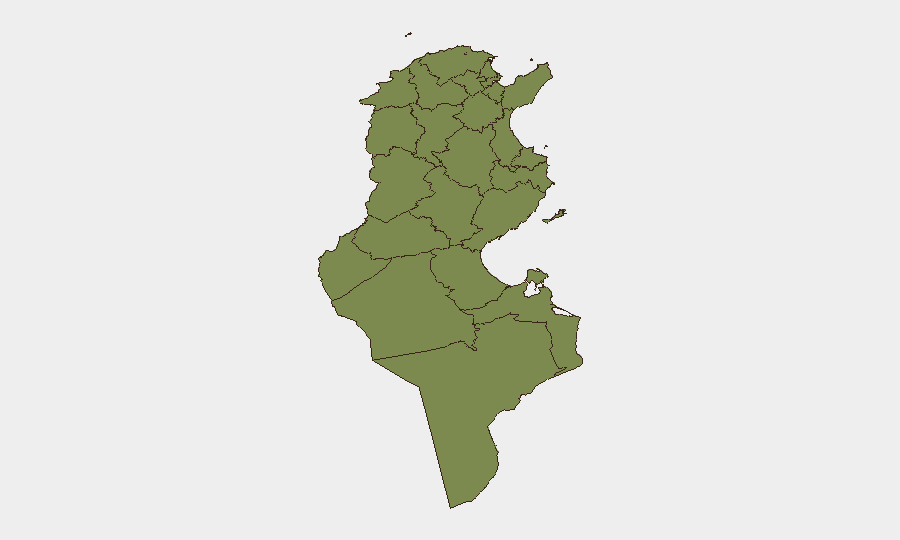
Kébili (risk score 31.8) remains the dominant outlier, driven by proximity to ungoverned or disputed border zones and persistent low-level terrorism indicators. Tunis (5.8) ranks second, reflecting both its role as the political and economic hub—where institutional and judicial tension concentrates—and its status as a transport and gatherings nexus. All remaining governorates cluster at 1.8, indicating diffuse, baseline risk. The extreme variance between Kébili and other regions suggests that southern border security and counter-terrorism operations are the primary drivers of national risk, while capital-based political risk remains contained but monitored.
How GeoBit Would Assist
A corporate security team monitoring Tunisia would deploy AOI Monitoring & Early Warning on Kébili, Tataouine, and Tunis to detect emerging protest activity, security-force movements, or cross-border activity. Intel Sweep (global event feeds, X/Telegram OSINT, multi-language search) would track judicial developments, civil-society pressure, and labor actions that signal political-risk escalation. Routing & Network Analysis would support duty-of-care teams in identifying safe alternative routes and gathering locations away from state-of-emergency restrictions and border exclusion zones.
7-Day Outlook
No imminent security escalation is forecasted for the next week. Judicial proceedings against civil-society figures will likely continue, maintaining political friction but not necessarily triggering street violence. The state of emergency remains the operative constraint on movement and assembly; organizations should assume ongoing restrictions through end of year and monitor official advisories for any border-zone or governorate-specific closures.
Highest-Risk Areas — Ranked
| # | State / Region | Risk |
|---|---|---|
| 1 | Kébili | 31.8 |
| 2 | Tunis | 5.8 |
| 3 | Tataouine | 1.8 |
| 4 | Nabeul | 1.8 |
| 5 | Monastir | 1.8 |
| 6 | Sfax | 1.8 |
| 7 | Mahdia | 1.8 |
| 8 | Médenine | 1.8 |
| 9 | Jendouba | 1.8 |
| 10 | Béja | 1.8 |
| 11 | Bizerte | 1.8 |
| 12 | Ariana | 1.8 |
Sources
Previous Daily Briefs
A new Tunisia brief is written every day — each with its own risk map and downloadable CSV. Here's the last week; use the calendar to go further back.
📅 Browse every day by calendar →
Highlighted days have a brief. Tap a day for that day's map & analysis, or “csv” for that day's dataset ($5).