Situation Summary
Turkmenistan remains in a low-acute-threat environment with no significant security incidents reported in the last 24–48 hours. The country maintains its composite threat ranking of #186 globally, with risk concentrated in peripheral regions rather than the capital. The security picture is characterized by structural governance constraints and information opacity rather than active conflict or civil unrest; baseline risks (visa restrictions, border controls, limited connectivity) persist but show no signs of acute escalation.
Key Developments
No discrete, independently verified security incidents meeting current-event criteria were identified in open-source reporting or social media monitoring over 28–30 June 2026. Recent civil-society advocacy regarding transnational repression and enforced disappearances (reported to OSCE forums ~29 June) reflects ongoing patterns rather than a specific dated event within Turkmenistan. General multilateral counter-terrorism and human-rights engagement at UN-affiliated forums (29–30 June) does not indicate country-specific incidents. X/Twitter and news monitoring returned commentary on chronic governance and media-freedom issues but no time-stamped reports of fresh arrests, protests, confrontations, or infrastructure disruptions inside Turkmenistan in the assessed window. Travel advisory and connectivity discussions in diaspora forums remain consistent with historical baseline constraints.
Highest-Risk Areas
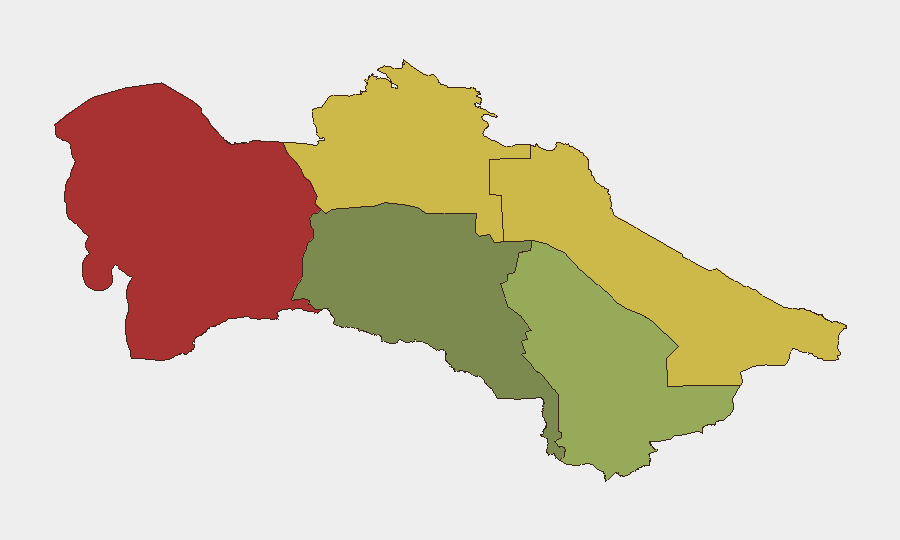
The Balkan Region (#1, composite risk 78) and Lebap Region (#2, risk 68) drive national risk, likely reflecting border proximity, limited state capacity, and historically weaker security infrastructure in the northwest. Dashoguz Region (risk 62) follows as the third-priority area, again reflecting geographic isolation and cross-border vulnerabilities. Mary, Ahal, and Ashgabat show markedly lower risk scores (42, 35, and 18 respectively), with the capital representing the most stable and monitored zone. The concentration of risk in peripheral regions suggests that corporate or operational exposure in Ashgabat faces substantially lower threat than teams or assets in the north and west.
How GeoBit Would Assist
Security teams can employ AOI Monitoring & Early Warning to maintain persistent watch on high-risk regions (Balkan, Lebap, Dashoguz) with automated alerting on discrete incidents, protests, or border activity. Multi-language OSINT and X/Twitter intelligence with sentiment and temporal analysis will capture diaspora reporting and civil-society communications that precede or follow security changes in an information-constrained environment. GIS & Spatial Analysis combined with Routing & Network Analysis enables identification of safe transit corridors and alternative journey planning around high-risk zones for personnel movement within the country.
7-Day Outlook
No indicators suggest imminent escalation of acute security threats in the next seven days; the environment is expected to remain operationally quiet at the national level. Peripheral regions will continue to warrant elevated baseline caution due to structural border and governance factors. Corporate duty-of-care protocols should remain keyed to chronic constraints (visa enforcement, connectivity gaps, financial access) rather than to expected sudden incidents.
Highest-Risk Areas — Ranked
| # | State / Region | Risk |
|---|---|---|
| 1 | Balkan Region | 78 |
| 2 | Lebap Region | 68 |
| 3 | Dashoguz Region | 62 |
| 4 | Mary Region | 42 |
| 5 | Ahal Region | 35 |
| 6 | Ashgabat City | 18 |
Sources
Previous Daily Briefs
A new Turkmenistan brief is written every day — each with its own risk map and downloadable CSV. Here's the last week; use the calendar to go further back.
📅 Browse every day by calendar →
Highlighted days have a brief. Tap a day for that day's map & analysis, or “csv” for that day's dataset ($5).