Situation Summary
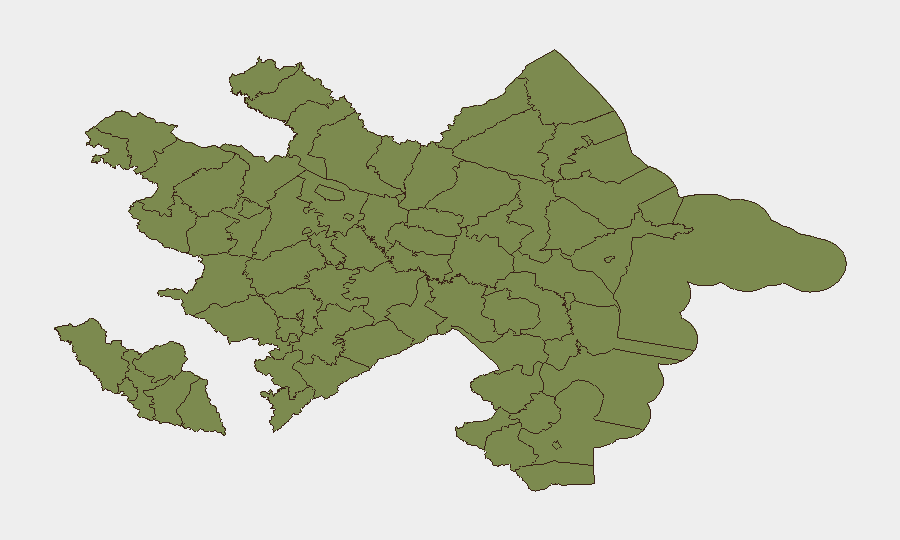
Azerbaijan remains at composite threat level 8 with geographically concentrated risk: Baku City dominates the national threat profile (risk 31.3), while most other regions score substantially lower (1.3–2.8). Recent developments reflect ongoing regional tensions involving Iranian military activity, Turkish and Russian diplomatic posturing, and international interest in the Azerbaijan–Armenia dispute, but no armed clashes, mass protests, or major infrastructure incidents have been reported within Azerbaijan's borders in the last 24–48 hours. Landmine-clearance operations in liberated post-2020-war territories continue to constrain civilian access and pose residual risk in border districts.
Key Developments
- Mine-clearance operations (Karabakh and adjacent districts; week of 13–19 July 2026): Azerbaijan's Mine Action Agency cleared 1,959.5 hectares and neutralized 200 anti-personnel mines, 28 anti-tank mines, and 630 UXO. Ongoing demining indicates persistent landmine contamination and restricted access in post-war zones.
- International military-exercise participation (Jordan; mid-July 2026): Azerbaijani special forces are engaged in counter-terrorism and special operations exercises abroad, involving drone, urban combat, and hostage-rescue scenarios. No domestic incident reported.
- Opposition detention condition deterioration (location unspecified; reported 20–24 July 2026): Advocates report harsh detention conditions for Popular Front Party chairman Ali Karimli, signaling continued political-instability pressure and human-rights concern.
- Repatriation of Azerbaijani maritime casualty (Baku; confirmed 20–24 July 2026): Body of ship captain Samad Nasrullayev, killed in a Russian drone attack off Odesa on 14 July, has been returned to Azerbaijan. Underscores ongoing exposure of Azerbaijani civilian maritime interests to Black Sea conflict spillover.
- Cross-border criminal coordination (Batumi Airport, Georgia; mid-July 2026): Azerbaijani citizen detained in connection with homicide case involving Azerbaijani victim in Tbilisi, coordinated among Azerbaijan, Georgia, and Turkish law enforcement.
- Diplomatic friction on international standing (Baku; mid-July 2026): President Aliyev stated Azerbaijan may withdraw from PACE over perceived loss of voting rights and disagreements on Karabakh and Zangezur corridor issues. Reflects broader European relations stress.
- Regional military and diplomatic signaling (various; 20–21 July 2026): Nine tracked events show Iranian conventional military activity directed at Azerbaijan, Turkish statements, Israeli-Iran military activity, and Russian statements—indicating heightened regional geopolitical tension without direct incident on Azerbaijani soil.
Highest-Risk Areas
Baku City's risk score (31.3) is approximately 11 times higher than the second-ranked district (Ujar, 2.8), reflecting the capital's concentration of government, international presence, critical infrastructure, and historical targeting. Ujar District's elevated score likely reflects proximity to the Armenia border and ongoing landmine risk; Sadarak, Qazakh, Sharur, and other northwestern districts along the Armenian and Iranian borders carry baseline 1.3 risk, primarily from mine contamination and cross-border military activity rather than active conflict. The disparity suggests that corporate personnel and assets concentrated in Baku face substantially higher composite threat exposure than those in regional cities or rural areas.
How GeoBit Would Assist
Security teams managing Azerbaijan exposure should deploy AOI Monitoring & Early Warning on Baku's critical zones and border districts to detect escalation signals in real time, coupled with Network & Actor Analysis to track diplomatic and military signaling among regional powers (Iran, Turkey, Russia, Armenia). OSINT Fusion & Corroboration across Twitter/Telegram, news, and official sources provides early warning of protest, detention policy shifts, or port/aviation disruptions affecting expatriate operations. GIS & Spatial Analysis supports route planning around demined versus contaminated territories for personnel or supply movement in border regions.
7-Day Outlook
Regional diplomatic and military signaling is likely to persist, reflecting broader Azerbaijan–Armenia–Iran–Turkey geopolitical friction, but no imminent armed escalation inside Azerbaijan is currently indicated. Baku will remain the focal point of security concern; border districts will require attention to mine-clearance progress and cross-border military activity. Monitoring of opposition detention and PACE withdrawal rhetoric is warranted for political-instability trend assessment.
Highest-Risk Areas — Ranked
| # | State / Region | Risk |
|---|---|---|
| 1 | Baku City | 31.3 |
| 2 | Ujar District | 2.8 |
| 3 | Sadarak District | 1.3 |
| 4 | Qazakh District | 1.3 |
| 5 | Sharur District | 1.3 |
| 6 | Yevlakh District | 1.3 |
| 7 | Kangarli District | 1.3 |
| 8 | Nakhchivan Autonomous Republic | 1.3 |
| 9 | Aghstafa District | 1.3 |
| 10 | Tovuz District | 1.3 |
| 11 | Qakh District | 1.3 |
| 12 | Shaki | 1.3 |
Sources
Previous Daily Briefs
A new Azerbaijan brief is written every day — each with its own risk map and downloadable CSV. Here's the last week; use the calendar to go further back.
📅 Browse every day by calendar →
Highlighted days have a brief. Tap a day for that day's map & analysis, or “csv” for that day's dataset ($5).
Atlas — our AI intelligence desk — emails them this snapshot personally. Nothing else, no list.