Situation Summary
Belgium remains a low-to-moderate threat environment (global rank #135, composite score 6/100) with no major security incidents reported in the past 24–48 hours. The threat landscape is geographically concentrated: Brussels-Capital accounts for the majority of tracked risk, while Flanders presents moderate concern and Wallonia remains comparatively stable. The country's cyber-resilience posture is strong, though Belgium remains exposed to routine disinformation campaigns and state-linked cyber activity typical of EU member-states.
Key Developments
No acute security, conflict, civil-unrest, crime, or travel-risk incidents were confirmed in open sources for Belgium during 24–25 June 2026. Web research across Belgian, European, and international outlets identified no multi-source-confirmed events fitting security-brief criteria for the reporting window.
The following routine development occurred outside the acute-incident threshold:
- Donauwörth / Belgium – 24 June 2026 – Airbus delivered the first H145M helicopter to Belgium as part of NATO-mediated defence modernization for armed forces and Federal Police. This is a capability enhancement, not a security incident.
Historical context (not current developments): Belgium's 2025 crime data showed a shift toward cybercrime (635 incidents handled by the national cyber-response centre) and away from burglary. Belgian intelligence services have expanded use of hacking and telephone interception as authorized surveillance methods, noted in annual oversight reporting. Pro-Russian hacktivist groups have conducted periodic DDoS campaigns against Belgian government and business targets throughout 2025–early 2026, but no specific new attack has been reported in the last 48 hours.
Highest-Risk Areas
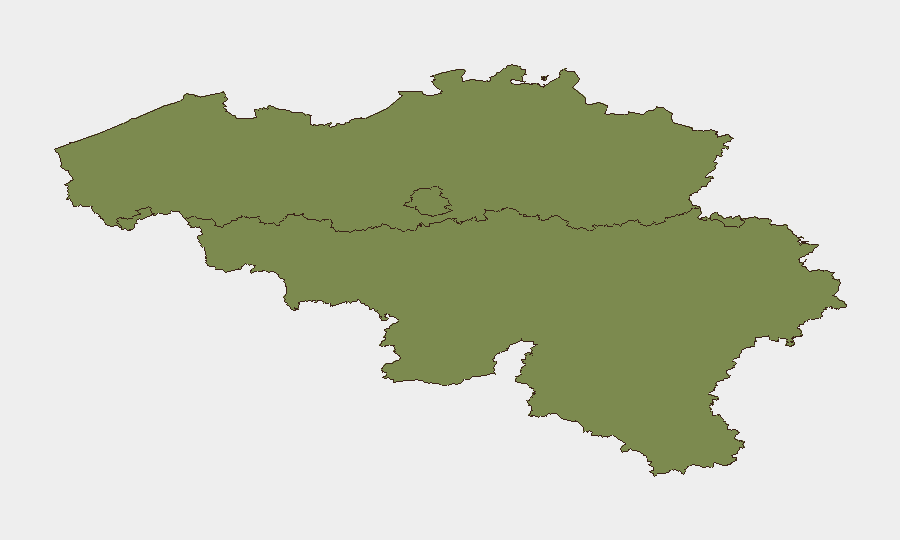
Brussels-Capital (risk score 32) dominates Belgium's threat profile by a substantial margin, reflecting its status as the EU capital, NATO headquarters, and a major international logistics hub. This concentration of high-value targets, diplomatic presence, and trans-national activity drives elevated exposure to terrorism, espionage, protest activity, and cyber operations. Flanders (risk 26.4) presents secondary concern, primarily driven by port activity (Antwerp), dense logistics networks, and routine cross-border flows. Wallonia (risk 2) shows minimal tracked risk and does not materially affect national security posture. Corporate security and duty-of-care teams should weight Brussels as the primary focus for operational planning, while maintaining baseline monitoring of Flanders infrastructure and transit routes.
How GeoBit Would Assist
Security teams protecting people or assets in Belgium should employ AOI (Area-of-Interest) Monitoring & Early Warning with persistent watch on Brussels-Capital and major Flanders infrastructure nodes (ports, transport hubs, government facilities) to detect emerging protest, protest-adjacent activity, or security incidents in near-real-time. Intel Sweep, multi-language OSINT, and X/Twitter + Telegram monitoring provide continuous signal ingestion across Belgian, French, Dutch, and English-language channels to identify threats before they mature. Network & Actor Analysis and Sentiment Analysis help distinguish routine political discourse from credible mobilization, reducing false-alarm noise while preserving early-warning sensitivity.
7-Day Outlook
No significant escalation in Belgium's threat environment is forecast for the coming week. Routine cyber-disinformation activity and minor protest cycles are expected to continue at baseline levels. Security teams should maintain standard vigilance for Brussels events (EU policy announcements, NATO meetings) that may trigger short-lived activist response, particularly in the capital's central districts.
Highest-Risk Areas — Ranked
| # | State / Region | Risk |
|---|---|---|
| 1 | Brussels-Capital | 32 |
| 2 | Flanders | 26.4 |
| 3 | Wallonia | 2 |
Sources
Previous Daily Briefs
A new Belgium brief is written every day — each with its own risk map and downloadable CSV. Here's the last week; use the calendar to go further back.
📅 Browse every day by calendar →
Highlighted days have a brief. Tap a day for that day's map & analysis, or “csv” for that day's dataset ($5).