Situation Summary
Chile maintains a composite threat score of 2.7 globally (rank #103), reflecting a relatively stable security environment compared to regional peers. No confirmed security incidents—civil unrest, violence, infrastructure disruption, or organized crime activity—were detected in Chile during the 24–48 hours preceding 27 June 2026 via open-source monitoring and cross-referenced reporting. The security posture remains steady, though Coquimbo Region presents an outlier risk profile warranting targeted attention.
Key Developments
No verifiable location-specific security or civil-unrest incidents were identified in Chile within the last 24–48 hours from open web sources, social media (X/Twitter), regional travel advisories, or corroborated incident feeds. Chile's recent open-source coverage focuses on diplomatic and foreign-policy statements rather than domestic security events. Current monitoring indicates no protests, riots, terror attacks, politically motivated violence, or major infrastructure disruption during this window.
Highest-Risk Areas
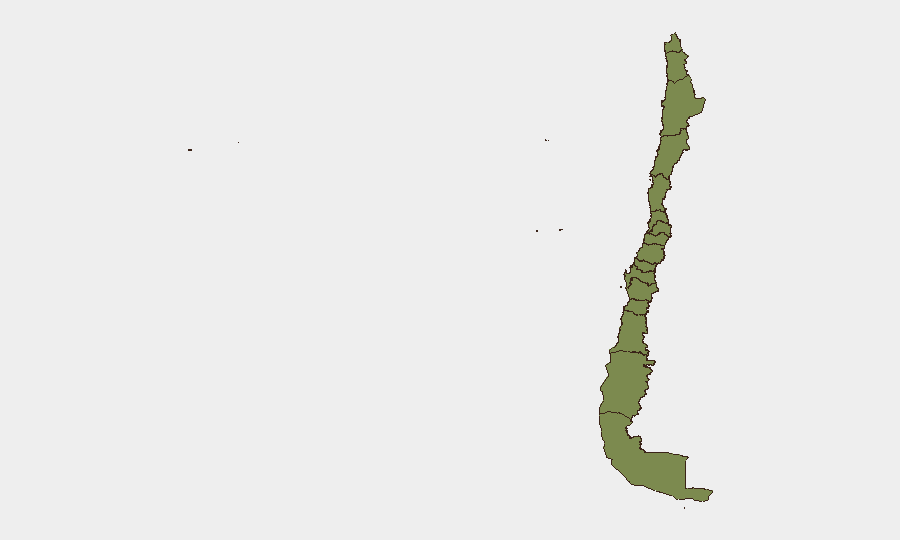
Coquimbo Region dominates the sub-national risk ranking with a composite score of 31.9—nearly seven times higher than Santiago Metropolitan Region (4.8) and 16 times the baseline risk of remaining regions. This concentration warrants investigation into underlying drivers: historical patterns may include organized crime activity, gang violence, or resource-competition dynamics that distinguish Coquimbo from the rest of the country. Santiago Metropolitan Region remains the secondary concern at 4.8, reflecting the density and visibility of the capital and its surrounding areas. All other regions cluster at 1.9, suggesting relatively uniform baseline risk outside these two zones.
How GeoBit Would Assist
Teams with personnel or assets in Chile—particularly in Coquimbo and Santiago—would benefit from AOI (Area-of-Interest) Monitoring & Early Warning to establish persistent watch on high-risk zones with automated alerting for incident emergence. Intel Sweep, X/Twitter & Telegram OSINT, and OSINT fusion capabilities provide continuous multi-language, multi-source monitoring to detect civil unrest, protest activity, or organized-crime signals before escalation. Risk & Threat Assessment and Network & Actor Analysis would support deeper investigation of Coquimbo's elevated risk profile to identify specific threat actors, criminal networks, or conflict drivers affecting duty-of-care planning.
7-Day Outlook
No imminent security events are signaled in open-source reporting or early-warning feeds for the coming week. Coquimbo Region's persistent elevated risk warrants sustained monitoring, though the lack of recent incident clustering suggests the threat remains chronic rather than acute. Standard vigilance protocols remain appropriate across Chile; escalation would likely manifest first in social media and transport hubs before broader civil unrest.
Highest-Risk Areas — Ranked
| # | State / Region | Risk |
|---|---|---|
| 1 | Coquimbo Region | 31.9 |
| 2 | Santiago Metropolitan Region | 4.8 |
| 3 | Valparaiso Region | 1.9 |
| 4 | Antofagasta Region | 1.9 |
| 5 | Atacama Region | 1.9 |
| 6 | Aysen del General Carlos Ibanez del Campo Region | 1.9 |
| 7 | Los Lagos Region | 1.9 |
| 8 | Magallanes and Chilean Antarctica Region | 1.9 |
| 9 | O'Higgins Region | 1.9 |
| 10 | Maule Region | 1.9 |
| 11 | Nuble Region | 1.9 |
| 12 | Biobio Region | 1.9 |
Sources
Previous Daily Briefs
A new Chile brief is written every day — each with its own risk map and downloadable CSV. Here's the last week; use the calendar to go further back.
📅 Browse every day by calendar →
Highlighted days have a brief. Tap a day for that day's map & analysis, or “csv” for that day's dataset ($5).