Situation Summary
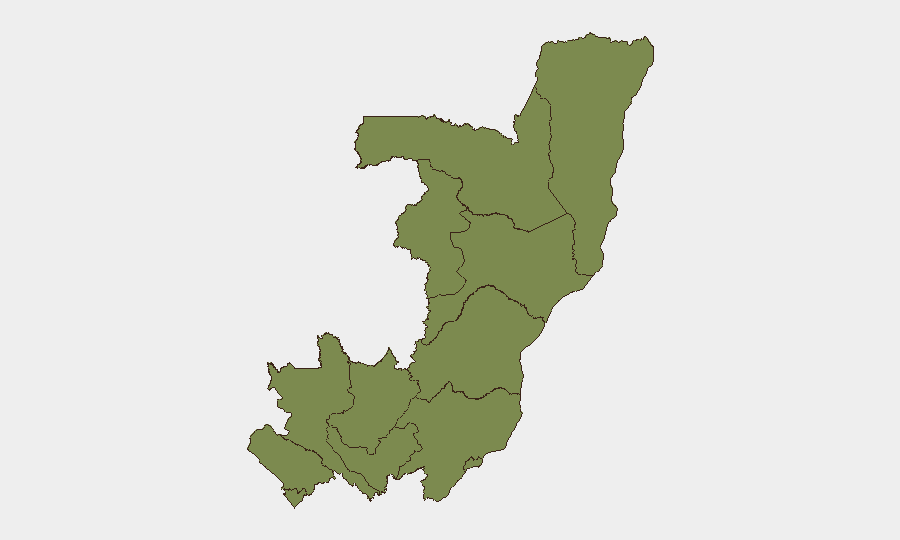
Congo remains a moderate composite threat (rank #32 globally, score 72) with acute risk concentrated in two northwestern departments: Cuvette-Ouest and Lékoumou, both scoring 31.4 and significantly outpacing all other regions. The broader security environment is shaped by ongoing instability in the Democratic Republic of the Congo (DRC)—a neighboring state with which Congo shares porous borders—including Ebola circulation, M23-linked armed conflict, and humanitarian disruption. Open-source intelligence for Congo itself over the last 24–48 hours is sparse; however, the persistence of high sub-national risk scores and recent cross-border event signals suggest sustained tension and potential population movements tied to DRC instability.
Key Developments
Open-source confirmation of discrete, dated events in Congo for 2026-07-02 through 2026-07-04 is limited. GeoBit tracking has flagged:
- 2026-07-02 · Demonstrations in Kinshasa (DRC). Cross-border proximity and related crowd activity may influence sentiment and mobility near Congo's eastern border regions, particularly Pool Department and Brazzaville.
- 2026-07-03 · Public statement (Congo). Nature and issuing authority unconfirmed in available rapid-access open sources; warranting monitoring for policy or security-posture shifts.
- Ongoing Ebola outbreak (DRC and Uganda). U.S. CDC confirmed active response as of 21 June 2026 with entry restrictions in force for 30 days. Risk of cross-border transmission and population displacement remains elevated in border areas, particularly Sangha, Likouala, and Cuvette departments.
- Ongoing conflict and humanitarian crisis (eastern DRC). M23-linked violence, armed-group activity, and mass civilian displacement continue to drive secondary displacement pressures and resource strain in neighboring regions of Congo; no discrete incident dated within 24–48 h confirmed in open sources.
Note: The sparsity of time-stamped, multi-source incident reports from Congo's interior and remote departments (Cuvette-Ouest, Lékoumou) reflects both limited open-source coverage and genuine reporting gaps in those regions rather than absence of risk.
Highest-Risk Areas
Cuvette-Ouest and Lékoumou departments drive the national threat profile, each scoring 31.4—more than 20 times higher than all other regions. Both are remote, forested, and economically marginal, with limited state presence and high susceptibility to transnational activity, including armed-group transit, resource trafficking, and health-crisis spillover from the DRC. The remaining ten departments cluster at 1.4, indicating either lower intrinsic risk or significantly better reporting/monitoring coverage. Pool Department and Brazzaville merit secondary attention given proximity to DRC unrest and demonstration activity; however, the capital and major transport hub show lower composite scores, suggesting operational state capacity and international presence provide some stabilization.
How GeoBit Would Assist
Security teams should deploy AOI Monitoring & Early Warning on Cuvette-Ouest, Lékoumou, and Pool Department to detect cross-border population movement, armed-group activity, or disease signals before they escalate. Intel Sweep, multi-language OSINT fusion, and X/Telegram OSINT focused on remote areas and regional NGO channels will improve real-time situational awareness where commercial news coverage is minimal. Conflict & Military mapping and Network & Actor Analysis can clarify M23 and other armed-group positions on the DRC side to assess spillover risk to Congo's border zones.
7-Day Outlook
Risk trajectory remains stable to slightly elevated. Ebola outbreak persistence and DRC armed-conflict continuation will sustain cross-border displacement and supply-chain disruption through the week. No imminent national security transition is evident; however, demonstration activity in Kinshasa warrants close watch for contagion effects. Operational security posture for personnel and assets in Cuvette-Ouest, Lékoumou, and eastern border regions should remain heightened.
Highest-Risk Areas — Ranked
| # | State / Region | Risk |
|---|---|---|
| 1 | Cuvette-Ouest Department | 31.4 |
| 2 | Lékoumou Department | 31.4 |
| 3 | Sangha | 1.4 |
| 4 | Likouala | 1.4 |
| 5 | Cuvette Department | 1.4 |
| 6 | Kouilou Department | 1.4 |
| 7 | Niari Department | 1.4 |
| 8 | Pointe-Noire (département) | 1.4 |
| 9 | Bouenza Department | 1.4 |
| 10 | Plateaux Department | 1.4 |
| 11 | Pool Department | 1.4 |
| 12 | Brazzaville (department) | 1.4 |
Sources
Previous Daily Briefs
A new Congo brief is written every day — each with its own risk map and downloadable CSV. Here's the last week; use the calendar to go further back.
📅 Browse every day by calendar →
Highlighted days have a brief. Tap a day for that day's map & analysis, or “csv” for that day's dataset ($5).
Atlas — our AI intelligence desk — emails them this snapshot personally. Nothing else, no list.