Situation Summary
Cuba faces escalating civil unrest and critical infrastructure failure following a third nationwide power grid collapse on 13 July 2026. Protests have erupted across multiple provinces—most intensely in Havana—with residents demanding regime change and basic goods. State security forces are responding with arrests, targeted internet blackouts, and visible surveillance of protest participants. The combination of sustained blackouts (35–87 hours in key regions), economic scarcity, and political tension creates a volatile environment with significant risk to corporate operations and personnel.
Key Developments
- Nationwide power grid failure (13 July 2026): Unit 6 of Nuevitas thermoelectric plant (Camagüey Province) went offline, leaving only 935–1,000 MW available against demand of ~3,100 MW. This triggered the third nationwide outage of 2026 and cascading blackouts across all provinces.
- Multi-neighborhood protests, Havana (night of 13 July 2026): Residents in Guanabacoa, Jaimanitas, Central Havana, Arroyo Arenas, and Alamar took to streets during extended blackouts, chanting anti-government slogans and demanding an end to shortages. Cuban authorities responded with arrests and localized internet shutdowns.
- Escalating clashes, Santa Fe/Playa, Havana (10–13 July 2026): Nightly protests in Santa Fe escalated into physical confrontations between locals and riot police. Undercover officers documented and identified participants, signaling sustained state surveillance and arrest operations.
- Extended regional blackouts ongoing: Matanzas (87 consecutive hours), Granma (72 hours), and Havana (up to 35 hours daily) remain without electricity as of 14 July, directly fueling protest activity and humanitarian strain.
- Consular and travel disruptions (current): Canadian airlines suspended Cuba service; public transport and taxis remain disrupted; fuel, medicine, food, and water shortages persist. Multiple governments advise against non-essential travel.
- Heightened protest frequency baseline (June–July 2026): Cuban Conflict Observatory recorded 107 street protests nationwide in June, 82 in Havana alone. Current wave described as "most sustained since July 11, 2021," indicating structural political instability.
- Government signaling escalation (14 July 2026): Recent event signals include military force considerations (CUBA vs RUSSIA), reduced diplomatic relations (GOVERNMENT, HAVANA vs CUBAN), and unconventional violence by border guard units—suggesting state actors are prepared for wider confrontation.
Highest-Risk Areas
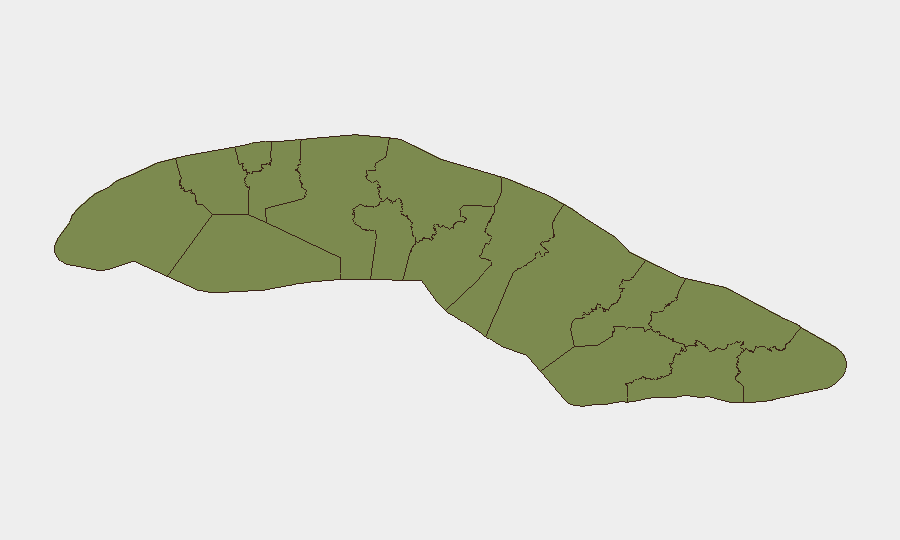
Sancti Spiritus (risk 33.7) ranks as the single highest-risk province, though Havana (26.1) is the operational epicenter for personnel and asset exposure. Santiago de Cuba (13.2) presents elevated secondary risk. The Havana concentration reflects both the scale of current unrest and the presence of most international corporate operations; Sancti Spiritus's ranking likely reflects infrastructure fragility and protest intensity relative to population. Regional blackouts correlate directly with protest activity, amplifying risk where outages are longest (Matanzas, Granma, central Havana neighborhoods).
How GeoBit Would Assist
Security teams should use AOI Monitoring & Early Warning with persistent watch on Havana neighborhoods (Guanabacoa, Playa, Central Havana) and Sancti Spiritus to detect protest escalation and police operations in real time. Intel Sweep (X/Twitter, Telegram OSINT, news feeds, multi-language search) provides early detection of blackout expansion and state-security force deployments. Risk & Threat Assessment linked to infrastructure status (thermoelectric plant outages, grid failures) allows predictive modeling of protest triggers and travel disruption windows.
7-Day Outlook
Protests are likely to persist and potentially intensify if grid repairs extend beyond 48–72 hours or further blackouts occur. State repression (arrests, internet blackouts, police deployment) will remain visible in Havana and other urban centers. Travel and supply-chain delays should be expected; personnel should avoid protest-active neighborhoods and maintain low visibility. Communications reliability will remain unpredictable in protest zones.
Highest-Risk Areas — Ranked
| # | State / Region | Risk |
|---|---|---|
| 1 | Sancti Spiritus | 33.7 |
| 2 | Havana | 26.1 |
| 3 | Santiago de Cuba | 13.2 |
| 4 | Mayabeque | 10 |
| 5 | Artemisa | 6.9 |
| 6 | Camagüey | 6.6 |
| 7 | Matanzas | 6 |
| 8 | Isle of Youth | 4.3 |
| 9 | Las Tunas | 4.1 |
| 10 | Pinar del Rio | 3.7 |
| 11 | Cienfuegos | 3.7 |
| 12 | Villa Clara | 3.7 |
Sources
Previous Daily Briefs
A new Cuba brief is written every day — each with its own risk map and downloadable CSV. Here's the last week; use the calendar to go further back.
📅 Browse every day by calendar →
Highlighted days have a brief. Tap a day for that day's map & analysis, or “csv” for that day's dataset ($5).
Atlas — our AI intelligence desk — emails them this snapshot personally. Nothing else, no list.