Situation Summary
Guinea-Bissau remains a low-threat environment globally (rank #96, composite score 10) with no discrete security incidents reported in the last 24–48 hours. However, a military court ruling today ordering the detention of opposition leader Domingos Simões Pereira—pending trial for alleged involvement in a October 2025 coup attempt—introduces acute political tension centered on regime stability and potential opposition response. No corroborated protests, clashes, or civil unrest have yet materialized, but the development warrants close monitoring of Bissau and surrounding areas for secondary political mobilization.
Key Developments
- Bissau Autonomous Sector, 10 July 2026: Military court ordered re-imprisonment of Domingos Simões Pereira, main opposition leader, revoking earlier release while he awaits trial over alleged financing of an attempted coup in October 2025. Potential flashpoint for opposition mobilization and political friction with state institutions.
- No other corroborated security, crime, civil-unrest, or infrastructure incidents reported in Guinea-Bissau in the last 24–48 hours across indexed web, social-media, and X/Twitter sources.
Highest-Risk Areas
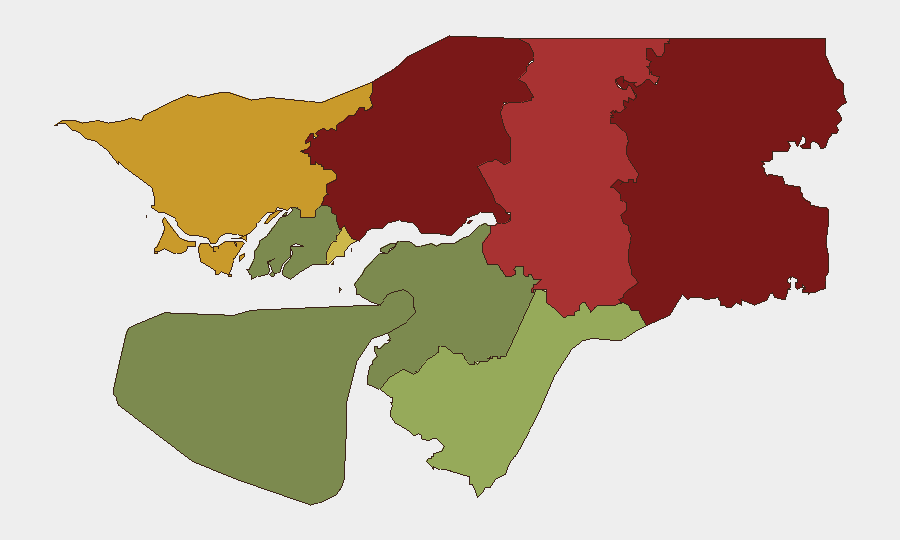
Gabu Region (risk 92) remains the highest-risk administrative division, followed by Oio (85) and Bafatá (78) in the east and north. These inland regions consistently exceed national averages; drivers likely include cross-border smuggling networks with Senegal, weak state presence, and historical tension associated with separatist or criminal activity. Bissau Autonomous Sector (risk 68), home to national government institutions and today's political development, ranks fifth but warrants elevated monitoring given its role as the nexus of regime-stability decisions and opposition organizing. Southern and island regions (Tombali, Quinara, Bolama) remain substantially lower-risk.
How GeoBit Would Assist
Security teams should deploy AOI (Area-of-Interest) Monitoring & Early Warning on Bissau, Gabu, and Oio regions to detect nascent protests, demonstrations, or security-force mobilization in response to the court ruling. OSINT Fusion & Corroboration (X/Twitter, Telegram, local-language web, sentiment analysis) will track opposition rhetoric and coalition-building signals in real time. Regime-Stability Search & Network Actor Analysis can map elite factions, military-court patronage, and opposition leadership networks to anticipate secondary institutional or street-level reactions over the coming week.
7-Day Outlook
The opposition's organizational response to Pereira's re-detention will likely emerge within 3–5 days; low-threshold protests or public statements are probable but major civil unrest remains contingent on broader political escalation or visible state repression. The absence of corroborated incidents in the last 48 hours does not preclude rapid volatility if Pereira's supporters mobilize or if rival government factions exploit the court ruling for internal leverage. Continued monitoring of military, judicial, and opposition communications is warranted through the week.
Highest-Risk Areas — Ranked
| # | State / Region | Risk |
|---|---|---|
| 1 | Gabu Region | 92 |
| 2 | Oio Region | 85 |
| 3 | Bafatá Region | 78 |
| 4 | Cacheu Region | 72 |
| 5 | Bissau Autonomous Sector | 68 |
| 6 | Tombali Region | 45 |
| 7 | Quinara Region | 38 |
| 8 | Biombo Region | 32 |
| 9 | Bolama Region | 15 |
Sources
Previous Daily Briefs
A new Guinea-Bissau brief is written every day — each with its own risk map and downloadable CSV. Here's the last week; use the calendar to go further back.
📅 Browse every day by calendar →
Highlighted days have a brief. Tap a day for that day's map & analysis, or “csv” for that day's dataset ($5).
Atlas — our AI intelligence desk — emails them this snapshot personally. Nothing else, no list.