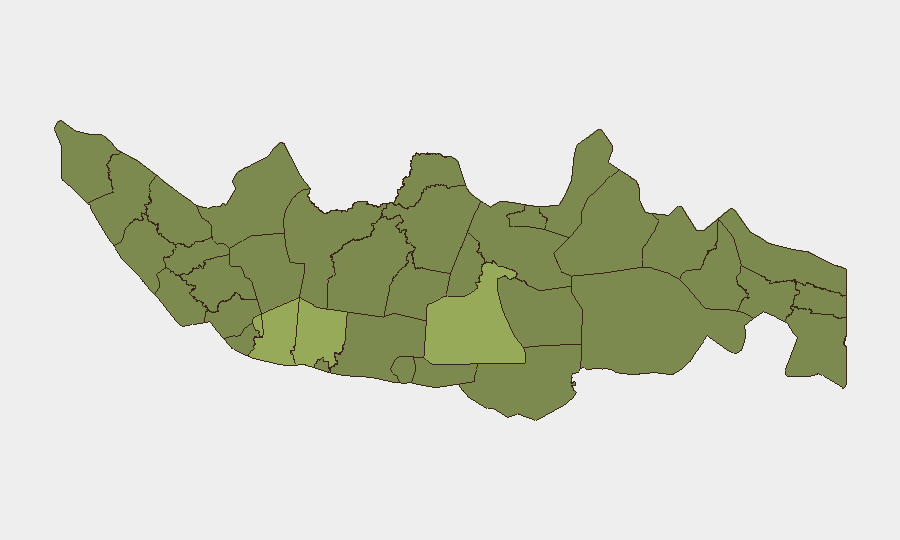
Situation Summary
Indonesia remains a composite mid-range security risk (#55 globally) with 593 tracked events in the monitoring period. The national threat score of 32 reflects persistent but manageable risks across civil unrest, criminal activity, and administrative instability. Recent event signals (22–23 June) indicate scattered civil demonstrations, investigative actions by state prosecutors, and isolated confrontations, with no indication of coordinated nationwide destabilization. The security environment remains localized and reactive rather than systemic.
Key Developments
GeoBit's event feed shows the following signal clusters from 22–23 June; however, ground-truth confirmation of specific incidents and their precise locations and timing is not available from open sources in the current research window:
- 22 June · Jakarta (arrest/detain event): Doctor detained in connection with unspecified incident in the capital; state prosecutor investigation underway. Details and underlying cause not yet clarified.
- 22 June · Administrative/civil domain: Multiple public statements from Indonesian government administration and medical professionals suggest official response to an ongoing matter; civilian public statement also recorded on 23 June, indicating possible civil concern or grievance.
- 22 June · Village-level threat signal: Unspecified threat activity reported at village level; no casualty or operational impact confirmed.
- 22 June · Student/civilian domain: Disapproval action and civilian demonstration/rally events recorded, suggesting youth or student mobilization; geographic specificity and underlying cause not yet established.
- 22–23 June · International involvement: Swedish public statement and civilian complaint (vs. Indonesia) suggest possible consular, human rights, or bilateral concern; no active diplomatic rupture indicated.
- 21 June · Pilgrimage-related event: Public statement from pilgrimage actor(s); context remains unclear but may relate to Hajj season logistics or religious observance.
Note: These signals reflect GeoBit event taxonomy flags and do not constitute verified, independently corroborated incident reports with confirmed casualty, damage, or operational impact data.
Highest-Risk Areas
Jakarta (52.5) dominates the risk landscape, driven by administrative concentration, protest activity, and law enforcement intensity. Central Java (45.6) and South Sulawesi (44.7) show elevated composite scores, likely reflecting civil unrest, administrative tensions, and socio-economic grievances in densely populated regions. West Java (41.4) rounds out the critical tier. These four provinces account for the preponderance of tracked events and represent the primary operational exposure zones for corporate and diplomatic presence. Secondary risk clusters in Bangka-Belitung (33.5) and East Java (31.6) warrant monitoring, particularly for extractive and maritime operations. Bali, despite tourism prominence, ranks mid-tier (24.3), reflecting tourism-related crime and petty civil disorder rather than political instability.
How GeoBit Would Assist
Security teams would prioritize AOI (Area-of-Interest) Monitoring & Early Warning on Jakarta, Central Java, and South Sulawesi to track protest escalation and administrative action in real time. Multi-language OSINT fusion (X/Twitter, Telegram, local media feeds) and entity/actor network analysis would disambiguate the motivations and scale of the 22–23 June demonstrations and investigative actions. Routing & Network Analysis would enable alternative journey planning for personnel transiting high-risk provinces, while sentiment analysis of social media would provide 48–72 hour early warning of civil mobilization before ground escalation.
7-Day Outlook
No indicators suggest a shift toward coordinated national unrest or security sector instability in the next seven days. Localized civil demonstrations and administrative investigations are expected to persist at current intensity. Regional risk variation will likely remain stable; however, continued monitoring of Jakarta and Central Java is essential to detect any clustering or widening of protest activity.
Highest-Risk Areas — Ranked
| # | State / Region | Risk |
|---|---|---|
| 1 | Special capital Region of Jakarta | 52.5 |
| 2 | Central Java | 45.6 |
| 3 | South Sulawesi | 44.7 |
| 4 | West Java | 41.4 |
| 5 | Bangka-Belitung Islands | 33.5 |
| 6 | East Java | 31.6 |
| 7 | North Sumatra | 26.3 |
| 8 | Banten | 24.7 |
| 9 | Riau | 24.3 |
| 10 | West Kalimantan | 24.3 |
| 11 | Bali | 24.3 |
| 12 | East Nusa Tenggara | 24 |
Sources
Previous Daily Briefs
A new Indonesia brief is written every day — each with its own risk map and downloadable CSV. Here's the last week; use the calendar to go further back.
📅 Browse every day by calendar →
Highlighted days have a brief. Tap a day for that day's map & analysis, or “csv” for that day's dataset ($5).