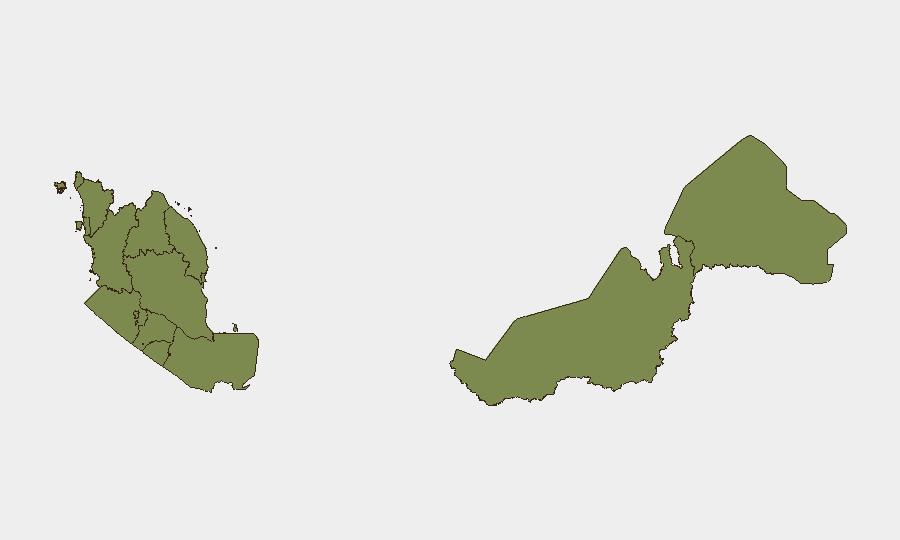
Situation Summary
Malaysia remains at composite threat level #109 globally (score 8) with 159 tracked events, characterized by a localized but acute cyber-infrastructure disruption and isolated violent crime, rather than systemic civil unrest or political instability. The security environment is elevated in cyber domains following recent ransomware and infrastructure attacks, while physical security risks remain geographically concentrated in Johor (risk 31.9) and Kuala Lumpur (risk 9.1). No major nationwide protests, terror incidents, or cross-border spillover have been confirmed in the last 24–48 hours, but parliamentary and policy activity around cyber-legislation signals heightened institutional risk awareness.
Key Developments
- Banting, Selangor – 6 July 2026: A 15-year-old student was stabbed multiple times by a peer at a secondary school in Kuala Langat district; victim sustained a left-lung injury and is in stable condition; suspect detained. Incident formally confirmed by Selangor Education Department and district police, indicating isolated but serious on-campus violent crime in a major urban state.
- Selangor statewide & 64 municipal councils nationwide – cyberattack ongoing as of 7–9 July: A massive cyberattack against the Selangor Intelligent Parking (SIP) platform forced an emergency shutdown of digital parking-payment systems across Selangor and other states; motorists temporarily unable to pay parking fees; municipal revenue collection halted. Confirmed by Selangor local government chairman Ng Suee Lim as a significant infrastructure/cyber-security disruption with continuing restoration efforts.
- National cyber-risk posture (last 24–48 hours): Recent Malaysian security assessments confirm no new major domestic civil unrest, crime surges, or physical infrastructure disruption in the latest reporting window; cyber-threat environment remains elevated and acute following coordinated breaches, but physical-security incidents remain non-systemic.
- Malaysia–Thailand border vigilance maintained: Cross-border security cooperation reaffirmed with Thailand to prevent spillover from southern Thai insurgency; no new domestic attacks inside Malaysian territory in the last 24–48 hours, though border districts remain under heightened watch.
- Cybercrime Bill 2026 parliamentary tabling (governance signal, early July): Malaysia has introduced the Cybercrime Bill 2026 to replace the Computer Crimes Act 1997, addressing ransomware, AI misuse, and digital-identity offences. Legislative activity reflects institutional response to recent cyberattacks and signals evolving regulatory environment for corporate cyber-resilience and due-care obligations.
Highest-Risk Areas
Johor dominates sub-national risk (score 31.9), reflecting ongoing organized-crime activity, cross-border smuggling networks, and gang-related violence that have persisted throughout the first half of 2026. Kuala Lumpur (9.1) follows significantly lower, driven by routine political investigation, governance friction, and cyber-infrastructure exposure as Malaysia's capital and financial hub. Negeri Sembilan (7.4) and Sarawak (5.7) show secondary elevation, likely reflecting scattered investigative activity and resource-extraction tensions. All other states remain below 5.0, indicating manageable localized risk with no acute systemic threat.
How GeoBit Would Assist
Corporate security teams should deploy AOI Monitoring & Early Warning on Johor, Kuala Lumpur, and Selangor to track emerging crime, cyber-incident signals, and political activity in real time. Intel Sweep, OSINT fusion, and multi-language search across local news, government, and social platforms would provide corroborated early warning of infrastructure breaches, labor unrest, or investigative pressure targeting specific assets or supply chains. Network & Actor Analysis combined with entity extraction on municipal and law-enforcement communications would surface indicators of emerging threats to operations, personnel, or digital systems before escalation.
7-Day Outlook
The cyber-infrastructure disruption is expected to persist through system restoration and forensic investigation; corporate systems handling payments, logistics, or municipal interfaces should assume degraded service availability. Physical security risks remain localized and non-systemic; heightened vigilance in Johor (smuggling/organized crime) and Selangor (school violence precedent) is warranted. Parliamentary cyber-legislation activity will likely drive regulatory tightening and may impose new reporting or compliance burdens on corporate entities managing critical digital services.
Highest-Risk Areas — Ranked
| # | State / Region | Risk |
|---|---|---|
| 1 | Johor | 31.9 |
| 2 | Kuala Lumpur | 9.1 |
| 3 | Negeri Sembilan | 7.4 |
| 4 | Sarawak | 5.7 |
| 5 | Perak | 4 |
| 6 | Pahang | 3.6 |
| 7 | Kelantan | 3.2 |
| 8 | Penang | 2.7 |
| 9 | Sabah | 2.7 |
| 10 | Terengganu | 2.3 |
| 11 | Perlis | 1.9 |
| 12 | Kedah | 1.9 |
Sources
Previous Daily Briefs
A new Malaysia brief is written every day — each with its own risk map and downloadable CSV. Here's the last week; use the calendar to go further back.
📅 Browse every day by calendar →
Highlighted days have a brief. Tap a day for that day's map & analysis, or “csv” for that day's dataset ($5).
Atlas — our AI intelligence desk — emails them this snapshot personally. Nothing else, no list.