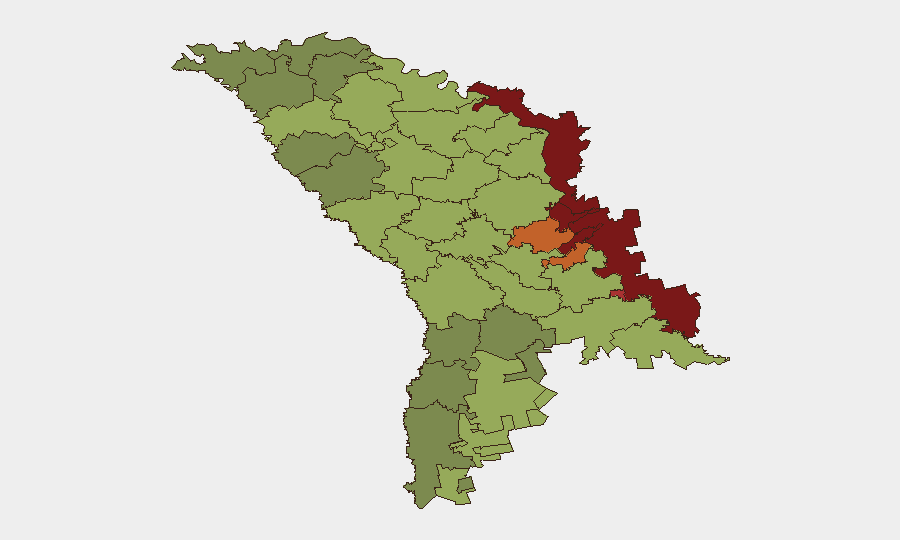
Situation Summary
Moldova continues to experience recurring airspace violations and drone/missile impacts as a secondary effect of Russia's wider campaign against Ukraine, with six unauthorized flights and multiple explosions recorded in the past week alone. The pattern reflects Moldova's geography as a transit corridor for Russian strikes on Ukrainian targets rather than direct military focus on Moldovan territory, but civilian risk remains material. Transnistria's frozen-conflict status and the country's weak air-defense capacity sustain baseline instability, while diplomatic protest and investigation activity indicate Chişinău is attempting to manage the cumulative reputational and safety costs.
Key Developments
- Chişinău, Eugen Doga International Airport – October 2: A bomb threat forced evacuation of passengers and staff, suspension of check-in, and deployment of border police and specialist response units; flight schedules were disrupted.
- Moldovan national airspace (six districts) – October 3: Six unauthorized aircraft crossed Moldovan airspace during a Russian strike on Ukraine; five aircraft (three missiles, two drones) subsequently impacted or exploded near Hîncești, Anenii Noi, Căușeni, and Ștefan Vodă districts. No casualties initially reported; explosive-ordnance teams secured impact sites in Crocmaz, Delacău, Puhăceni, Bozieni, Dubău, Constantinovca, and other settlements.
- Chişinău – October 3: Moldova's government summoned Russia's ambassador and lodged a formal protest citing civilian safety risks and property damage from the airspace violations.
- Hîrbovăț, Anenii Noi District – September 30: A drone crossed Moldovan airspace and exploded near the village; area was cordoned off with no casualties reported.
- Moldovan airspace – September 30: Three unauthorized drone flights recorded; two drones impacted on Moldovan territory during Russian operations against Ukraine.
- Eastern districts and Transnistrian region – October 1: A parliamentary reintegration commission convened to review Chişinău–Tiraspol contacts, human-rights conditions, and Romanian-language school operations in the region.
Highest-Risk Areas
The left-bank Dniester region and Russian-controlled Transnistria (Administrative-Territorial Units of the Left Bank, Dubăsari, Bender) dominate the sub-national ranking, reflecting unresolved conflict, Russian military presence, and governance fragmentation. Contiguous border districts (Criuleni, Rezina, Căușeni, Ștefan Vodă, Soroca) register elevated risk due to proximity to both Transnistria and the active Ukraine conflict zone, making them corridors for military traffic and collateral-damage exposure. Chişinău itself (rank 12, risk 49) remains stable by comparison but faces aviation-sector disruption and drone-impact risk; the October 2 airport threat exemplifies dual-use civilian vulnerability.
How GeoBit Would Assist
Security teams monitoring Moldova would benefit from AOI Monitoring & Early Warning to track persistent airspace violations and explosion sites in real time, OSINT fusion and multi-language search to correlate Moldovan, Russian, and Ukrainian reporting on cross-border incidents, and GIS & spatial analysis to map impact zones, assess proximity to corporate facilities, and model casualty/debris-field risk by district. Aviation tracking and satellite & imagery analysis would provide primary-source confirmation of airspace intrusions and impact locations independent of official announcements.
7-Day Outlook
Airspace violations are expected to continue at current frequency (2–6 weekly incursions) as Russian operations against Ukraine remain active; October typically sees sustained campaign intensity. Diplomatic friction will likely remain contained to formal protests, with no indication of Moldovan military response or escalation. Corporate and NGO operations in northern and eastern districts should anticipate ongoing disruption to transport and communications during Russian strike windows, particularly overnight hours.
Highest-Risk Areas — Ranked
| # | State / Region | Risk |
|---|---|---|
| 1 | Administrative-Territorial Units of the Left Bank of the Dniester | 85 |
| 2 | Dubăsari | 82 |
| 3 | Bender | 79 |
| 4 | Criuleni | 75 |
| 5 | Rezina | 58 |
| 6 | Taraclia | 55 |
| 7 | Gagauzia | 54 |
| 8 | Căușeni | 53 |
| 9 | Soroca | 52 |
| 10 | Ștefan Vodă | 51 |
| 11 | Orhei | 50 |
| 12 | Chișinău | 49 |
Sources
Previous Weekly Briefs
A new Moldova brief is written every Monday, covering the week — each with its own risk map and downloadable CSV. Use the calendar to go further back.
- September 29, 2026
- September 22, 2026
- September 15, 2026
- September 8, 2026
- September 2, 2026
- August 31, 2026
- August 29, 2026
📅 Browse past briefs by calendar →
Highlighted days have a brief. Tap a day for that day's map & analysis, or “csv” for that day's dataset ($5).
Atlas — our AI intelligence desk — emails them this snapshot personally. Nothing else, no list.