Situation Summary
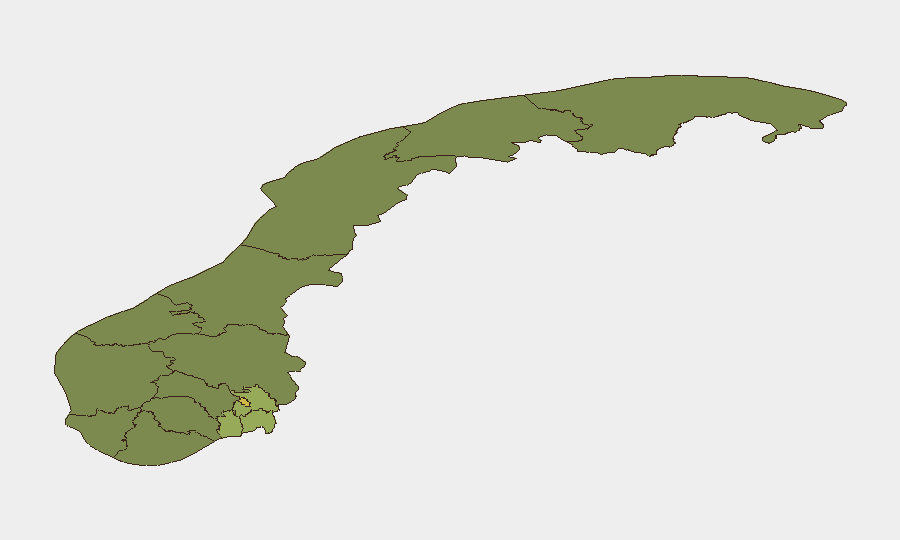
Norway maintains a stable baseline security environment with no major acute incidents confirmed in the last 24–48 hours. The country ranks #154 globally in composite threat exposure (score 5), reflecting low overall conflict, terrorism, and civil-unrest risk. Sub-national variation is significant: Oslo and surrounding Akershus and Østfold counties drive the bulk of tracked events, consistent with urban concentration of crime, protest activity, and police operations. The near-term trajectory remains stable absent new triggers.
Key Developments
No clearly documented, multi-source-confirmed security, conflict, civil-unrest, or major crime incidents in Norway were identified in the last 24–48 hours. Web research across news, social media (X/Twitter, Telegram), and regional security monitoring found an absence of location-specific acute events meeting cross-verification standards. Publicly visible posts mentioning Norway in the same window focused on non-security topics (sports, economic activity) or older contextual material (e.g., routine Arctic air-defense operations) without recent timestamps. Items that do reference Norway in a military or security context lack verifiable recency or are summaries rather than breaking developments.
Highest-Risk Areas
Oslo (risk 68) significantly outpaces other regions, reflecting its status as the capital and primary urban center for crime, protest, and police activity. Akershus (52) and Østfold (48) follow, likely driven by spillover effects, commuter-zone crime, and regional incident clustering. A secondary tier—Vestfold (42) and Rogaland (38)—shows moderate risk, while rural and northern regions (Innlandet, Møre og Romsdal) record the lowest scores. The concentration in the southeast underscores that duty-of-care protocols should weight Oslo metro area exposure highest, though absolute risk levels across Norway remain low by global standards.
How GeoBit Would Assist
Security and risk teams with personnel or assets in Norway should deploy Area-of-Interest (AOI) Monitoring & Early Warning on Oslo, Akershus, and Østfold to receive automated alerts on emerging protests, crime spikes, or infrastructure disruptions before they impact operations. Multi-language OSINT & social-media intelligence (X/Twitter, Telegram, YouTube) can track low-level activist, extremist, or criminal narratives and sentiment in near real-time, enabling early escalation detection. Risk & Threat Assessment modules should be refreshed quarterly to flag any shift in the sub-national ranking or emergence of new actor networks, ensuring duty-of-care decisions remain data-grounded.
7-Day Outlook
No acute triggers are visible on the horizon; Norway's security posture is expected to remain stable over the coming week. Seasonal summer activity (outdoor gatherings, increased tourism) may produce minor localized incidents in Oslo and coastal counties, but baseline risk is unlikely to spike materially. Teams should maintain standard monitoring cadence and escalation protocols; a shift to elevated alert status is not warranted at this time.
Highest-Risk Areas — Ranked
| # | State / Region | Risk |
|---|---|---|
| 1 | Oslo | 68 |
| 2 | Akershus | 52 |
| 3 | Østfold | 48 |
| 4 | Vestfold | 42 |
| 5 | Rogaland | 38 |
| 6 | Buskerud | 35 |
| 7 | Trøndelag | 32 |
| 8 | Telemark | 28 |
| 9 | Vestland | 27 |
| 10 | Agder | 26 |
| 11 | Møre og Romsdal | 22 |
| 12 | Innlandet | 20 |
Sources
Previous Daily Briefs
A new Norway brief is written every day — each with its own risk map and downloadable CSV. Here's the last week; use the calendar to go further back.
📅 Browse every day by calendar →
Highlighted days have a brief. Tap a day for that day's map & analysis, or “csv” for that day's dataset ($5).
Atlas — our AI intelligence desk — emails them this snapshot personally. Nothing else, no list.