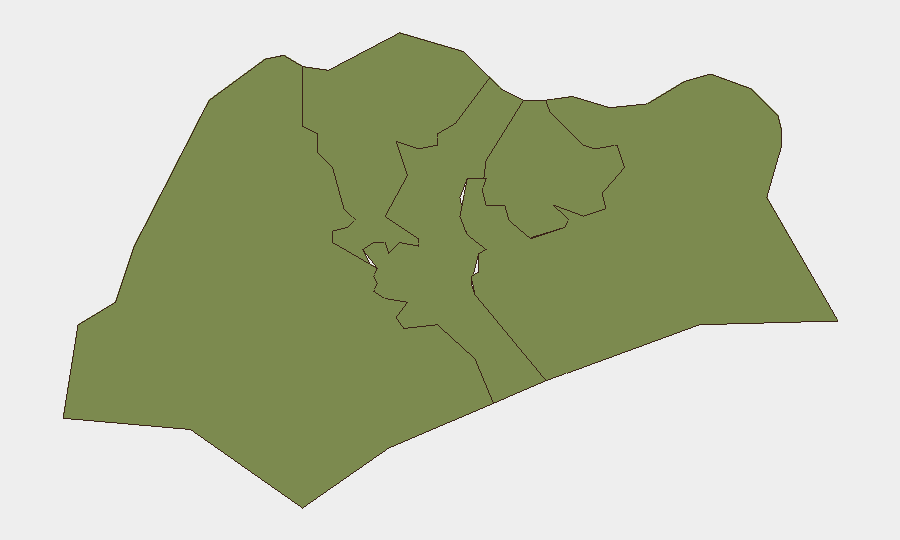
Situation Summary
Singapore remains a low-threat jurisdiction globally (rank #135, composite score 7/100) with no credible reports of significant security incidents, civil unrest, infrastructure disruption, or conflict in the last 24–48 hours. Recent event signals reflect routine governance activity (public statements from deputies, authorities, and citizens) and isolated labor action (lawyer strike/boycott on 29 June), with no indicators of systemic instability. Open-source monitoring confirms baseline crime and scam activity remains within normal parameters, and no travel or asset-protection advisories are warranted at the national level.
Key Developments
- 29 June, nationwide – Public statements issued by deputies and citizens; lawyer strike/boycott action initiated. No escalation reported or evidence of broader labor mobilization.
- 30 June, nationwide – Public statement from authorities; statement from business leadership (BOSS). Content and scope of statements not confirmed; appear routine in nature.
- 1 July, transnational – Senegal public disapproval statements regarding Israel and Palestinian issues. No domestic Singapore security nexus confirmed; reflects regional diplomatic sentiment only.
- No verified incidents of crime surge, protest activity, cyber disruption, or infrastructure impact in the last 48 hours in any sub-national region based on multi-language OSINT and social-media monitoring.
Highest-Risk Areas
The Northwest region shows significantly elevated composite risk (31.5) compared to all other sub-national areas (each 1.5), indicating concentrated concern in that geography. The specific drivers of Northwest risk—whether industrial, maritime, infrastructure, demographic, or transnational in nature—require targeted intelligence collection to determine operational relevance to corporate assets and personnel. Southwest, Central, Northeast, and Southeast regions show equivalent and minimal baseline risk. Security teams with operations or assets in the Northwest should prioritize localized monitoring and contingency review.
How GeoBit Would Assist
Intel Sweep and OSINT Fusion would provide multi-language, real-time monitoring of Singapore's public statements, social media, and citizen sentiment across all sub-national regions, enabling early detection of escalation in labor action, civil unrest, or geopolitical spillover. AOI Monitoring & Early Warning with persistent watch on the Northwest region and key corporate sites would generate alerts if threat indicators (protest clustering, security force deployment, infrastructure disruption) emerge. Conflict & Actor Network Analysis combined with Entity Extraction & Sentiment Tracking would identify emerging protest coalitions, key influencers, and sentiment shifts weeks ahead of mobilization, supporting proactive duty-of-care briefing to staff and leadership.
7-Day Outlook
Near-term trajectory remains stable. The lawyer strike and isolated public statements do not signal broadening labor action or political instability. Regional diplomatic friction (Senegal–Israel/Palestine) poses negligible direct risk to Singapore's security posture or corporate operations. Sustained low-threat environment is expected through 7 July unless sub-national developments in the Northwest region accelerate; continuous monitoring is recommended to track any convergence of labor, civic, or infrastructure concerns.
Highest-Risk Areas — Ranked
| # | State / Region | Risk |
|---|---|---|
| 1 | Northwest | 31.5 |
| 2 | Southwest | 1.5 |
| 3 | Central | 1.5 |
| 4 | Northeast | 1.5 |
| 5 | Southeast | 1.5 |
Sources
Previous Daily Briefs
A new Singapore brief is written every day — each with its own risk map and downloadable CSV. Here's the last week; use the calendar to go further back.
📅 Browse every day by calendar →
Highlighted days have a brief. Tap a day for that day's map & analysis, or “csv” for that day's dataset ($5).