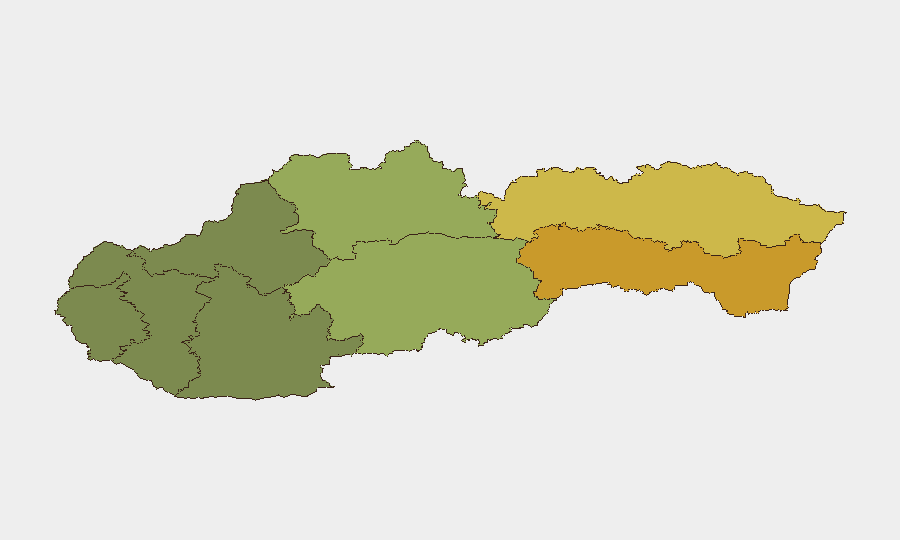
Situation Summary
Slovakia remains a low-threat country globally (#113, composite score 14) with no tracked discrete security events in the current window. However, a major cybersecurity and sovereignty scandal—Russian-made traffic and security cameras with hard-coded backdoor access—is actively domaging public confidence in government infrastructure and driving political tension through 21 August. Concurrent developments include commemorative protests tied to 1968 anniversary messaging, arrests in a racially-motivated assault case, and weather-related disruptions; the overall trajectory reflects infrastructure vulnerability and political friction rather than imminent violent threat.
Key Developments
- Nationwide road network (21 Aug): Slovakia's National Security Authority (NBU) issued a security alert and halted use of NERO R-ONE high-speed traffic cameras after confirming backdoor shell access via SMS from Russian numbers, disabled SecureBoot, exposed live streams, and weak authentication. Government terminated contracts with affected vendors.
- Interior Ministry building, Bratislava (20–21 Aug): Opposition figures and media coverage confirm that security cameras installed at the Interior Ministry may have enabled remote Russian access via St Petersburg phone numbers. Opposition leader Michal Šimečka has flagged preparation of a criminal complaint over installation of compromised Russian equipment at a state facility.
- Nationwide (21 Aug): Multiple outlets confirm ongoing political and media fallout from the discovery that Interior Ministry-procured traffic and security cameras are effectively Russian hardware (CORDON PRO / Simicon variants) with hard-coded access. Progressive Slovakia filed a criminal complaint; opposition characterizes it as one of the largest security scandals in recent Slovak history.
- Bratislava and other Slovak cities (21 Aug): Commemorative gatherings marking the 1968 Warsaw Pact invasion took place as politically charged street assemblies. These events doubled as protests against the current government, creating minor civil-unrest risk in public spaces.
- Nitra (21 Aug): Police detained four juveniles suspected in a group attack on Indian nationals on 1 August. One victim required hospital treatment. Incident highlights hate-crime and community-safety concerns in the city.
- Slovakia-wide (21 Aug): A severe storm impacted parts of the country, with potential for localized infrastructure disruption, flooding, and transport delays.
Highest-Risk Areas
The Košice (risk 72) and Prešov (risk 68) regions in eastern Slovakia dominate sub-national threat rankings, likely reflecting historical organized crime, smuggling, and cross-border trafficking patterns common to the Hungarian and Ukrainian border zones. Banská Bystrica (risk 55) and Žilina (risk 42) in central Slovakia show elevated scores consistent with economic marginalization and intermittent civil unrest. Bratislava (risk 28) and western regions (Trenčín 22, Trnava 18) remain significantly lower-risk, though recent camera-scandal developments and political tensions are concentrated in the capital.
How GeoBit Would Assist
Corporate security teams would deploy Intel Sweep and multi-language OSINT fusion to monitor rapid-evolving fallout from the Russian camera scandal, including criminal investigations, government procurement audits, and political blame-attribution in Slovak and international media. AOI Monitoring & Early Warning on Košice and Prešov regions would provide persistent watch on cross-border movement, smuggling indicators, and organized-crime actor signals. Entity extraction and network analysis capabilities would map Interior Ministry procurement chains, vendor relationships, and Russian backdoor-access vectors to assess operational exposure.
7-Day Outlook
The Russian camera scandal will likely dominate Slovak political and security discourse through late August, with potential for expanded criminal investigations and government contractor reviews. Protest activity may persist around 1968 anniversary commemoration and anti-government sentiment, though violent escalation risk remains low. Eastern border regions (Košice, Prešov) will continue as persistent focus areas for cross-border and organized-crime monitoring.
Highest-Risk Areas — Ranked
| # | State / Region | Risk |
|---|---|---|
| 1 | Region of Košice | 72 |
| 2 | Region of Prešov | 68 |
| 3 | Region of Banská Bystrica | 55 |
| 4 | Region of Žilina | 42 |
| 5 | Region of Nitra | 35 |
| 6 | Region of Bratislava | 28 |
| 7 | Region of Trenčín | 22 |
| 8 | Region of Trnava | 18 |
Sources
Previous Daily Briefs
A new Slovakia brief is written every day — each with its own risk map and downloadable CSV. Here's the last week; use the calendar to go further back.
- August 19, 2026
- August 17, 2026
- August 15, 2026
- August 13, 2026
- August 11, 2026
- August 10, 2026
- August 8, 2026
📅 Browse every day by calendar →
Highlighted days have a brief. Tap a day for that day's map & analysis, or “csv” for that day's dataset ($5).
Atlas — our AI intelligence desk — emails them this snapshot personally. Nothing else, no list.