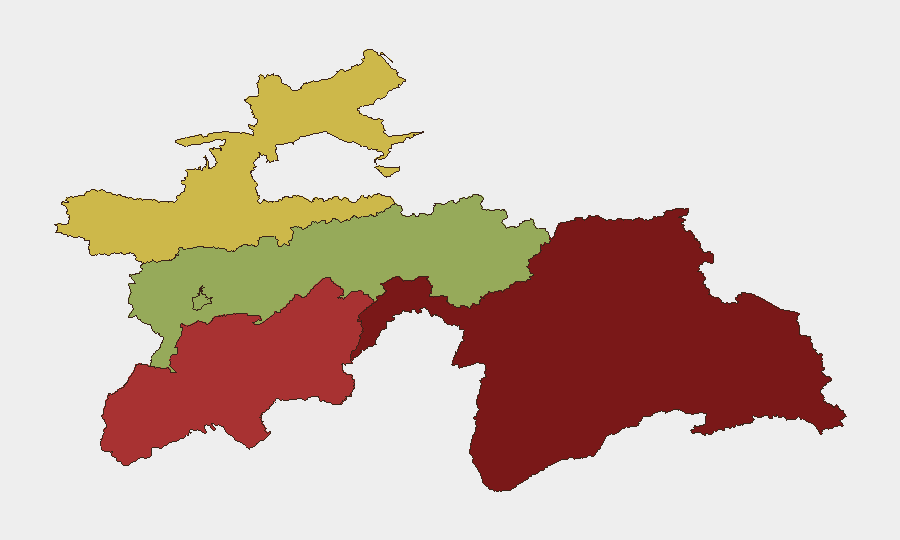
Situation Summary
Tajikistan remains ranked #123 globally (composite threat score 9) with no tracked security events in the current 24–48-hour window. The country's baseline security posture reflects persistent structural vulnerabilities—cross-border militant activity, Afghan narcotics trafficking, and sporadic counter-terrorism operations—rather than acute destabilization. No new major incident is verifiably reported across independent sources as of 2 July 2026; the threat environment is stable but geographically concentrated in border regions and autonomous areas.
Key Developments
No discrete, verifiable security or civil-unrest incidents have been reliably documented in Tajikistan in the last 24–48 hours across open-source intelligence, major news outlets, or social-media platforms with sufficient temporal precision to confirm occurrence within 2026-06-30 to 2026-07-02.
Background context (ongoing, not new): Tajikistan's security posture continues to be shaped by:
- Long-standing counter-terrorism operations in border zones near Afghanistan and Kyrgyzstan.
- Cross-border trafficking and militant-cell activity, particularly in Gorno-Badakhshan.
- Periodic sporadic violence and landmine risks in disputed or remote border areas.
- These factors inform Western travel advisories but do not constitute new discrete events in the current reporting window.
Highest-Risk Areas
Gorno-Badakhshan Autonomous Region (risk 92) and Khatlon Region (risk 78) drive the country's aggregate risk profile, primarily due to proximity to Afghanistan, porous borders, militant networks, and trafficking infrastructure. Sughd Region (65) faces secondary exposure through cross-border routes and economic vulnerabilities. By contrast, Dushanbe (42) and Districts of Republican Subordination (58) operate under stronger state security presence and lower incident frequency. The risk concentration in the south and east reflects the geopolitical reality of the Afghan border and terrain that facilitates non-state actor presence and narcotics flows.
How GeoBit Would Assist
Teams with personnel or assets in Tajikistan should deploy AOI (Area-of-Interest) Monitoring & Early Warning on high-risk regions—particularly Gorno-Badakhshan and Khatlon—to detect militant activity, trafficking surges, or inter-ethnic tension with persistent alerting. OSINT Fusion & Corroboration (X/Twitter, Telegram, local media, multi-language search) and Sentiment & Temporal Analysis provide early indicators of emerging unrest or security crackdowns before they escalate. Routing & Network Analysis supports duty-of-care by identifying secure transit corridors and alternative routes around high-risk zones, while Entity & Actor Network Mapping tracks known militant and criminal networks to inform personnel briefings and incident-response protocols.
7-Day Outlook
No acute security shock is signaled for the next 7 days; Tajikistan's threat trajectory remains consistent with its baseline—episodic but not systemic instability. Teams should maintain heightened watchfulness in Gorno-Badakhshan and border areas during any spike in regional tensions or Afghan cross-border activity, and keep travel advisories and personnel protocols current. Routine monitoring of OSINT channels and border-security reporting will remain the primary early-warning mechanism.
Highest-Risk Areas — Ranked
| # | State / Region | Risk |
|---|---|---|
| 1 | Gorno-Badakhshan Autonomous Region | 92 |
| 2 | Khatlon Region | 78 |
| 3 | Sughd Region | 65 |
| 4 | Districts of Republican Subordination | 58 |
| 5 | Dushanbe | 42 |
Sources
Previous Daily Briefs
A new Tajikistan brief is written every day — each with its own risk map and downloadable CSV. Here's the last week; use the calendar to go further back.
📅 Browse every day by calendar →
Highlighted days have a brief. Tap a day for that day's map & analysis, or “csv” for that day's dataset ($5).