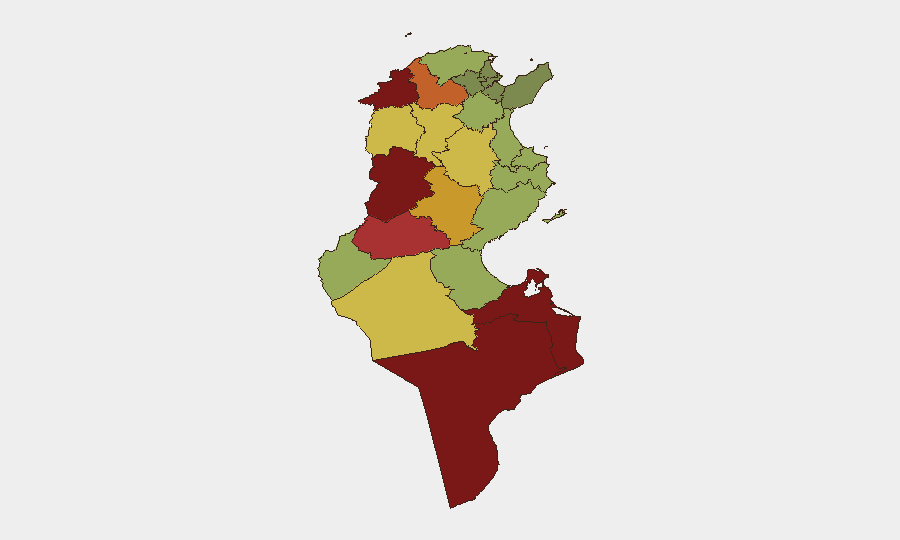
Situation Summary
Tunisia remains a moderate-risk jurisdiction (#56 globally) with composite security score 21, driven primarily by activity in its western and southern border regions rather than the capital or coastal tourist zones. The country faces persistent structural challenges: economic fragility in remote governorates, migrant-trafficking and asylum-seeker abuse patterns (documented since 2023), and low-level border tensions linked to Libya's ongoing instability. No major security incidents or policy shifts have been verified in the last 24–48 hours; current risk reflects chronic rather than acute threat dynamics.
Key Developments
No specific, dated security incidents verified in the last 24–48 hours. Available open-source reporting does not yield clearly timestamped events from 6–7 July 2026. Background risk factors—including migrant abuse allegations (ongoing since mid-2025), a stranded cargo vessel dispute near Bizerte (110+ days unresolved), and historical border-economy protests in southern governorates—remain active but are not documented as newly escalated in this window. Corporate security teams should consult real-time local law enforcement, embassy security feeds, or dedicated commercial travel-intelligence platforms for any overnight developments not yet reflected in public reporting.
Highest-Risk Areas
Kasserine, Jendouba, and Tataouine dominate the sub-national ranking (risk scores 92, 88, 85 respectively), with Médenine and Gafsa also elevated (83, 78). These western and southern governorates share common drivers: proximity to the Libya border (trafficking, weapons leakage, militant transit), extreme poverty and unemployment, limited state capacity, and historical grievance over resource distribution. Kasserine in particular has been a recruitment and transit zone for armed groups. Béja and Al Kaf, though lower-ranked, show similar patterns. By contrast, Tunis, Sfax, and coastal regions register substantially lower composite scores, reflecting stronger state presence and economic activity. Any expansion of unrest from border zones toward major cities or transport corridors would represent a material escalation not currently evident.
How GeoBit Would Assist
AOI Monitoring & Early Warning: Persistent, real-time watch on Kasserine, Jendouba, and Tataouine with automated alerts for protest activity, armed clashes, or checkpoint incidents would provide 24–48 hour advance notice of escalation before it affects supply chains or personnel movement.
OSINT Fusion & Corroboration (multi-language search, X/Telegram, local media): Continuous scan of Tunisian Arabic social media, local news outlets, and cross-border Libyan sources to detect emerging incidents, curfews, or security operations faster than wire-service reporting.
Routing & Network Analysis: Dynamic alternative-route planning for corporate convoys or expat transit, accounting for real-time closure of roads in high-risk governorates and border checkpoints.
7-Day Outlook
Absent major external shock (e.g., Libya spillover, mass migrant arrival, or domestic political arrest), Tunisia's security profile is likely to remain stable at current risk level through mid-July. Border governorates will continue to exhibit low-intensity chronic risk. Ramadan and summer heat may reduce protest momentum in some areas but do not fundamentally alter underlying structural vulnerabilities. Monitor Libya border developments and any new asylum-seeker policy announcements from Tunis, either of which could prompt rapid regional instability.
Highest-Risk Areas — Ranked
| # | State / Region | Risk |
|---|---|---|
| 1 | Kasserine | 92 |
| 2 | Jendouba | 88 |
| 3 | Tataouine | 85 |
| 4 | Médenine | 83 |
| 5 | Gafsa | 78 |
| 6 | Béja | 75 |
| 7 | Sidi Bouzid | 72 |
| 8 | Al Kaf | 70 |
| 9 | Kébili | 68 |
| 10 | Kairouan | 65 |
| 11 | Siliana | 62 |
| 12 | Tozeur | 58 |
Sources
Previous Daily Briefs
A new Tunisia brief is written every day — each with its own risk map and downloadable CSV. Here's the last week; use the calendar to go further back.
📅 Browse every day by calendar →
Highlighted days have a brief. Tap a day for that day's map & analysis, or “csv” for that day's dataset ($5).
Atlas — our AI intelligence desk — emails them this snapshot personally. Nothing else, no list.