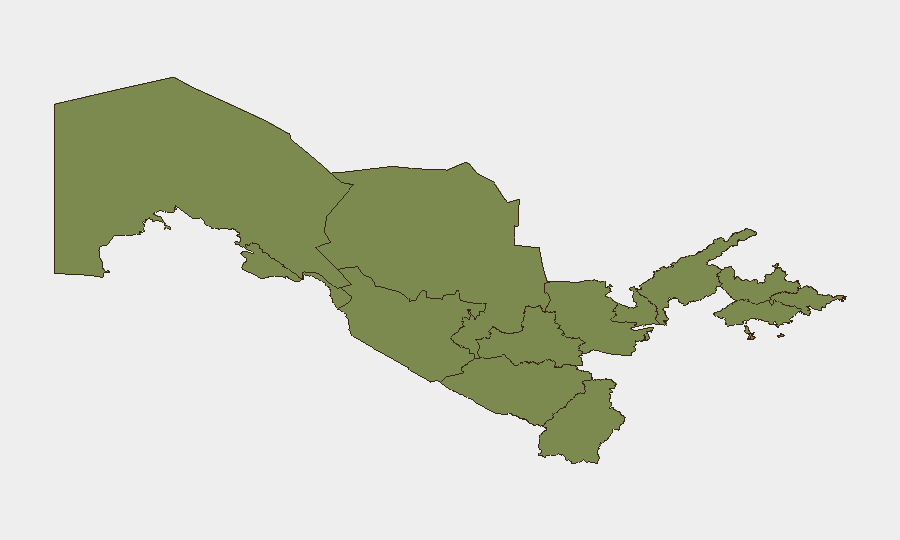
Situation Summary
Uzbekistan remains a low-threat environment (composite score 2; #197 globally) with no confirmed security incidents reported in the past 24–48 hours. Recent diplomatic signals between Russia and Uzbekistan are under observation but have not translated into documented ground-level disruptions. The security landscape is characterized by baseline regional risks—particularly concentrated in Tashkent—rather than acute conflict, civil unrest, or infrastructure failure at this time.
Key Developments
No confirmed security, conflict, crime, or infrastructure incidents were identified in Uzbekistan during 07-09 to 07-10 July 2026 from credible open-source reporting. Web research and social-media monitoring did not surface geographically specific events meeting the recency and incident-type criteria required for this brief.
Russian–Uzbek diplomatic statements (07-09 July) have been flagged by GeoBit event feeds but remain public statements without disclosed operational or security implications. Context and intent require ongoing monitoring.
Baseline civil-order and border-security posture remains stable across all 12 provinces, with no reports of protests, demonstrations, or intercommunal tension in recent reporting windows.
*Given the absence of current incident activity, teams should note that absence of reporting does not indicate absence of risk. Uzbekistan's interior regions (Fergana Valley, Karakalpakstan) and borders with Kyrgyzstan and Tajikistan retain historical vulnerabilities to smuggling, militant networks, and transnational crime; these remain dormant but unresolved.*
Highest-Risk Areas
Tashkent dominates the risk profile (31.5 vs. 1.5 across all other regions), reflecting its status as the capital, primary commercial hub, and site of diplomatic, government, and expatriate concentrations. Crime, petty theft, fraud, and counterfeiting remain higher in urban contexts; large gatherings and commercial zones warrant standard duty-of-care protocols.
The remaining 11 provinces cluster at equivalent baseline risk (1.5 each), indicating no single secondary region is experiencing acute instability. The Fergana Valley (Fergana, Namangan, Andijan regions) and Karakalpakstan retain lower-profile but persistent transnational-crime and trafficking routes; these are structural rather than acute drivers.
How GeoBit Would Assist
Security and risk teams operating in Uzbekistan should deploy AOI Monitoring & Early Warning on Tashkent and key border crossings (Kyrgyz, Tajik, and Turkmen frontiers) to capture any emerging civil unrest, protest activity, or security-force mobilization within 2–4 hours of onset. Intel Sweep and X/Twitter OSINT can maintain real-time visibility on Russian–Uzbek diplomatic and military signaling, with sentiment and temporal analysis to distinguish posturing from operational intent. Network & Actor Analysis combined with conflict and terrorism search will track any resurgence of transnational militant or trafficking networks in Fergana or Karakalpakstan, where open-source indicators remain sparse but historical risk persists.
7-Day Outlook
No acute security deterioration is forecast for the next seven days. Russo-Uzbek diplomatic engagement will remain the primary variable; any shifts in military posture or visa/transit restrictions should be treated as early-warning triggers. Standard duty-of-care measures (situational awareness, staff briefings, routine check-ins with Tashkent staff) remain proportionate to the current threat environment.
Highest-Risk Areas — Ranked
| # | State / Region | Risk |
|---|---|---|
| 1 | Tashkent | 31.5 |
| 2 | Qashqadaryo Region | 1.5 |
| 3 | Surxondaryo Region | 1.5 |
| 4 | Fergana Region | 1.5 |
| 5 | Republic of Karakalpakstan | 1.5 |
| 6 | Xorazm Region | 1.5 |
| 7 | Navoiy Region | 1.5 |
| 8 | Bukhara Region | 1.5 |
| 9 | Jizzakh Region | 1.5 |
| 10 | Tashkent Region | 1.5 |
| 11 | Namangan Region | 1.5 |
| 12 | Sirdaryo Region | 1.5 |
Sources
Previous Daily Briefs
A new Uzbekistan brief is written every day — each with its own risk map and downloadable CSV. Here's the last week; use the calendar to go further back.
📅 Browse every day by calendar →
Highlighted days have a brief. Tap a day for that day's map & analysis, or “csv” for that day's dataset ($5).
Atlas — our AI intelligence desk — emails them this snapshot personally. Nothing else, no list.