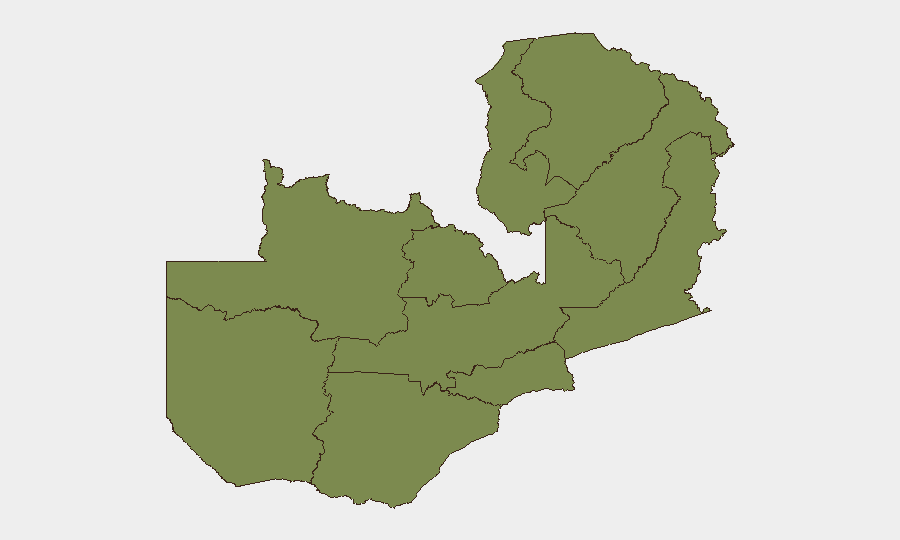
Situation Summary
Zambia remains a low-threat environment globally (rank #169) with a composite threat score of 4.0 and 1,335 tracked events. Recent signals point to diplomatic tensions involving UN territory-occupation statements and critical commentary from UNICEF regarding Farooq Abdullah and Zambian governance, alongside domestic public statements from Zambian authorities. The security landscape is heavily concentrated in Lusaka Province, which accounts for the majority of measurable risk; all other provinces remain at minimal threat levels.
Key Developments
- 2026-07-13 · Lusaka Province – Zambian government issued public statement (specific content not yet verified in open sources).
- 2026-07-12 · National Level – United Nations issued "Occupy Territory" statements regarding Zambia on two occasions; nature and specificity of claims require further corroboration.
- 2026-07-12 · National Level – Pan-African disapproval statement attributed to "Africans vs Africa" actors; low clarity on organizational backing or operational impact.
- 2026-07-11 · National Level – UNICEF issued critical public statements against both Farooq Abdullah and Zambian government; thematic focus on humanitarian/governance concerns rather than security incident.
- 2026-07-11 · National Level – Farooq Abdullah made counter-statement to Zambia; geopolitical dimension unclear from available signals.
Note on verification: Live web research (last 24 hours) did not yield independently corroborated recent news coverage, social media posts, or incident reports confirming the nature, location, or operational consequences of these developments. GeoBit event signals are recorded; ground-truth confirmation is pending.
Highest-Risk Areas
Lusaka Province dominates the risk landscape at 31.5, approximately ten times higher than any other jurisdiction; Southern Province follows distantly at 3.3. The concentration reflects capital-city political activity, diplomatic presence, administrative authority, and media/signal density rather than necessarily widespread civil unrest or criminal activity. Remaining eight provinces (Copperbelt, Northern, Luapula, Muchinga, Eastern, Western, North-Western, Central) are at minimal parity (1.5 each), indicating either genuine stability or low signal penetration. For corporate duty-of-care purposes, Lusaka represents the primary exposure point; provincial operations and supply chains face negligible tracked risk.
How GeoBit Would Assist
Security teams should deploy Intel Sweep and multi-language OSINT (including X/Twitter, Telegram, and local media) to establish ground truth on the UN and UNICEF statements, which remain unverified in mainstream sources. AOI Monitoring with alerting on Lusaka Province—and secondarily on transport corridors serving mining operations in the Copperbelt—would provide early warning of escalation. Entity extraction and network analysis applied to Farooq Abdullah, UNICEF regional actors, and Zambian government officials would clarify organizational linkages and intention behind recent statements, informing risk classification.
7-Day Outlook
No imminent security deterioration is indicated by available signals. If diplomatic tensions with the UN or humanitarian access disputes with UNICEF intensify, they are likely to manifest first as public statements and administrative actions rather than street-level incidents. Continued monitoring for any escalation in Lusaka or disruption to services (transport, utilities, banking) is warranted as a precaution, though probability remains low absent new triggering events.
Highest-Risk Areas — Ranked
| # | State / Region | Risk |
|---|---|---|
| 1 | Lusaka Province | 31.5 |
| 2 | Southern Province | 3.3 |
| 3 | North-Western Province | 1.5 |
| 4 | Western Province | 1.5 |
| 5 | Eastern Province | 1.5 |
| 6 | Muchinga Province | 1.5 |
| 7 | Luapula Province | 1.5 |
| 8 | Northern Province | 1.5 |
| 9 | Copperbelt Province | 1.5 |
| 10 | Central Province | 1.5 |
Sources
Previous Daily Briefs
A new Zambia brief is written every day — each with its own risk map and downloadable CSV. Here's the last week; use the calendar to go further back.
📅 Browse every day by calendar →
Highlighted days have a brief. Tap a day for that day's map & analysis, or “csv” for that day's dataset ($5).
Atlas — our AI intelligence desk — emails them this snapshot personally. Nothing else, no list.