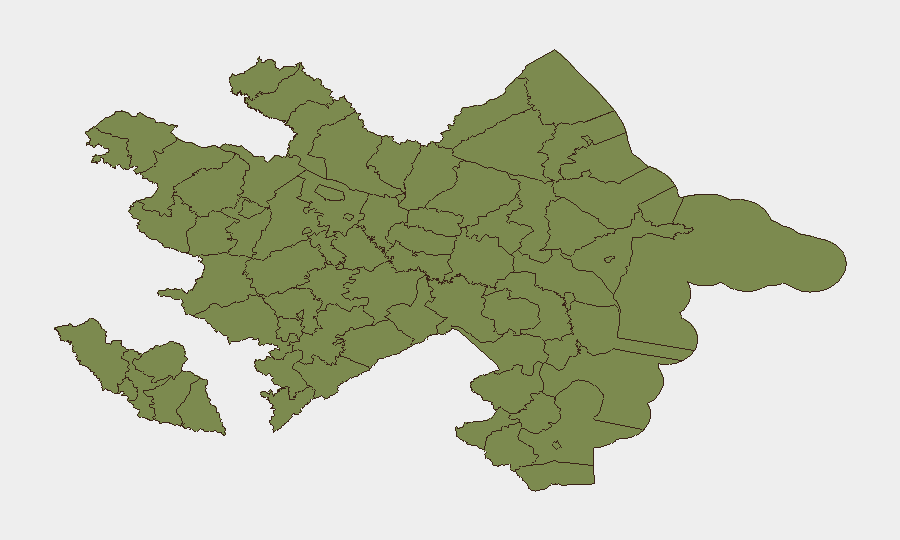
Situation Summary
Azerbaijan remains a lower-risk jurisdiction globally (composite threat score 8) with 11 tracked events, though sub-national concentration in Baku City creates acute exposure for corporate operations there. Regional tension signals—involving Armenian, Turkish, Iranian, Russian, and European actors—are elevated in diplomatic and military posturing but have not translated into verified security incidents or unrest within Azerbaijan's borders in the last 48 hours. Mine-clearance operations in liberated Karabakh territories and ongoing political detention cases represent persistent long-term risk vectors rather than acute immediate threats.
Key Developments
No verified, time-stamped security incidents or unrest in Azerbaijan have been reliably identified for 21–22 July 2026. The event signals tracked (public statements, threats, military posturing) involve external actors and diplomatic friction rather than discrete incidents inside Azerbaijan. The following are background contexts dated before the last 48 hours:
- Mine-clearance operations in liberated territories, 13–19 July 2026: ANAMA neutralized 200 anti-personnel mines, 28 anti-tank mines, and 630 unexploded ordnance across 1,959.5 hectares—illustrating residual post-2020 war hazards in Karabakh and border zones.
- Repatriation of Azerbaijani sea captain (mid-July 2026): Captain Samad Nasrullayev, killed when cargo vessel *Atlas* *Bey* was struck by a drone near Odesa, was recovered and returned to Azerbaijan in mid-July—flagging maritime security risk in Black Sea operations affecting Azerbaijani nationals.
- Opposition-party detention conditions (ongoing): Claims of deteriorating conditions for Popular Front Party chairman Ali Karimli underline internal political tension and potential for civil-society friction, though no acute incident is dated to 21–22 July.
- Council of Europe friction (ongoing): President Aliyev has signaled possible PACE withdrawal over voting-rights and Karabakh-related criticism, reflecting diplomatic tension but not a domestic security event.
Highest-Risk Areas
Baku City dominates the risk profile (score 31.3), driven by concentration of diplomatic presence, international business operations, and political/security decision-making. A significant secondary tier—Agdere and Ujar districts (score 2.8 each)—reflects proximity to Armenia and residual mine/UXO contamination in post-2020 conflict zones. Border districts (Sadarak, Qazakh, Sharur, Tovuz, Qakh) and Nakhchivan Autonomous Republic each register score 1.3, reflecting ongoing territorial sensitivities, Iranian military proximity (documented 20 July movement signal), and disputed-zone dynamics. For corporate duty-of-care purposes, Baku-based personnel face standard urban crime and political risk; field operations in Karabakh and border zones face mine/UXO hazard and military posturing risk.
How GeoBit Would Assist
Security teams should deploy AOI Monitoring & Early Warning on Baku (daily briefing on protest, civil unrest, and crime signals) and border/Karabakh districts (persistent watch for military movement, mine-clearance setbacks, or cross-border incidents). Network & Actor Analysis applied to Turkish, Russian, Iranian, and Armenian state and non-state actors will track escalation signals before they manifest as on-ground threats. OSINT fusion (X/Twitter, Telegram, multi-language news, entity extraction) will flag emerging political detention cases, sanctions-related business disruption, or maritime incidents affecting Azerbaijani nationals.
7-Day Outlook
Diplomatic and military posturing around Armenia, Turkey, Iran, and Russia will likely remain elevated through late July; absent a major geopolitical shock, this is unlikely to cascade into domestic security events or movement restrictions in Azerbaijan proper. Mine-clearance and border-zone hazards remain chronic; corporate field operations in Karabakh should assume continued UXO risk. Monitor for any Council of Europe withdrawal announcement or escalation in Ali Karimli detention reporting as early signals of internal political instability.
Highest-Risk Areas — Ranked
| # | State / Region | Risk |
|---|---|---|
| 1 | Baku City | 31.3 |
| 2 | Agdere District | 2.8 |
| 3 | Ujar District | 2.8 |
| 4 | Sadarak District | 1.3 |
| 5 | Qazakh District | 1.3 |
| 6 | Sharur District | 1.3 |
| 7 | Yevlakh District | 1.3 |
| 8 | Kangarli District | 1.3 |
| 9 | Nakhchivan Autonomous Republic | 1.3 |
| 10 | Aghstafa District | 1.3 |
| 11 | Tovuz District | 1.3 |
| 12 | Qakh District | 1.3 |
Sources
Previous Daily Briefs
A new Azerbaijan brief is written every day — each with its own risk map and downloadable CSV. Here's the last week; use the calendar to go further back.
📅 Browse every day by calendar →
Highlighted days have a brief. Tap a day for that day's map & analysis, or “csv” for that day's dataset ($5).
Atlas — our AI intelligence desk — emails them this snapshot personally. Nothing else, no list.