Situation Summary
Belgium remains a moderate-risk environment (global rank #137) with a composite threat score of 6 across 77 tracked events, reflecting both its position as an EU and NATO hub and residual security concerns linked to historical extremism cases. The most significant immediate signal is the 26 June announcement of seven arrests in the ongoing March synagogue bombing investigation in Liège—a major development in a sensitive case rather than a new incident. Sub-nationally, Flanders (risk 31.5) and Brussels-Capital (risk 22.6) carry substantially higher risk profiles than Wallonia (1.5), driven by both geopolitical positioning and historical threat vectors. No imminent crisis is evident, but persistent monitoring of extremist networks and crowd dynamics remains warranted.
Key Developments
- Liège, 26 June 2026 — Belgian federal police announced seven arrests in the investigation of the March bombing of the Great Synagogue, a major case update signalling active law-enforcement momentum on a sensitive extremist attack; the timing of the announcement may trigger community sensitivities or counter-narrative activity.
- Threat Signal: Jewish Community — A 26 June threat event (Jewish vs. Belgium actor) was recorded in GeoBit's event feed, requiring clarification on whether this reflects the synagogue case escalation, community warnings, or independent threat communications; immediate OSINT triage recommended.
- Threat Signal: Belgian Actor — A 25 June threat event involving a Belgian actor was logged; source, target, and nature of threat remain unconfirmed and warrant rapid intelligence sweep to rule out coordinated activity or copycat risk.
- Military Mobilization (Brussels/EU) — A 25 June military mobilization signal involving Brussels and European actors was recorded; this likely reflects EU or NATO routine activity but requires confirmation to distinguish from abnormal readiness posture.
- Diplomatic Activity — 23–24 June Taliban delegation visas issued for EU meetings represent a known diplomatic event with potential for protest or extremist-network agitation; no incidents reported but activist monitoring warranted.
- External Geopolitical Signals — Multiple 26 June events involving European–Russian, Ukraine–Belarus, and France actor dyads suggest elevated regional tensions; spillover into Belgium (via diaspora networks, protest, or extremist recruitment) remains a secondary concern.
Highest-Risk Areas
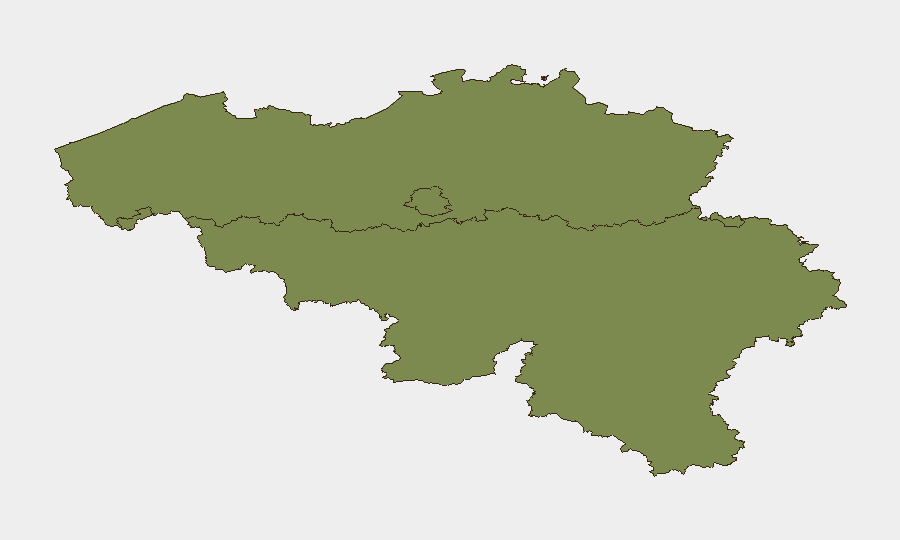
Flanders (31.5) and Brussels-Capital (22.6) together account for the vast majority of Belgian composite risk, with Flanders carrying nearly 14× the risk of Wallonia. Flanders' elevated score likely reflects its role as a historical recruitment and logistics hub for foreign fighters, residual far-right networks, and proximity to lower-security Schengen borders. Brussels-Capital's risk is driven by its status as the EU and NATO administrative centre, making it a symbolic and operational target for state and non-state actors; the synagogue bombing case (Liège, but with Brussels security implications) underscores persistent anti-Jewish and extremist threat vectors. Wallonia's low risk (1.5) reflects relative geographic isolation, smaller diaspora populations, and limited geopolitical salience, though border proximity to France warrants contingency planning.
How GeoBit Would Assist
Security teams should activate OSINT fusion and multi-language social-media intelligence (X, Telegram) to track immediate fallout from the Liège arrests and clarify the 26 June Jewish-community threat signal. Entity extraction and network analysis should be applied to the seven arrested individuals to map organizational ties and identify secondary risk nodes. Area-of-interest (AOI) monitoring with alerting on Flanders and Brussels—particularly synagogues, EU institutions, transport hubs, and protest gathering spaces—will enable early detection of coordinated activity or counter-extremist mobilization.
7-Day Outlook
No acute security event is imminent, but the synagogue case momentum and multiple geopolitical signals (EU–Russia, Ukraine–Belarus tensions) create a heightened-attention window through early July. Community tension, protest activity, or extremist narrative cycles should be expected in response to the arrests. Continuous OSINT watch on diaspora networks and far-right activity is prudent.
Highest-Risk Areas — Ranked
| # | State / Region | Risk |
|---|---|---|
| 1 | Flanders | 31.5 |
| 2 | Brussels-Capital | 22.6 |
| 3 | Wallonia | 1.5 |
Sources
Previous Daily Briefs
A new Belgium brief is written every day — each with its own risk map and downloadable CSV. Here's the last week; use the calendar to go further back.
📅 Browse every day by calendar →
Highlighted days have a brief. Tap a day for that day's map & analysis, or “csv” for that day's dataset ($5).