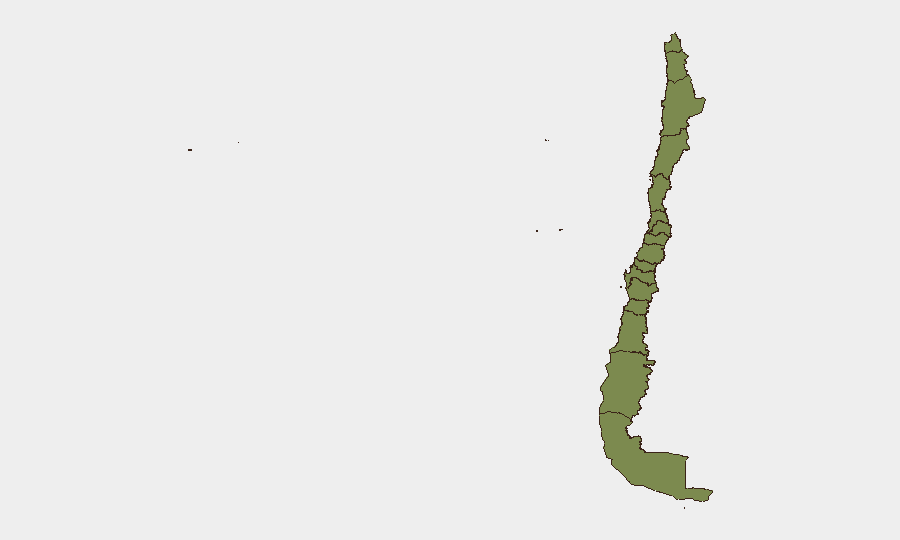
Situation Summary
Chile remains a relatively low-threat environment globally (#99 composite ranking) with 112 tracked security events, but sub-national risk is heavily concentrated in the Coquimbo Region, which accounts for a disproportionate share of documented incidents. The capital and largest metro area, Santiago, carries moderate localized risk (6.5) but remains broadly stable for business and diplomatic operations. Overall trajectory is stable, though regional disparities and infrastructure vulnerabilities warrant targeted monitoring by organizations with personnel or assets in the north.
Key Developments
Data limitation: GeoBit's available research materials do not contain verified security incidents from the last 24–48 hours in Chile. Recent web searches returned no fresh incident reports, civil unrest notifications, crime alerts, or infrastructure disruptions dated within the reporting window. To provide accurate daily developments, real-time news feeds (Chilean media, wire services, X/Twitter, Telegram incident channels) must be queried directly. GeoBit recommends tasking live OSINT collection if current-day situational updates are required.
Highest-Risk Areas
Coquimbo Region dominates the risk profile, with a composite score of 31.8—roughly five times higher than Santiago and ten times the national median. This concentration suggests persistent localized drivers: likely organized crime activity, resource-sector conflict, or border-adjacent instability (Coquimbo borders Argentina). Santiago Metropolitan Region (6.5) reflects big-city crime, protest potential, and critical infrastructure clustering; risk is manageable but non-trivial for multinational operations. All other regions score below 3, indicating that security attention and resource allocation should prioritize the Coquimbo–Santiago corridor while maintaining routine monitoring elsewhere.
How GeoBit Would Assist
Organizations with operations in Chile should deploy AOI (Area-of-Interest) Monitoring & Early Warning on Coquimbo and Santiago to receive automated alerts on protest activity, crime spikes, or infrastructure incidents. Multi-language OSINT (Spanish/English) and social-media intelligence (X/Twitter, Telegram) enable real-time detection of civil unrest, labor actions, or border tensions before mainstream reporting. GIS & Spatial Analysis combined with Routing & Network Analysis allow security teams to model safe transit corridors and alternative logistics paths should northern routes degrade due to protest or incident activity.
7-Day Outlook
No imminent nation-level crises are signaled by current data, but the Coquimbo Region's elevated risk profile suggests continued localized volatility warranting weekly intelligence refreshes. Personnel traveling to or based in the north should expect potential for civil disruption (protests, roadblocks) and organized-crime activity; duty-of-care protocols should include real-time monitoring and contingency communication. Santiago and the central corridor remain operationally normal for corporate activity.
Note to Security Teams: This brief reflects available public intelligence as of 2026-07-01. For current 24-hour incident data, request a fresh Intel Sweep covering Chilean news, social media, and emergency-services reporting.
Highest-Risk Areas — Ranked
| # | State / Region | Risk |
|---|---|---|
| 1 | Coquimbo Region | 31.8 |
| 2 | Santiago Metropolitan Region | 6.5 |
| 3 | Los Lagos Region | 3 |
| 4 | Maule Region | 3 |
| 5 | Aysen del General Carlos Ibanez del Campo Region | 2.2 |
| 6 | Magallanes and Chilean Antarctica Region | 2.2 |
| 7 | Valparaiso Region | 1.8 |
| 8 | Antofagasta Region | 1.8 |
| 9 | Atacama Region | 1.8 |
| 10 | O'Higgins Region | 1.8 |
| 11 | Nuble Region | 1.8 |
| 12 | Biobio Region | 1.8 |
Sources
Previous Daily Briefs
A new Chile brief is written every day — each with its own risk map and downloadable CSV. Here's the last week; use the calendar to go further back.
📅 Browse every day by calendar →
Highlighted days have a brief. Tap a day for that day's map & analysis, or “csv” for that day's dataset ($5).