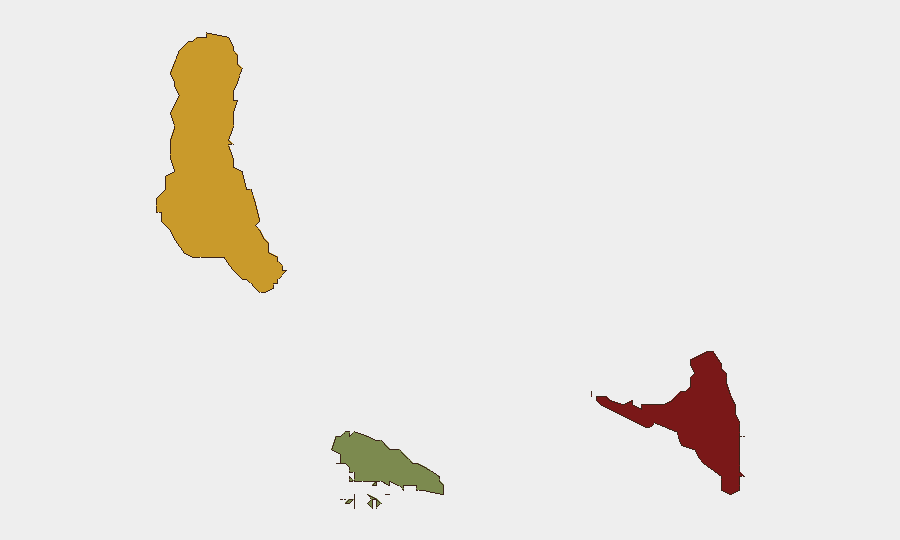
Situation Summary
Comoros remains a low-intensity threat environment (global rank #187) with no sustained conflict or terrorism activity in the current monitoring window. However, two discrete security incidents in the past 48 hours—a significant prison escape in Moroni and a nationwide mobile-data boycott—signal emerging governance and civil-order vulnerabilities. Anjouan's elevated sub-national risk score (88) reflects persistent instability and separatist tensions, while Grande Comore (72) faces urban security and institutional-capacity challenges. The overall trajectory is stable but fragile, with localized governance failures creating tactical risks for personnel and supply chains.
Key Developments
- Moroni, Grande Comore — 2026-07-07 to 2026-07-08 — Approximately 38 inmates escaped from the central prison after walking out of the main gate; a detained soldier is cited as the initiator. The incident underscores chronic overcrowding and inadequate custodial security, raising concern about prison-system integrity and potential re-offense risk in urban areas.
- Nationwide — 2026-07-06 — ACTIC and journalist Oubeidillah Mchangama initiated a 24-hour mobile-data boycott in protest of carrier price hikes. While limited in scope and duration, the action signals civil discontent and potential communications disruptions for corporate operations dependent on cellular connectivity.
- No reported violence, clashes, or protest-related injuries in the last 48 hours; both incidents remain non-violent and localized in immediate impact.
Highest-Risk Areas
Anjouan (risk 88) and Grande Comore (risk 72) concentrate the majority of documented threat drivers. Anjouan's score reflects long-standing autonomy disputes, weaker state capacity, and historical separatist mobilization; Grande Comore, as the capital island, faces urban crime, institutional weaknesses (exemplified by the prison escape), and governance bottlenecks that affect both commercial and security operations. Moheli (risk 35) remains materially lower-risk. Personnel and asset concentration on Grande Comore should be evaluated against Moroni's institutional vulnerabilities; Anjouan should be subject to enhanced vetting and movement controls.
How GeoBit Would Assist
Security teams should deploy AOI Monitoring & Early Warning against Moroni (prison facilities, major transport hubs) and Anjouan (political/separatist flashpoints) to detect escalation in real time. Intel Sweep and X/Twitter & Telegram OSINT capability would provide early signals of civil disorder, transport disruptions, and telecom outages affecting duty-of-care obligations. Routing & Network Analysis enables identification of alternative supply and personnel routes in the event of renewed road closures or port congestion tied to governance crises.
7-Day Outlook
The prison escape and data boycott are unlikely to trigger cascade effects unless followed by re-offender incidents or broader labor/political mobilization. Monitoring should intensify around Anjouan's political calendar and any statements from separatist actors. Unless new civil unrest emerges, Comoros will remain a low-urgency watch, with localized incident management the primary risk driver for corporate operations.
Highest-Risk Areas — Ranked
| # | State / Region | Risk |
|---|---|---|
| 1 | Anjouan | 88 |
| 2 | Grande Comore | 72 |
| 3 | Moheli | 35 |
Sources
Previous Daily Briefs
A new Comoros brief is written every day — each with its own risk map and downloadable CSV. Here's the last week; use the calendar to go further back.
📅 Browse every day by calendar →
Highlighted days have a brief. Tap a day for that day's map & analysis, or “csv” for that day's dataset ($5).
Atlas — our AI intelligence desk — emails them this snapshot personally. Nothing else, no list.