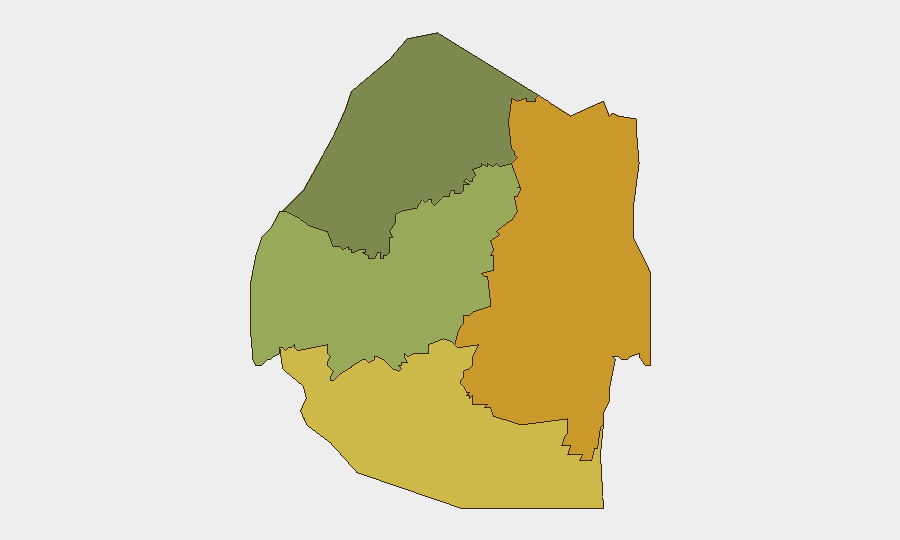
Situation Summary
Eswatini remains a low-threat environment by global standards (rank #147, composite score 9), with no confirmed discrete security incidents recorded in the seven-day window of 16–22 September 2026. Border and customs enforcement activity—including anti-smuggling operations—continues at baseline levels across the southern and eastern regions. The security posture has not materially shifted week-on-week, though persistent localized risks in Lubombo and Shiselweni regions warrant routine monitoring by organizations with personnel or assets in those areas.
Key Developments
No confirmed security incidents meeting GeoBit's verification criteria (independent corroboration, occurrence within 16–22 September 2026) were identified in the current reporting window.
Background context: A 11 September 2026 incident in Maphiveni, Lubombo Region, in which Eswatini military personnel accidentally wounded two U.S. government staff during an anti-smuggling roadblock operation, was reported or updated during this week but falls outside the seven-day period and is not counted as a current development. Routine customs and anti-smuggling enforcement continues as standing operational practice in border regions, particularly Lubombo and Shiselweni.
Highest-Risk Areas
Lubombo Region (composite risk score 72) remains the highest-risk jurisdiction, driven primarily by cross-border smuggling activity, informal trade corridors, and the operational tempo of military and customs enforcement at roadblocks. Shiselweni Region (score 68) ranks second, reflecting similar border-transit and customs vulnerabilities along the Mozambique and South Africa frontiers. Manzini Region (score 55) carries elevated but secondary risk; Hhohho (score 35) is substantially lower-risk. Organizations with operations, supply chains, or personnel transiting Lubombo and Shiselweni should calibrate duty-of-care protocols around roadblock interactions and informal-sector border crossing points.
How GeoBit Would Assist
Security teams protecting personnel or assets in Eswatini would benefit from AOI Monitoring & Early Warning on high-risk regions—specifically Lubombo and Shiselweni—to receive alerts on emerging incidents or operational changes at key roadblocks and crossing points. Intel Sweep and multi-language OSINT capabilities provide continuous passive monitoring of Eswatini security reporting, enabling early detection of incidents before they escalate to duty-of-care or insurance thresholds. Routing & Network Analysis can identify alternative routes or timing strategies to minimize exposure at customs/military checkpoints during planned movements.
7-Day Outlook
No significant escalation in Eswatini's security environment is anticipated over the next seven days. Routine border enforcement and anti-smuggling operations will likely continue at current levels, with Lubombo and Shiselweni remaining zones of elevated but manageable operational risk. Organizations should maintain standard security protocols and monitor GeoBit alerts for any changes in military deployment, cross-border incident frequency, or civil unrest.
Highest-Risk Areas — Ranked
| # | State / Region | Risk |
|---|---|---|
| 1 | Lubombo | 72 |
| 2 | Shiselweni | 68 |
| 3 | Manzini Region | 55 |
| 4 | Hhohho Region | 35 |
Sources
Previous Weekly Briefs
A new Eswatini brief is written every Monday, covering the week — each with its own risk map and downloadable CSV. Use the calendar to go further back.
- September 15, 2026
- September 8, 2026
- September 1, 2026
- August 30, 2026
- August 28, 2026
- August 26, 2026
- August 24, 2026
📅 Browse past briefs by calendar →
Highlighted days have a brief. Tap a day for that day's map & analysis, or “csv” for that day's dataset ($5).
Atlas — our AI intelligence desk — emails them this snapshot personally. Nothing else, no list.