Situation Summary
Serbia remains a moderate composite-threat environment (rank #84 globally, score 14/100) but faces acute near-term political instability following President Aleksandar Vučić's announcement on June 29 that he will resign within weeks, triggering early national elections. Mass anti-government protests centered in Belgrade have continued through June 29–30, accompanied by heightened police and security deployments around government buildings and protest sites. The combination of sustained civil unrest, political uncertainty, and reported Serbian military movements near the Kosovo border has elevated short-term protest, crowd-control, and regional-conflict risk.
Key Developments
- Belgrade, June 29–30 – Anti-government demonstrations continued in central Belgrade following Vučić's resignation announcement, with large crowds, visible police cordons, and riot units deployed around government buildings and key squares. Social media footage documented increased security posture and controlled access points at protest sites.
- Belgrade, June 29 – Vučić held a large pro-government rally where he reiterated his planned exit as president within weeks, effectively announcing early national elections. Parallel anti-government protests by students and opposition supporters occurred the same day, creating a polarized but largely non-violent crowd-management environment.
- Serbia–Kosovo border area, June 29–30 (reporting window) – Social media and analyst commentary on June 29–30 highlighted Serbian military movements near the Kosovo border. While precise operational dates are unclear, these deployments were actively discussed as a current concern and flagged by regional analysts as potentially increasing conflict risk when combined with Vučić's domestic political rhetoric.
- Belgrade, late June (renewed coverage) – Media revisited the case of Belgrade Police Chief Veselin Milić and alleged police–organized-crime links related to a gang killing, fueling public debate about state–organized-crime connections and law-enforcement credibility in the last 24–48 hours.
- Serbia (national), June 29 – EU Commission officials publicly noted they are closely monitoring Serbia's domestic political developments and early elections amid rule-of-law and institutional-integrity concerns.
Highest-Risk Areas
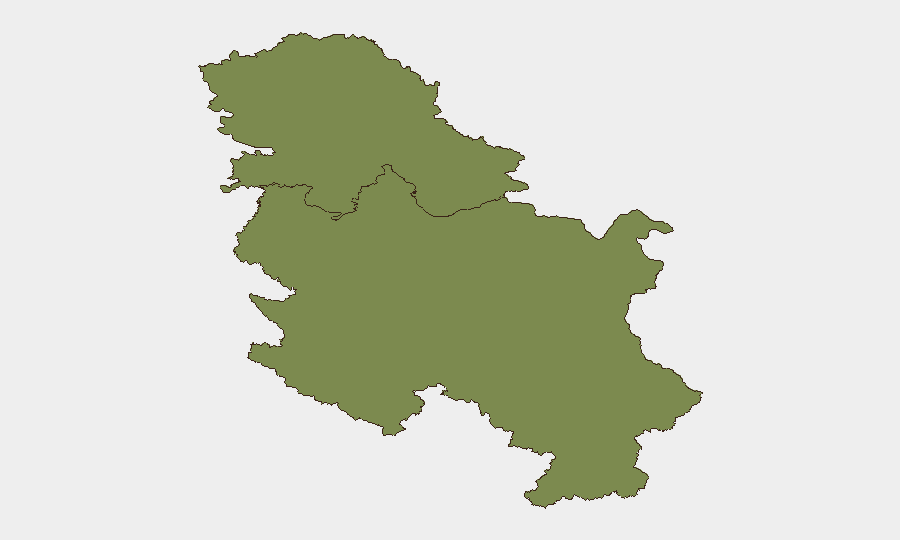
Central Serbia (composite risk 31.9) significantly outweighs Vojvodina (1.9) and is the primary driver of current threat activity. Belgrade and surrounding central regions account for the overwhelming majority of documented risk events, centered on large-scale anti-government protests, government-building security concentrations, and police–protest interface dynamics. The concentration of political power, media attention, and security-force deployment in the capital amplifies crowd-management risk and creates the potential for localized confrontations during the transition period ahead. Vojvodina's minimal risk score reflects lower protest density and fewer reported security incidents in that region during the same window.
How GeoBit Would Assist
Corporate security teams should deploy AOI Monitoring & Early Warning on central Belgrade (government buildings, major squares, border checkpoints) to track real-time protest activity, police deployments, and crowd density. OSINT fusion across X/Twitter, Telegram, YouTube, and local media combined with sentiment and temporal analysis will provide 24–48-hour advance notice of planned demonstrations and escalation signals. Network & Actor Analysis on opposition leadership, pro-government organizers, and security-force statements will clarify coordination intent and risk-posture changes as early elections approach.
7-Day Outlook
Protests are likely to remain sustained and large in central Belgrade through the early election period, with intermittent localized confrontations between demonstrators and police but no credible indicators of large-scale violence. Serbian military movements near Kosovo warrant continued monitoring; regional analysts assess moderate risk of border rhetoric escalation but low near-term kinetic risk. Political uncertainty and security-sector credibility questions will remain elevated through election announcements and campaigning.
Highest-Risk Areas — Ranked
| # | State / Region | Risk |
|---|---|---|
| 1 | Central Serbia | 31.9 |
| 2 | Vojvodina | 1.9 |
Sources
Previous Daily Briefs
A new Serbia brief is written every day — each with its own risk map and downloadable CSV. Here's the last week; use the calendar to go further back.
📅 Browse every day by calendar →
Highlighted days have a brief. Tap a day for that day's map & analysis, or “csv” for that day's dataset ($5).