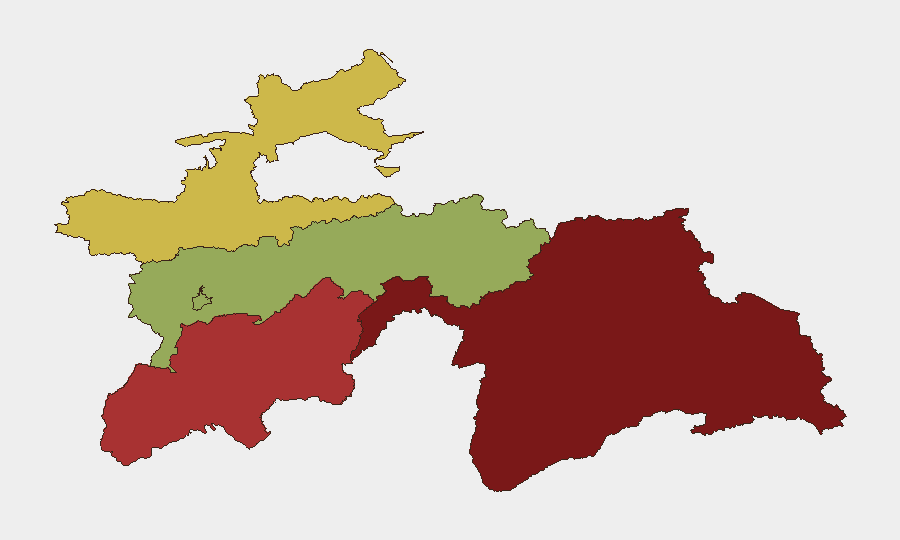
Situation Summary
Tajikistan remains in a period of baseline stability with no major, corroborated security incidents reported in the last 24–48 hours. The country's composite threat score (8/100) places it in the lower-risk band globally, though significant geographic disparity exists—Gorno-Badakhshan Autonomous Region and Khatlon Region carry substantially elevated risk profiles. Routine security management and area-specific vigilance remain appropriate for personnel and assets in the country.
Key Developments
No discrete, multi-sourced security or travel-risk events with confirmed dates of July 1–3, 2026, have been identified in available open-source feeds. This reflects an absence of large-scale, headline-level incidents (mass-casualty attacks, nationwide unrest, major border clashes, infrastructure failures) breaking into international or regional news wires in the current 24–48-hour window. Smaller localized incidents, routine crime, or traffic-related disturbances may occur but are not presently reflected in corroborated reporting.
Operational note: Absence of reported incident activity does not indicate zero risk; it indicates no significant event has yet surfaced in monitored channels. Teams should maintain direct liaison with in-country contacts and government travel-advisory services for real-time changes.
Highest-Risk Areas
Gorno-Badakhshan Autonomous Region (GBAO; risk score 92) and Khatlon Region (78) drive the country's risk profile and warrant highest vigilance. GBAO's remote terrain, limited state presence, porous borders with Afghanistan, and history of militant activity and smuggling networks make it the most volatile jurisdiction. Khatlon, bordering both Afghanistan and Uzbekistan, faces similar cross-border pressures and lower development infrastructure. Sughd Region (65) also warrants attention due to proximity to Uzbekistan and ongoing economic stressors. By contrast, Dushanbe and urban Districts of Republican Subordination present comparatively lower risk (42 and 58, respectively), though crime and petty corruption remain present.
How GeoBit Would Assist
Security teams monitoring Tajikistan should leverage AOI Monitoring & Early Warning to track Gorno-Badakhshan and cross-border zones for escalating activity signals; Intel Sweep and multi-language OSINT (including regional news, Telegram, and X feeds) to detect emerging unrest, crime spikes, or incident clusters before mainstream reporting; and Routing & Network Analysis to identify secure travel corridors and safe alternative routes during deterioration. Satellite & Imagery analysis supports infrastructure-status checks and border-area pattern-of-life monitoring, particularly valuable in remote GBAO where ground reporting is sparse.
7-Day Outlook
No imminent, large-scale security shift is signaled in the near term. Seasonal factors (summer heat, border-crossing activity, routine criminal patterns) should be monitored, and any cross-border escalation with Afghanistan or Uzbekistan would be the primary trigger for rapid reassessment. Teams should maintain current posture and refresh advisories weekly or upon alerting from early-warning monitors.
Highest-Risk Areas — Ranked
| # | State / Region | Risk |
|---|---|---|
| 1 | Gorno-Badakhshan Autonomous Region | 92 |
| 2 | Khatlon Region | 78 |
| 3 | Sughd Region | 65 |
| 4 | Districts of Republican Subordination | 58 |
| 5 | Dushanbe | 42 |
Previous Daily Briefs
A new Tajikistan brief is written every day — each with its own risk map and downloadable CSV. Here's the last week; use the calendar to go further back.
📅 Browse every day by calendar →
Highlighted days have a brief. Tap a day for that day's map & analysis, or “csv” for that day's dataset ($5).