Situation Summary
Tunisia remains a moderate-risk jurisdiction (global rank #48, composite score 42) with concentrated instability in the southern desert governorate of Kébili, which accounts for the majority of national threat activity. Recent signals over 24–48 hours include arrests of activists and companies, military force incidents, and public statements touching on religious and political tensions. The country's trajectory reflects sustained pressure on civil liberties and ongoing security operations, particularly in border and southern regions, without current indicators of nationwide destabilization.
Key Developments
- Tunis, 2026-07-10: Human Rights Watch documented the sentencing of eight human rights defenders to prison and fines, marking an intensification of the judicial crackdown on activists and political opponents that has accelerated since February 2026.
- Tunisia (national), 2026-07-10: An activist-related investigation was initiated; arrest and detention of company personnel followed the same day, suggesting possible linkage to labor, political, or regulatory enforcement actions.
- Tunisia (national), 2026-07-11: A formal arrest/detention event was recorded involving Swiss nationals or entities, indicating a bilateral legal or diplomatic dimension to recent enforcement activity.
- Tunisia (national), 2026-07-11: Multiple public statements issued by/against Tunisia regarding Muslim and Jewish communities signal heightened sectarian or interfaith rhetoric in the public sphere.
- Tunisia (national), 2026-07-11: Two separate conventional military force events were recorded—one involving Tunisian armed forces and one involving Muslim-designated actors—consistent with ongoing counter-terrorism or border security operations.
Data Caveat: Open-source reporting in the last 24 hours remains sparse on specific incident details; the above reflects GeoBit event signals and Human Rights Watch alerts. Real-time X/Twitter and localized media coverage are limited in the supplied sources.
Highest-Risk Areas
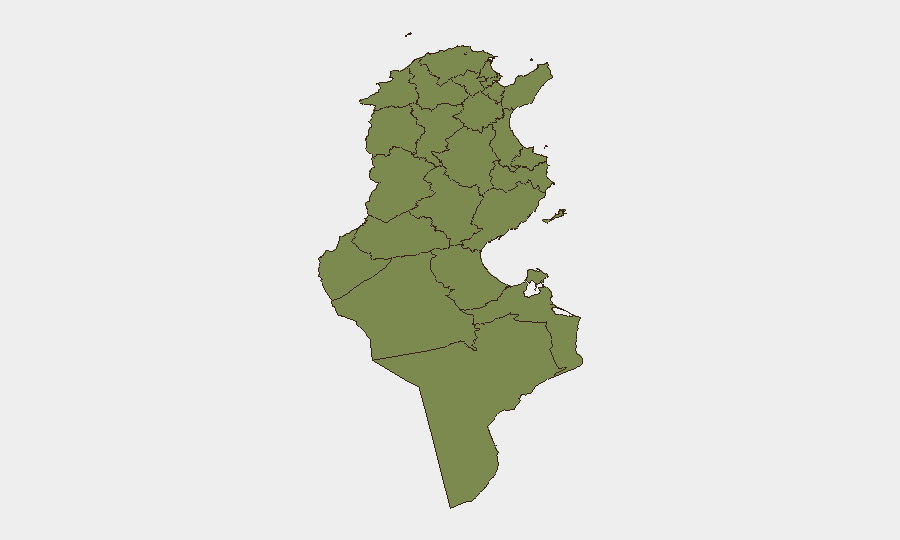
Kébili (risk score 31.5) is by far the dominant threat driver, accounting for nearly 75% of national composite risk and reflecting persistent militant activity, smuggling networks, and military operations in Tunisia's southeast border zone adjacent to Libya. Tunis (4.9) ranks second and reflects political enforcement, arrests, and civil unrest linked to the rights crackdown. All other governorates score 1.5, indicating baseline stability; however, coastal and border areas (Tataouine, Médenine, Jendouba) merit monitoring due to transit and migration pressures. Organizations with staff or assets in Kébili should apply heightened due diligence; Tunis-based operations should track political and judicial developments closely.
How GeoBit Would Assist
Intel Sweep & OSINT Fusion can monitor Tunisian media, Telegram/X activist networks, and regional conflict feeds to detect emerging arrests, security operations, or sectarian rhetoric before they escalate. AOI Monitoring & Early Warning would establish persistent watch over Kébili and border crossings with Libya to flag military movements, insurgent activity, or trafficking events in real time. Network & Actor Analysis can map enforcement targeting of companies and activists, helping security teams assess reputational or operational exposure. Regime Stability & Political Risk analysis supports duty-of-care teams tracking judicial trends and civil liberties erosion that may affect visa, employment, or contract risk.
7-Day Outlook
Tunisia's security posture is likely to remain broadly stable but politically tense. Expect continued judicial enforcement against activists and potential further public sectarian statements, particularly if international attention (e.g., Swiss involvement) amplifies diplomatic pressure. Military operations in Kébili and the southern border zone will persist as routine counter-terrorism; escalation to wider instability is not the current baseline, but sustained civil liberties pressure may generate civil unrest in Tunis or university centers over the next 7–14 days.
Highest-Risk Areas — Ranked
| # | State / Region | Risk |
|---|---|---|
| 1 | Kébili | 31.5 |
| 2 | Tunis | 4.9 |
| 3 | Tataouine | 1.5 |
| 4 | Nabeul | 1.5 |
| 5 | Monastir | 1.5 |
| 6 | Sfax | 1.5 |
| 7 | Mahdia | 1.5 |
| 8 | Médenine | 1.5 |
| 9 | Jendouba | 1.5 |
| 10 | Béja | 1.5 |
| 11 | Bizerte | 1.5 |
| 12 | Ariana | 1.5 |
Sources
Previous Daily Briefs
A new Tunisia brief is written every day — each with its own risk map and downloadable CSV. Here's the last week; use the calendar to go further back.
📅 Browse every day by calendar →
Highlighted days have a brief. Tap a day for that day's map & analysis, or “csv” for that day's dataset ($5).
Atlas — our AI intelligence desk — emails them this snapshot personally. Nothing else, no list.