Situation Summary
Australia's composite threat environment remains moderate (score 22/global ranking #null), with 490 tracked events concentrated heavily in New South Wales. The security picture is characterized by convergent pressures: active protest and political tension in the capital, critical infrastructure vulnerability in regional agribusiness, and elevated cyber-risk across mobile device management platforms. Current trajectory indicates sustained internal political friction and elevated cyber-exploitation activity, with no immediate signs of de-escalation.
Key Developments
- Canberra, ACT – 18 June 2026: GetUp! climate activists breached security at the National Press Club during One Nation leader Pauline Hanson's address, unfurling a protest banner and prompting an Australian Federal Police investigation into venue access controls. This represents a confirmed failure in physical security protocols at a high-profile political event and signals organized activist capability to penetrate controlled spaces.
- Mackay region, Queensland – 19 June 2026: Mackay Sugar, Australia's second-largest sugar producer, remains under operational restrictions nine days after a disclosed cyberattack (disclosed 10 June). Manual operations have only partially resumed at Farleigh Mill; growers continue to receive harvest-suspension advice, indicating ongoing supply-chain disruption in a critical regional infrastructure sector.
- Mackay region, Queensland – week of 17–19 June 2026: The cybercrime group "The Gentlemen" has claimed responsibility for the Mackay Sugar incident via its data leak site, characterizing the attack as extortion-motivated. While ransomware deployment has not been confirmed, the public claim has elevated threat perception across the Australian agribusiness and regional infrastructure sectors.
- National, Australia – mid-June 2026: CISA's addition of the LiteLLM SQL injection vulnerability (CVE-2026-6973) affecting Ivanti EPMM to its Known Exploited Vulnerabilities catalog signals active exploitation risk to Australian organizations using mobile-device management infrastructure, particularly in corporate and government sectors.
- National, Australia – mid-June 2026: The UK and Australia have formalized a Memorandum of Understanding on AI security cooperation, linking the UK AI Security Institute and the Australian AI Safety Institute. This policy response indicates official recognition of emerging technology-sector security risks and intent to establish coordinated monitoring.
Highest-Risk Areas
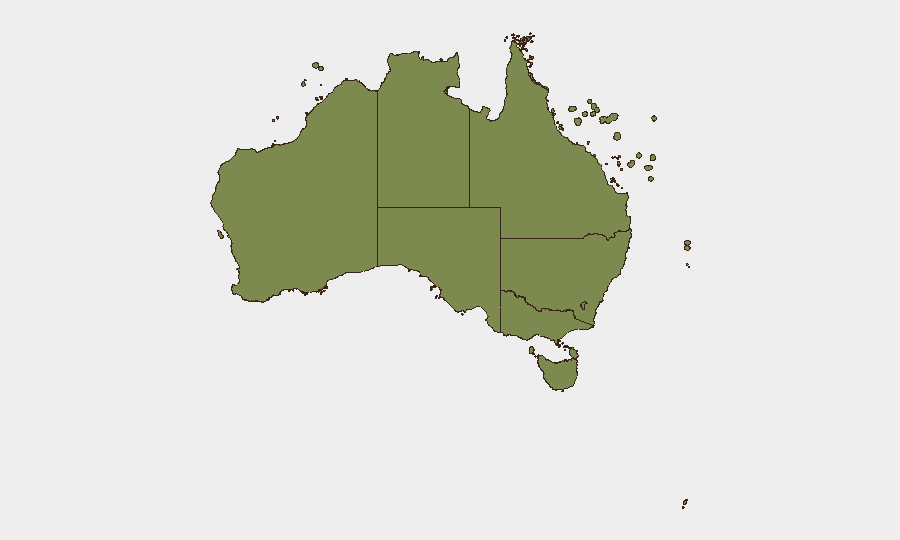
New South Wales dominates the risk landscape (31.3), driven by concentrated political tension, protest activity, and investigative actions centered on Canberra and federal institutions. The Northern Territory (18.9) shows secondary elevation, while Victoria (10.3) and Queensland (9.8) present moderate elevated risk. Queensland's risk is partly attributable to the active Mackay Sugar incident; NSW concentration reflects broader political instability signals and activist mobilization. Regional concentration suggests that corporate and infrastructure assets in NSW and Queensland warrant heightened operational attention.
How GeoBit Would Assist
Real-time Intel Sweep and multi-channel OSINT (X/Twitter, Telegram, public statements) enable continuous monitoring of activist organization, protest planning, and political tension escalation vectors across affected regions. AOI Monitoring & Early Warning with persistent geofencing around critical infrastructure sites—particularly agricultural processing facilities in Queensland and political venues in Canberra—provides actionable advance notice of physical or cyber threats. Network & Actor Analysis of cybercrime groups operating against Australian targets (such as "The Gentlemen") supports threat attribution and targeting-pattern forecasting to help corporate security teams anticipate sector-wide vulnerability exploitation.
7-Day Outlook
Political and activist tension is expected to remain elevated through parliamentary sitting periods and scheduled public events. Cyber-exploitation of known vulnerabilities in mobile device management and agribusiness systems will likely continue; recovery at critical infrastructure sites such as Mackay Sugar may extend beyond current timelines if extortion demands remain unresolved. No major escalation triggers are apparent, but sustained low-level protest activity and opportunistic cyber-crime should be expected.
Highest-Risk Areas — Ranked
| # | State / Region | Risk |
|---|---|---|
| 1 | New South Wales | 31.3 |
| 2 | Northern Territory | 18.9 |
| 3 | Victoria | 10.3 |
| 4 | Queensland | 9.8 |
| 5 | Australian Capital Territory | 7.3 |
| 6 | Western Australia | 6 |
| 7 | South Australia | 4.6 |
| 8 | Tasmania | 1.5 |
| 9 | Ashmore and Cartier Islands | 1.3 |
| 10 | Jervis Bay Territory | 1.3 |
| 11 | Coral Sea Islands | 1.3 |
Sources
Previous Daily Briefs
A new Australia brief is written every day — each with its own risk map and downloadable CSV. Here's the last week; use the calendar to go further back.
📅 Browse every day by calendar →
Highlighted days have a brief. Tap a day for that day's map & analysis, or “csv” for that day's dataset ($5).