Situation Summary
Belarus remains at a stable internal security baseline with no reported civil unrest, major crimes, or infrastructure disruptions as of 4 July 2026. Risk is concentrated in Minsk and its surrounding region and is driven by heightened political-security postures, tightened border policing, and official travel warnings linked to cross-border drone activity in adjacent Russian territory rather than active violence within Belarus itself. The government has amplified security messaging ahead of Independence Day celebrations and in response to a reported strike on a Minsk-bound passenger bus in Russia's Bryansk region on 2–3 July.
Key Developments
- Homiel Region border areas, 3 July 2026: Interior Ministry announced deployment of additional police units and enhanced security regimes in border districts of Homiel Region; travelers should expect increased checkpoints and visible security presence in southern border zones near Ukraine and Russia.
- Minsk (national advisory), 3 July 2026: State Secretary of the Security Council Alexander Volfovich issued an official public advisory urging Belarusian citizens to avoid travel to Russia's border regions, citing frequent drone incidents and inability to guarantee civilian safety—represents the most significant travel-risk escalation in recent briefings.
- Minsk–Anapa bus route, Bryansk Region, Russia, 2–3 July 2026: A passenger bus departing Minsk for Anapa was reportedly struck by a Ukrainian drone in Russian territory, resulting in at least two injuries; incident is being used by Belarusian authorities to justify heightened travel warnings and reinforces perceived risk for Belarus-origin cross-border traffic.
- Minsk media narrative, 3 July 2026: State media (BELTA, ONT) emphasized that drones are falling "daily" in Russian border regions and characterized the bus strike as a random attack, though independent outlets noted conflicting Minsk–Moscow accounts of intentionality; consistent messaging underscores elevated civilian-travel risk perception.
- Moscow–Minsk security coordination messaging, 3 July 2026: Russian Foreign Minister Sergey Lavrov, in Independence Day remarks, called for tighter Union State coordination to "decisively repel" threats to Belarus–Russia sovereignty; signals a hardening joint security posture that may translate into stricter border controls and surveillance.
- Country-wide baseline (through 3 July 2026): No verified reports of protests, civil unrest, crime spikes, or infrastructure failures inside Belarus; security environment characterized as "stable but tense," with risk concentration in the capital and immediate surroundings.
Highest-Risk Areas
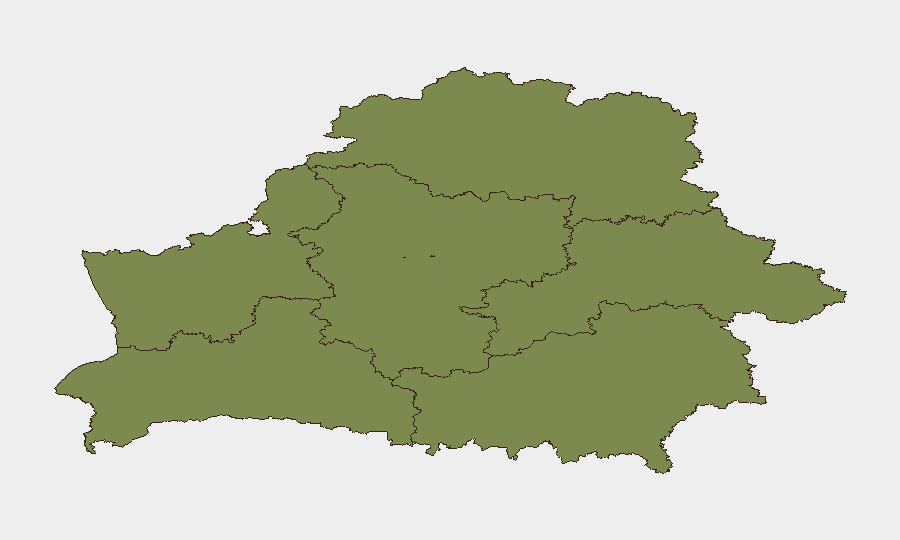
Minsk (31.8) and Minsk Region (30.3) account for the overwhelming majority of tracked risk; all other regions (Vitsebsk, Hrodna, Brest, Mahilyow, Homyel) register at or near 1.8, indicating that risk is highly concentrated in the capital and its immediate surroundings. The Minsk concentration reflects political-security tensions and geopolitical signalling rather than active incidents. Homiel Region, while scoring low overall, has become operationally significant due to 3 July policing announcements and its proximity to the Ukraine–Russia border, making it a watch area for checkpoint activity and secondary-route disruptions.
How GeoBit Would Assist
Security teams should deploy AOI Monitoring & Early Warning on Minsk and Homiel Region border checkpoints to track visibility and intensity of police deployments, coupled with OSINT fusion (X/Telegram monitoring, state media tracking) to detect further travel advisories or security-posture escalations. Routing & Network Analysis would enable real-time alternative-route planning for staff traveling to or through Belarus, avoiding congested border crossings and areas under heightened police activity.
7-Day Outlook
Near-term risk is unlikely to escalate significantly inside Belarus absent new cross-border incidents affecting Belarusian nationals. Independence Day celebrations may sustain elevated visible security presence in Minsk through the weekend. Monitoring should focus on whether additional travel warnings are issued and whether Homiel border policing spreads to other southern regions.
Highest-Risk Areas — Ranked
| # | State / Region | Risk |
|---|---|---|
| 1 | Minsk | 31.8 |
| 2 | Minsk Region | 30.3 |
| 3 | Vitsebsk Region | 1.8 |
| 4 | Hrodna Region | 1.8 |
| 5 | Brest Region | 1.8 |
| 6 | Mahilyow Region | 1.8 |
| 7 | Homyel Region | 1.8 |
Sources
Previous Daily Briefs
A new Belarus brief is written every day — each with its own risk map and downloadable CSV. Here's the last week; use the calendar to go further back.
📅 Browse every day by calendar →
Highlighted days have a brief. Tap a day for that day's map & analysis, or “csv” for that day's dataset ($5).