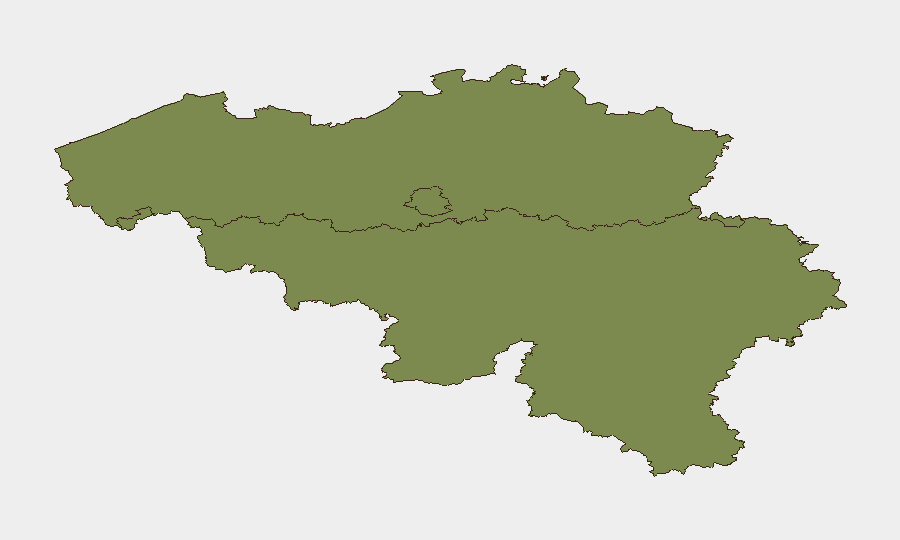
Situation Summary
Belgium remains a composite-threat environment (global rank #137) with elevated cyber and civil-society risk concentrated in Flanders and Brussels-Capital. A significant Russian-linked cyberattack ("FortiBleed") affecting 270+ Belgian organisations, including government and judicial entities, is ongoing as of 26 June with 110+ firewalls still exposed. Concurrent international diplomatic activity (World Customs Organization Council meetings) and a high-profile court ruling on colonial-era abuses create elevated potential for localized protests and heightened security postures, particularly in Brussels.
Key Developments
- Russia-linked cyberattack (nationwide, 23–26 June): Secutec confirmed FortiBleed campaign has compromised Fortinet partner portals affecting at least 270 Belgian organisations (local authorities, law firms, schools); 110 firewalls remain accessible to attackers as of 26 June, with new systems infiltrated daily. Immediate mitigation (patching, MFA, access-control review) is in progress across affected entities, creating potential for IT service disruption.
- World Customs Organization Council meetings (Brussels, 22–26 June, ongoing): Senior customs and security officials from multiple countries are convened; associated VIP presence, security checkpoints, and traffic controls remain active near conference facilities through 26 June.
- Colonial-era court ruling (Brussels, 26 June): Belgium's top court issued a judgment on state responsibility for Congo-era abuses, including family separations. Ruling is likely to trigger international media attention, legal follow-on actions, and potential civil-society demonstrations in Brussels and other major cities in the short term.
- Supply-chain cyber risk amplification (Europe-wide, 26 June): European Cyber Risk Report highlights ransomware surge (January–April 2026) with third-party suppliers as primary vectors, reinforcing vulnerability profile for Belgian manufacturing and organisations dependent on external IT services.
- Incident-response operations ongoing (organisations using Fortinet, 26 June): Multiple Belgian firms and authorities are actively patching systems and implementing enhanced monitoring; short-term service interruptions and heightened staff workload at affected entities expected.
Highest-Risk Areas
Flanders (composite risk 31.6) and Brussels-Capital (22.7) account for the preponderance of tracked threat activity, driven by cyber incidents, government/judicial sensitivity, and international presence. Flanders' elevated profile reflects concentration of business and IT infrastructure vulnerable to the FortiBleed campaign; Brussels concentrates political institutions, international organisations, and civil-society focal points, amplifying both cyber and protest-related risk in the wake of the colonial-abuses court ruling and ongoing World Customs meetings. Wallonia (risk 1.6) remains substantially lower-risk.
How GeoBit Would Assist
Security teams operating in Belgium should deploy AOI Monitoring & Early Warning on Brussels government and judicial districts to detect emergent protest mobilization or public-order disruption linked to the colonial-abuses ruling. Cyber Risk Assessment and Network & Actor Analysis capabilities enable real-time tracking of FortiBleed compromise scope, lateral-movement patterns, and affected organisational clusters to prioritize incident response and supply-chain vulnerability reviews. OSINT fusion (X/Twitter, Telegram, news feeds, multi-language search) provides early detection of civil-society activation, international-meeting security impacts, and threat-actor communications signaling new attack phases.
7-Day Outlook
The FortiBleed campaign will remain the primary driver of operational risk through early July as patch cycles and access-control hardening progress unevenly across 270+ organisations; secondary ransomware incidents or data-exfiltration claims are plausible. The colonial-abuses court ruling may generate sustained civil-society activity and localized demonstrations in Brussels over 7–14 days. Border and customs enforcement postures will remain elevated through the conclusion of international meetings on 26 June and associated post-event security wind-down.
Highest-Risk Areas — Ranked
| # | State / Region | Risk |
|---|---|---|
| 1 | Flanders | 31.6 |
| 2 | Brussels-Capital | 22.7 |
| 3 | Wallonia | 1.6 |
Sources
Previous Daily Briefs
A new Belgium brief is written every day — each with its own risk map and downloadable CSV. Here's the last week; use the calendar to go further back.
📅 Browse every day by calendar →
Highlighted days have a brief. Tap a day for that day's map & analysis, or “csv” for that day's dataset ($5).